


I talked with a Series B founder last week. They realized their AI assistant was a fancy FAQ page. It also came with a high API bill. They had the wrapper, but they did not have the agent. This is a common architectural trap. Many startups spend months building reactive bots that wait for user questions. They later find these bots do not improve operational efficiency.
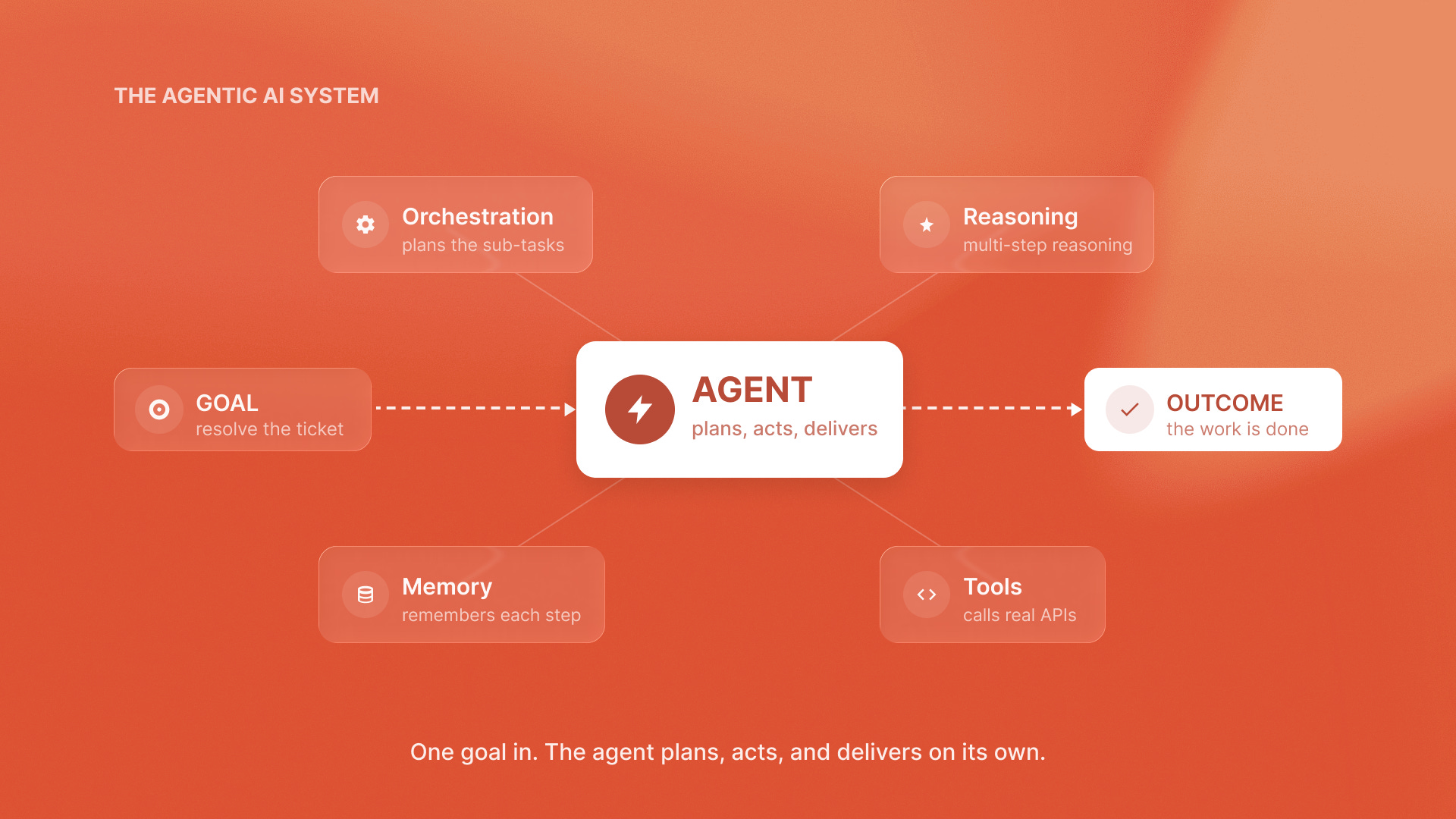
The fundamental difference is that while chatbots respond, agents execute. We are moving from digital assistants to production-grade agentic AI systems that replace human workflows. This shift requires a different engineering philosophy. You are building an autonomous employee rather than a conversation.
There is a reason the industry defaults to conversation as the measure of a system. Alan Turing set that default in 1950, opening the paper that founded the field:
“I propose to consider the question, ‘Can machines think?’”
Alan Turing — “Computing Machinery and Intelligence,” Mind, October 1950
He then set that question aside as too meaningless to discuss, and replaced it with a conversational test: could a machine hold a five-minute exchange without being identified? He chose dialogue because dialogue was measurable, not because it was the point.
Seventy-six years later the industry has inherited his proxy and forgotten it was one. A chatbot is optimised to win the imitation game. An agent is optimised to finish the job. Those are different objectives, and only one of them appears on a P&L.
The architectural trap: Why agentic AI systems are not chatbots
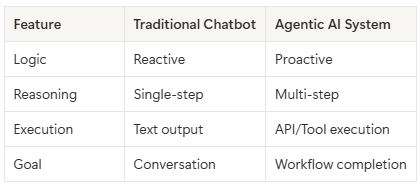
Traditional bots follow decision trees. Even when powered by a large language model, they are typically reactive. They take an input, process it through instructions, and provide an output. This perception-only architecture can answer simple questions. It cannot find and fix the three biggest spending categories in a marketing budget.
Reactive logic is limited by the human in the loop. If the human does not ask the right question, the bot provides no value. Proactive logic allows the system to monitor data streams and identify problems. It takes action without being prompted. Most companies build assistants when they need autonomous agents, and this architectural distinction determines ROI. The limits of decision trees are reached quickly when trying to automate a complex business process.
To achieve true autonomy, your architecture must include these core components:
Goal-oriented orchestration: The ability to break a high-level goal into smaller tasks. It uses a dedicated LLM orchestration layer.
State management: Maintaining context and memory across long-running sessions.
Tool integration: The power to interact with external APIs, databases, and software.
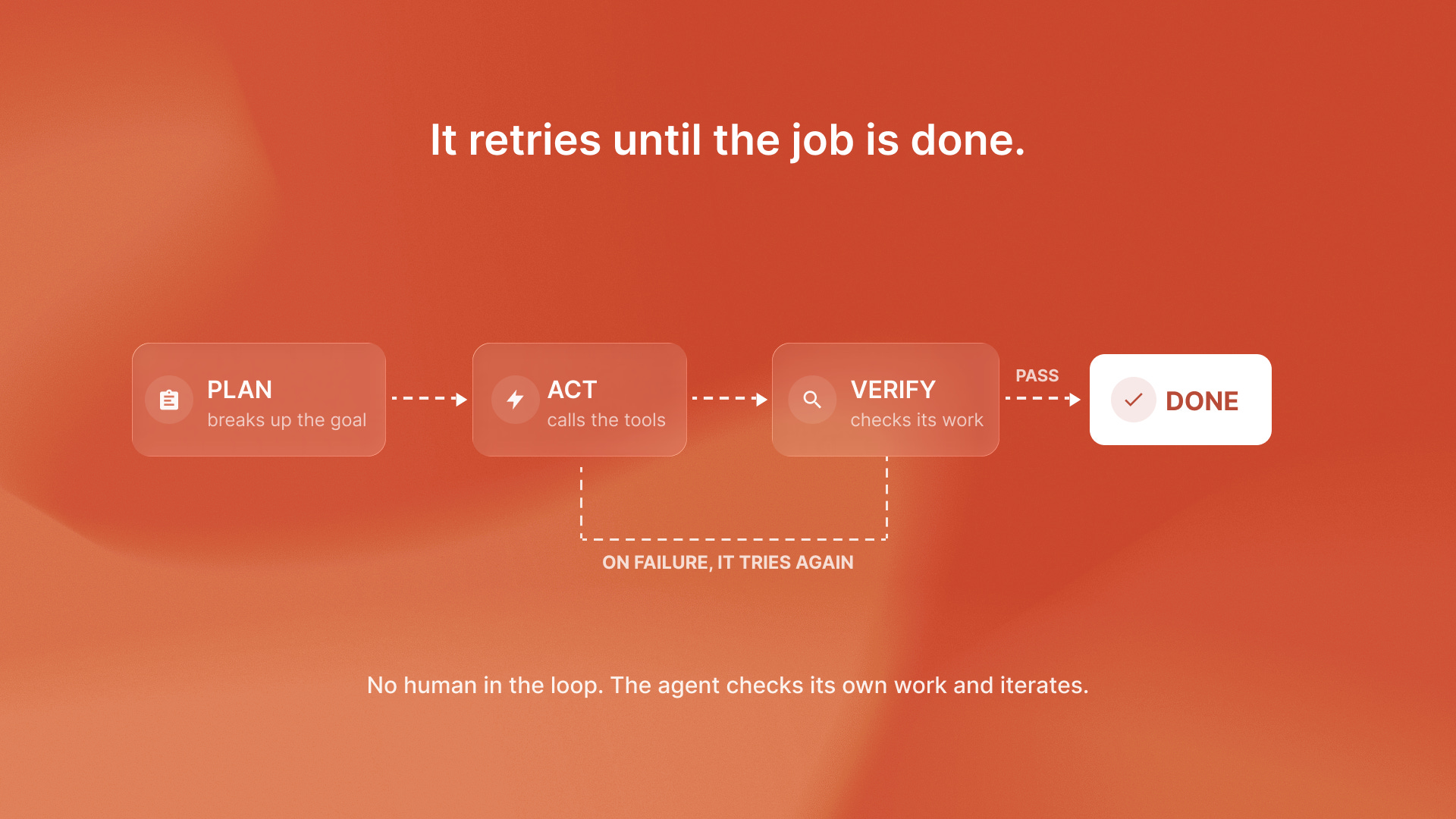
Self-correction: The capability to identify a failed sub-task and iterate on a new approach.
Defining the agentic AI system
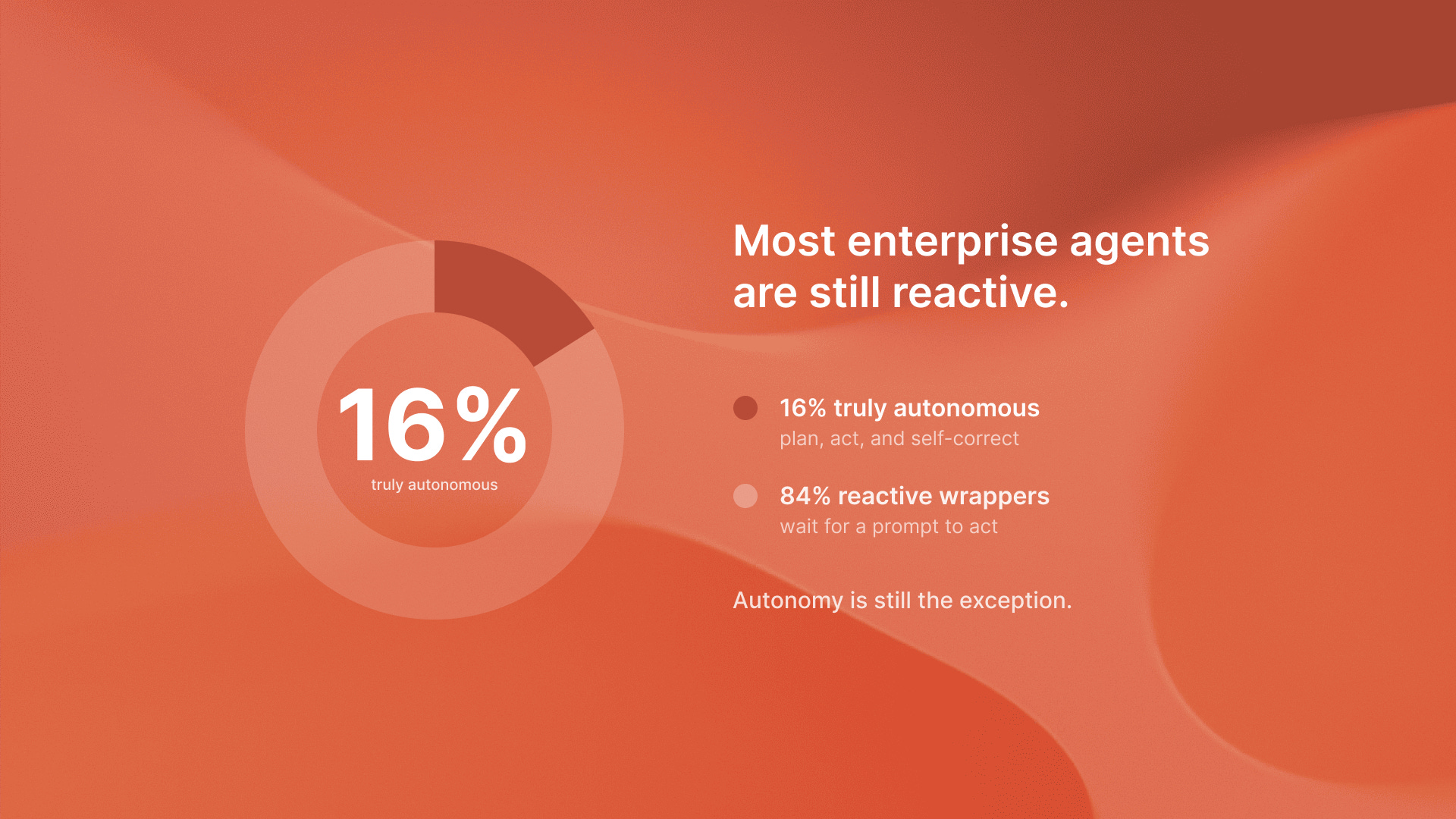
Agentic AI systems pursue goals independently through multi-step reasoning and API execution. Research suggests that only 16% of enterprise deployments are true autonomous agents. These agents can plan and self-correct.
As Dario Amodei, Anthropic’s CEO, noted in his analysis of AI’s path, value is shifting.
It is shifting to systems that can reason over complex data sets. An agent can research specific industry data and incorporate it into the workflow. This is infrastructure.
From demo to production
Building for production is where the wrapper startups fail. The real challenge is the orchestration. For example, autonomous testing through QA flow needs a system. It must handle a changing UI. It must understand the intent of a prompt. It must also create its own test cases. This level of AI workflow replacement separates toys from tools.
The focus must remain on state management and memory. Developers must handle complex state in AI to ensure the agent remembers what it did ten steps ago to make a smart decision now. If it loses context, it becomes a reactive chatbot again. Moving beyond the demo requires self-contained systems that own a specific business outcome from start to finish.
Solving these complex architectural problems also has financial benefits. Custom AI software and agentic projects are increasingly eligible for R&D tax credits, according to Cloudforces. By building proprietary infrastructure, you move from simple prompts to integrated systems that drive long-term value.
Operationalizing autonomy
Transitioning to agentic systems requires a systematic audit of your current tech stack. Our architectural audit helps identifies where human router bottlenecks are slowing down your operations.
Implementation steps
Audit current workflows for bottlenecks where a person is simply moving data between tools.
Map the state requirements for that workflow. Determine what information needs to be remembered across the entire process.
Build the orchestration layer first. Start with the logic that will manage the agent’s actions rather than the prompt.
System comparison
The bottom line
The goal is workflow replacement. If your AI isn’t taking actions while you sleep, it isn’t an agent. Infrastructure beats tools every time.
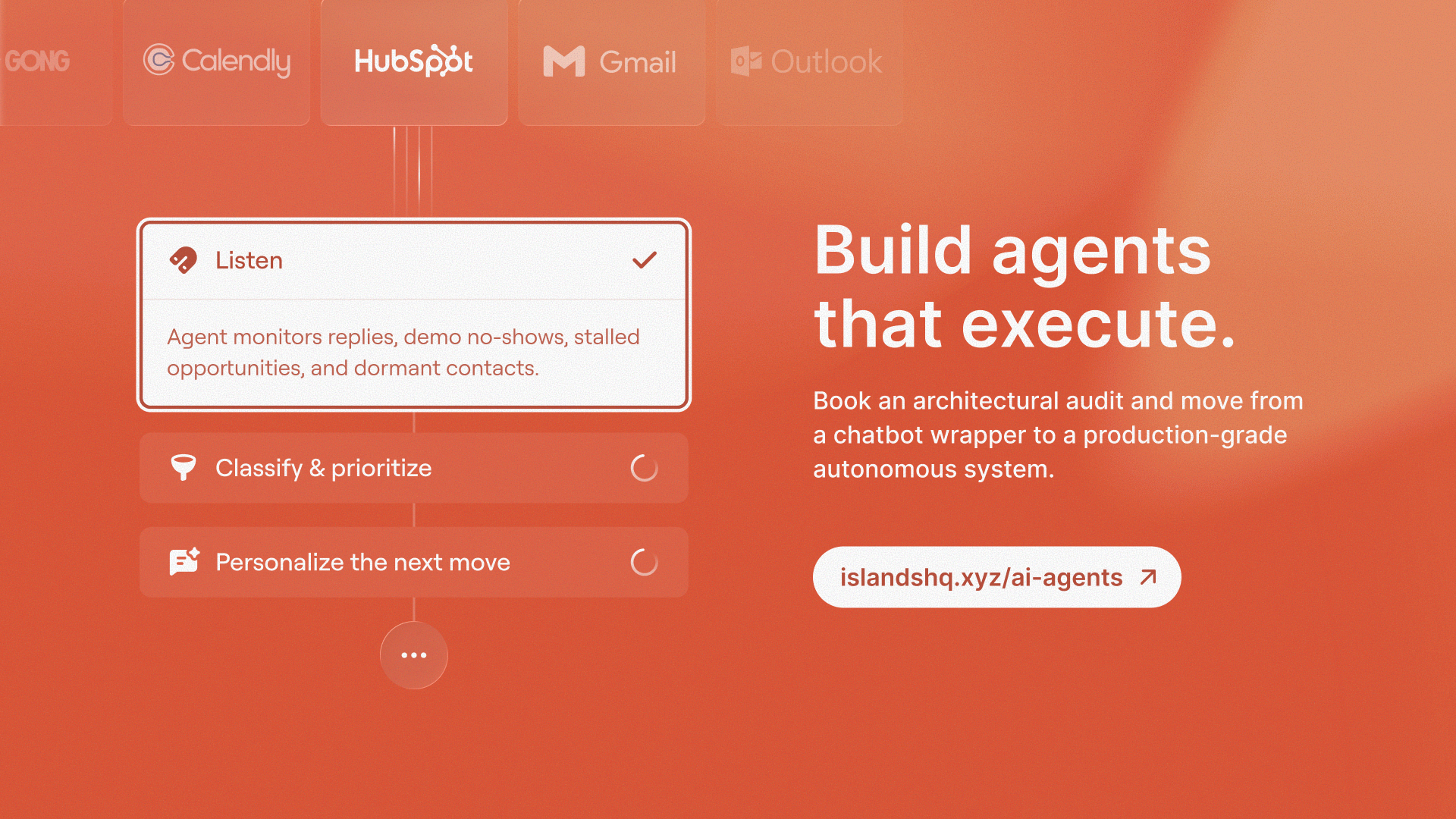
Is your current AI strategy focused on helping people work faster, or replacing the work entirely? Reach out today for an architectural audit to move from assistants to agents and book a call.