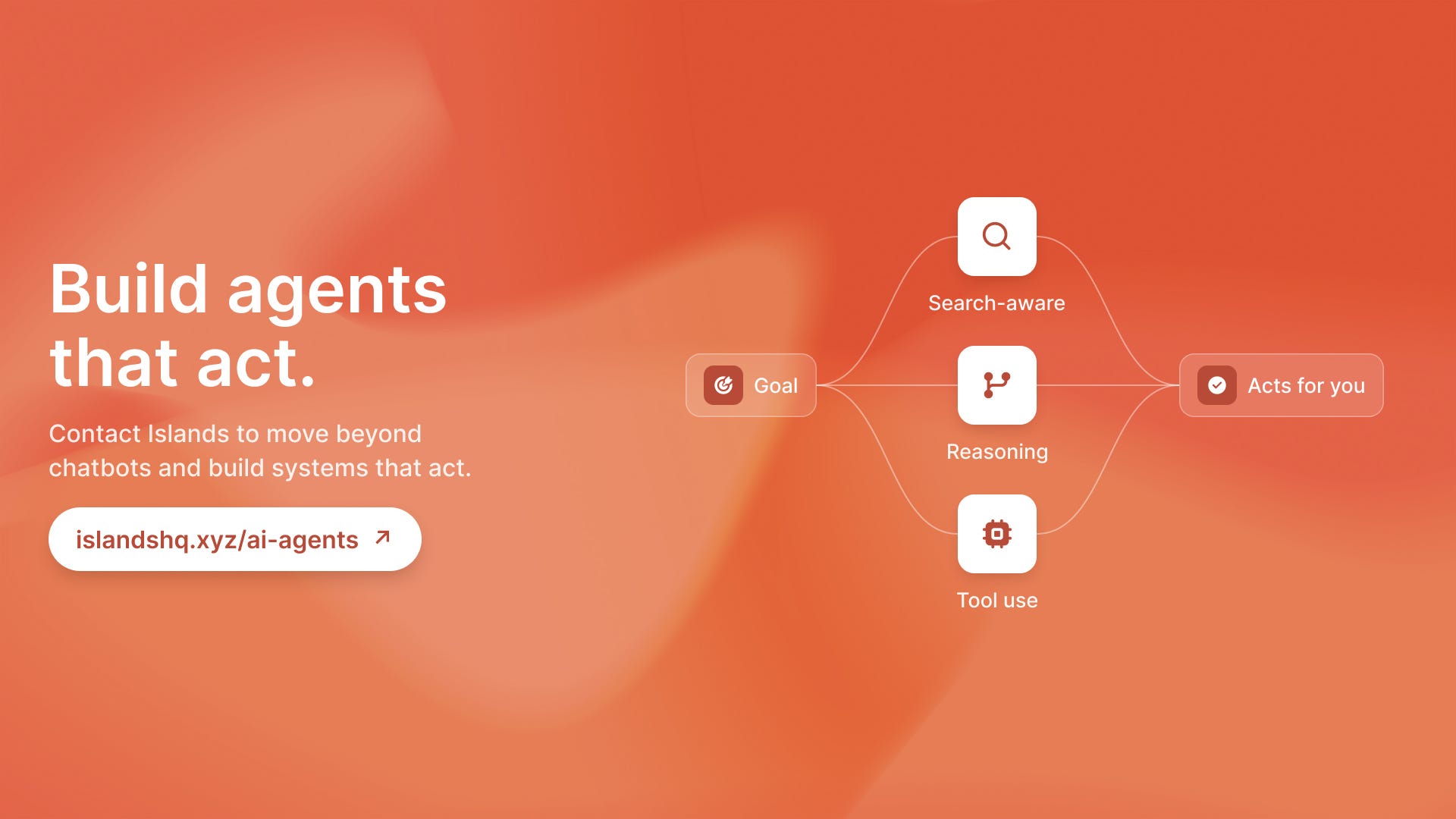

I was talking to a Series B founder last week who thought they had an AI strategy because they bought a few ChatGPT seats. They worked in the era of passive assistants, where a person had to give a prompt for each output. The industry has moved from passive chat to active execution. If you aren’t building agentic systems, you are already falling behind. A clear definition of agentic AI is needed to understand this shift. We are moving from helpful tools to systems that act independently.

Digital strategy now requires a shift toward autonomous systems. The architectural requirement of an agent is fundamentally different from a passive chatbot. You need a system that can find and understand outside data sources on its own. It should not rely only on static training data. However, current data shows that many enterprise AI deployments lack true autonomy. They often work as simple perception tools, not independent actors. Staying updated on recent agentic AI news is critical for technical leaders trying to understand these rapid changes.
Establishing an agentic AI definition: beyond the chatbot
Passive assistants are tools that help a human perform a task better. Active agents are systems that perform the task themselves. The role of autonomy in execution defines this next era. An agent plans the steps, calls the necessary APIs, and verifies the outcome. This represents the difference between a productivity boost and a workflow replacement. Many engineering teams are now experimenting with agentic frameworks to bridge the gap between simple automation and complex reasoning.
In my experience, many startups get stuck building assistants because they are easier to prototype. However, these systems fail to drive the unit economic shifts required for long-term ROI. To scale, build for autonomy from day one. Use autonomous AI systems that handle edge cases without constant oversight.
The three pillars of agentic architecture
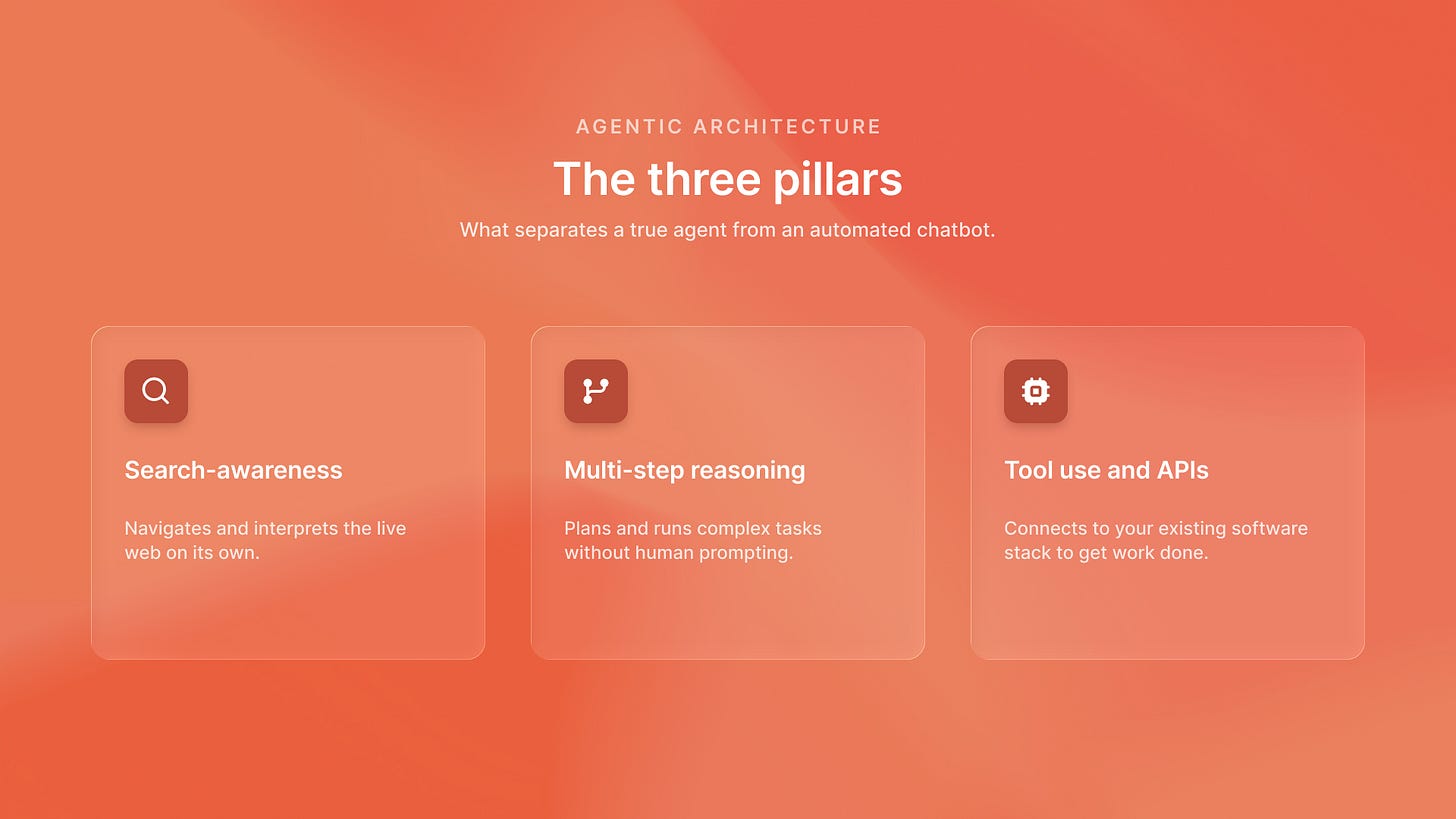
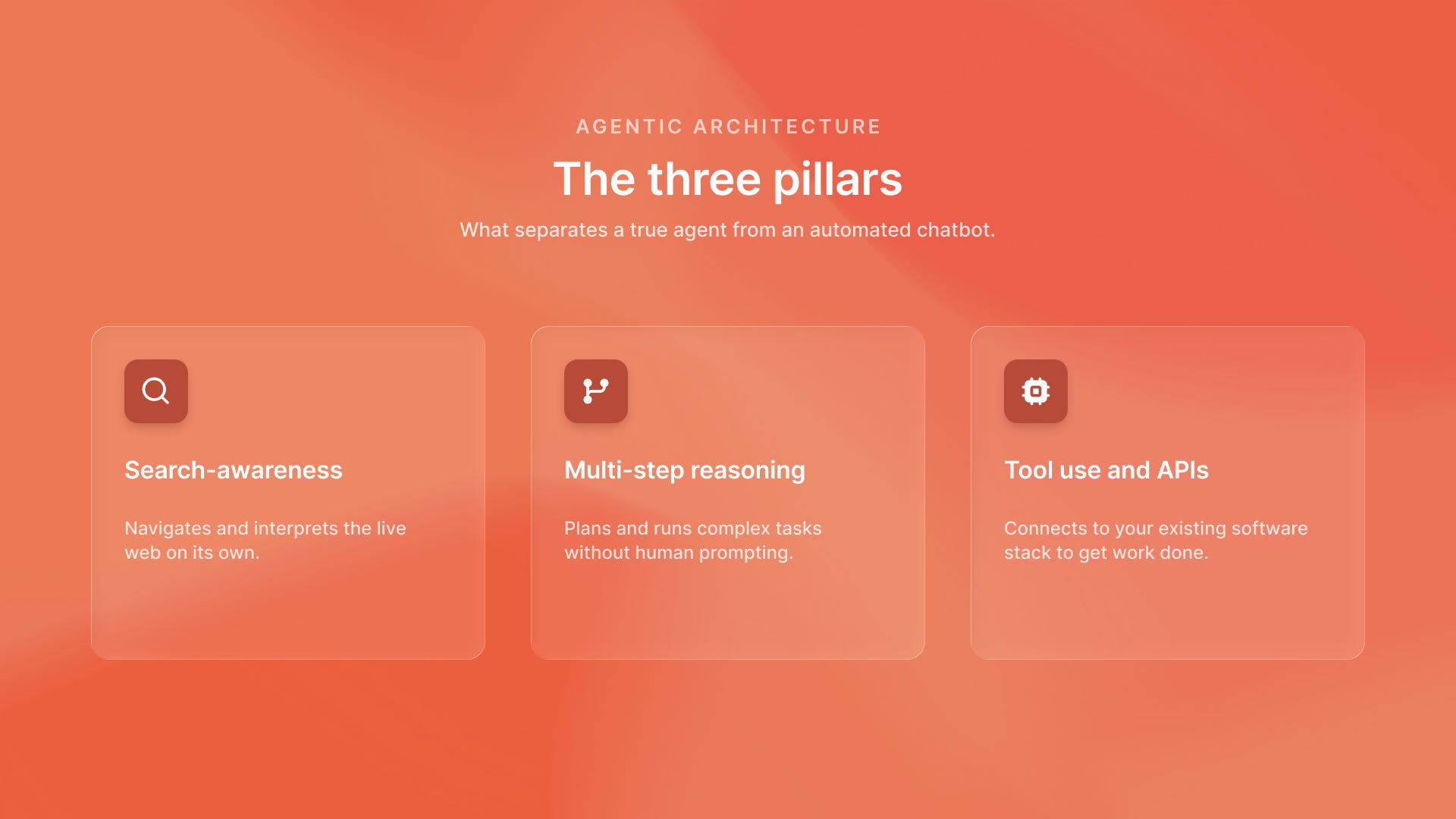
To build a production-ready agent, technical leaders must focus on three core pillars of infrastructure:
Search-awareness: The ability for the agent to autonomously browse and interpret real-time data from the web.
Multi-step reasoning: A framework that allows the system to plan and execute complex processes without human intervention.
Tool use and API integration: An orchestration layer that enables the agent to interact with other software systems.
Modern digital strategy requires agents that can navigate generative search. This means your agents must be optimized for discovery in an AI-driven market. According to DesignRevision, this requires a shift toward autonomous, search-aware systems that move beyond traditional content frameworks.
Why modern frameworks matter
Building these systems from scratch is a massive undertaking. Technical teams are moving toward specialized frameworks that handle state management and memory. Using a robust AI agent architecture allows you to focus on the business logic rather than the underlying plumbing.
Alfred North Whitehead described this dynamic in 1911, arguing against what he called the erroneous truism that we should always think about what we are doing. Civilisation advances, he wrote, by:
“...extending the number of important operations which we can perform without thinking about them.”
Alfred North Whitehead - An Introduction to Mathematics, 1911
Every layer a team stops writing is a layer it stops debugging. Nobody building a web application today implements TCP. State management and agent memory are moving in the same direction. Teams that reach production first will treat that plumbing as settled. They will not use it to show depth. This approach moves a project from a demo to production in weeks rather than months. Recent agentic AI news indicates that speed of deployment is becoming a primary competitive advantage. For example, the openclaw AI agent framework provides a blueprint for developers seeking to implement these capabilities quickly.
We see this methodology in production environments where autonomous testing generation allows systems to infer requirements from design artifacts. QA flow is a prime example of building systems that learn and adapt to changing conditions without human intervention.
The roadmap to production-ready autonomy
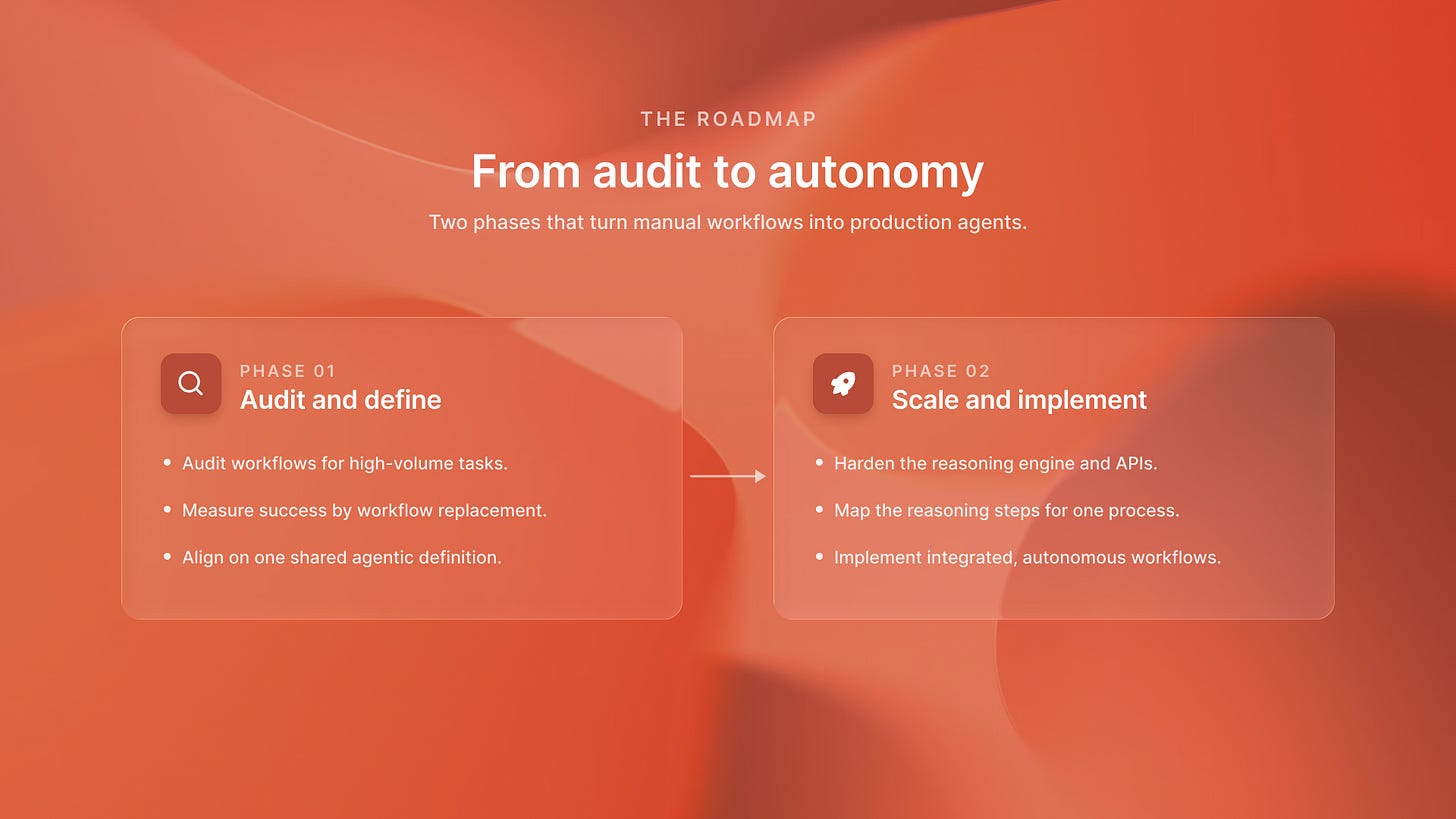
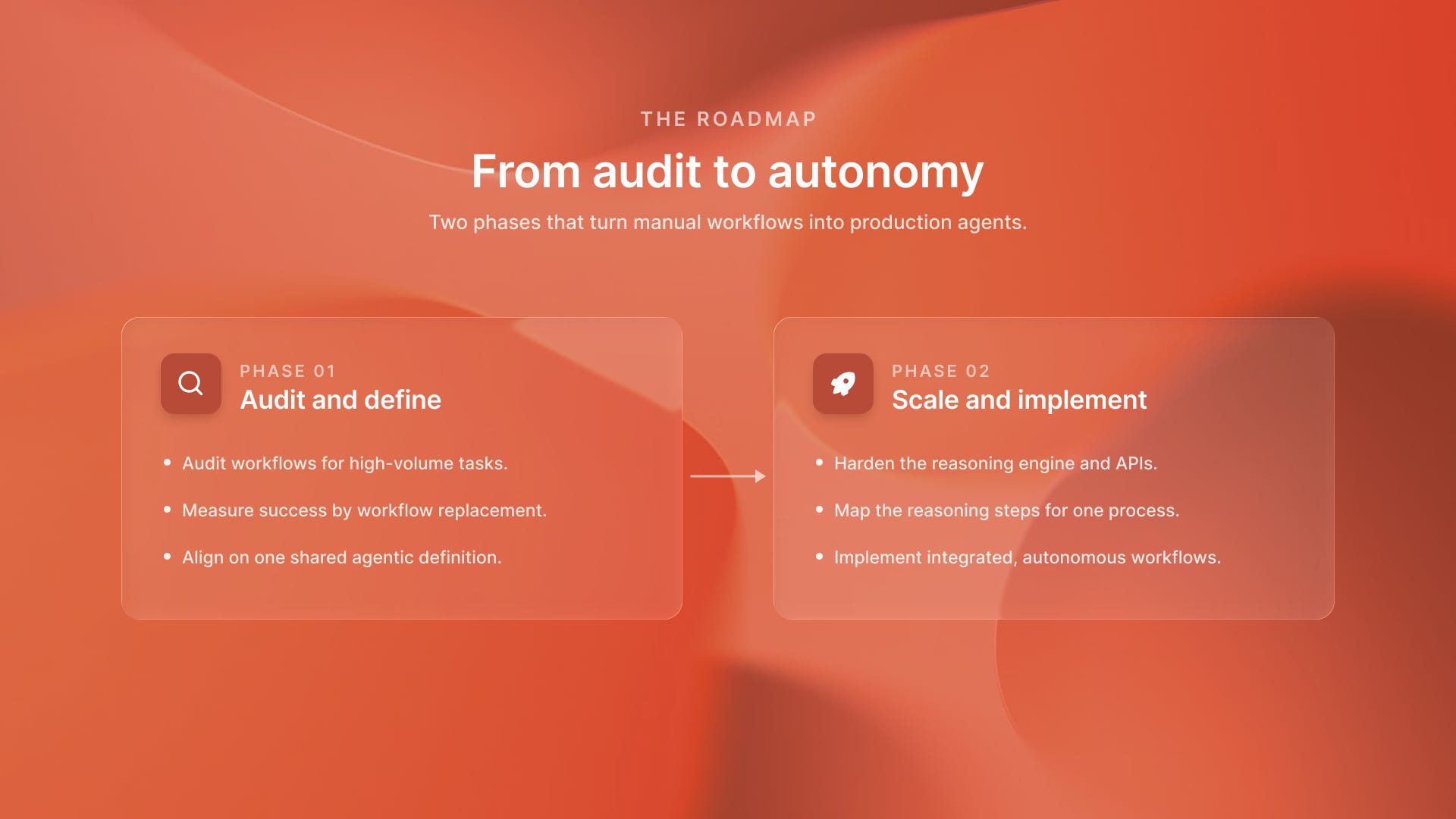
Auditing workflows: Find the multi-step processes in your business that slow down due to human approval delays.
Defining success metrics: Establish clear KPIs for the agent, including cost-per-execution and accuracy rates. By refining your agentic AI definition for internal teams, you help everyone agree on what makes a successful deployment.
Scaling from demo to production: Use generative engine optimization. This helps your agents and content stay visible as AI-referred traffic grows.
The bottom line
Building for autonomy is the only way to secure long-term ROI in a search-aware digital economy. The shift from assistants to agents is a fundamental architectural transition.
Build. Run. Maintain.
Are you ready to build for autonomy? Reach out if you want to see how an agentic roadmap can transform your business architecture.