


I recently saw a Series B founder struggle to justify a huge AI spend. It only made their chatbot a little faster. They were caught in the assistant trap. They assumed that paying for seats on a productivity tool would transform their unit economics. It never does. In my experience, adding LLMs to legacy processes makes a more expensive typewriter. It does not create an AI-native company.
Melvin Conway explained why in 1968, in the paper that gave us Conway’s Law. His less-quoted observation is the one that applies here:
“...organizing a design team means that certain design decisions have already been made.”
Melvin E. Conway — “How Do Committees Invent?”, Datamation, April 1968
A firm that sells hours has already decided its output will be shaped like hours. Every deliverable will have a human at the end of it, because that is what the billing model requires and what the org chart is arranged to produce. Adding a language model to that structure does not change the structure. It makes each hour marginally faster, which is why the spend never reaches the unit economics. An AI-native studio is not an agency with better tools. It is an organisation arranged so that autonomous output is the natural thing for it to make.
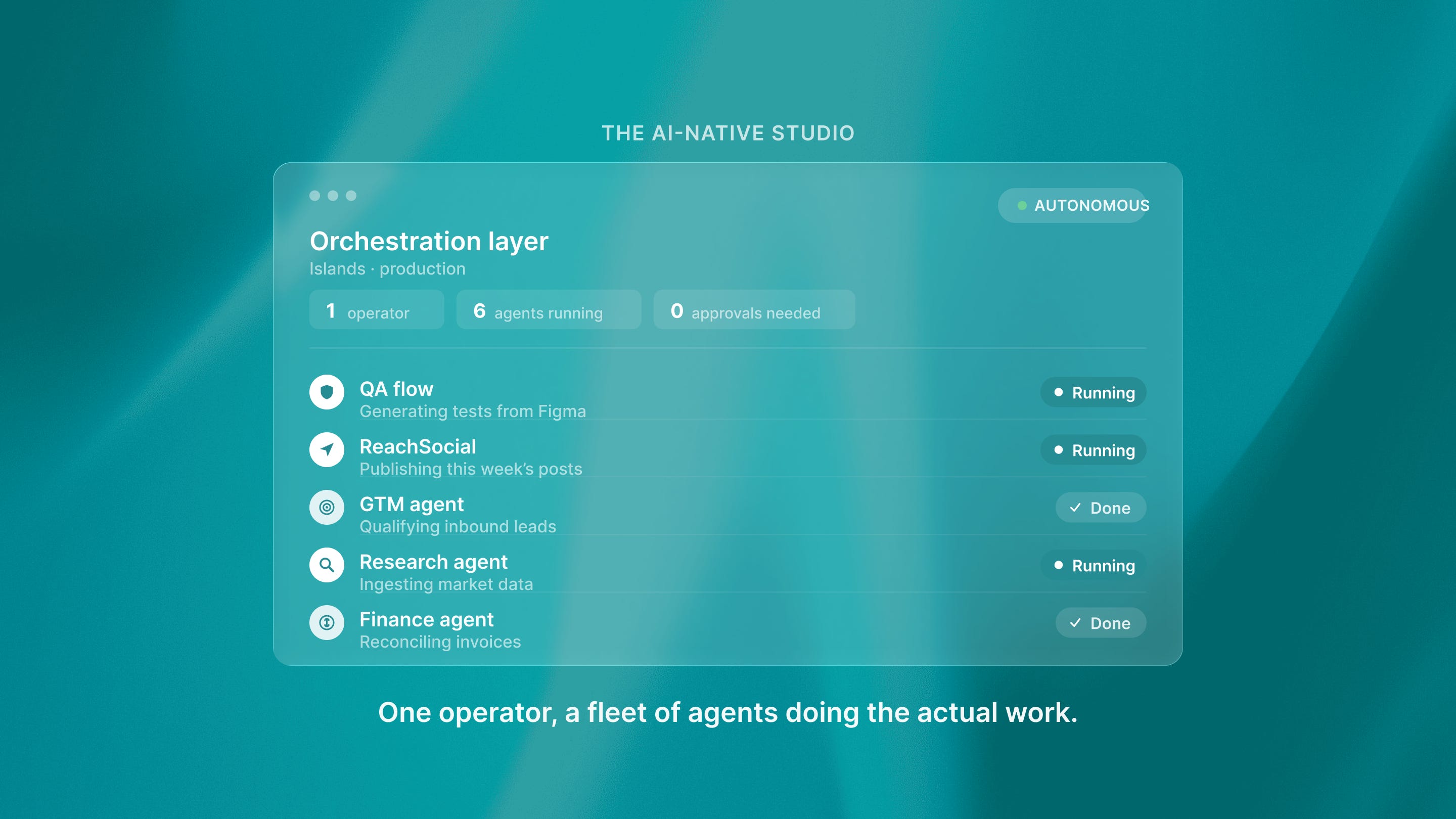
In the current market, an AI-native studio represents a structural evolution. Autonomous agents function as the primary plumbing of the business. Traditional agencies sell hours and deliverables. A market analysis of AI service providers (Islands) shows most focus on basic prompts. They often skip production-grade infrastructure. An AI-native studio builds and deploys systems that replace entire workflows. It is the difference between hiring a writer and building an autonomous distribution engine. It can research, draft, and publish content without human help.
Infrastructure vs. integration
Most startups approach AI as an integration problem. They add a prompt window to their UI and call it a feature. This approach offers a linear solution to an exponential problem. An AI-native studio treats AI as the core infrastructure. The system is designed around the capabilities of agentic models from the ground up. This transition often uses an AI venture studio model. It provides a clear framework for building AI-first companies (Padiso).
An AI-native product studio is a specialized team that uses autonomous agents to help build and scale companies. It focuses on creating systems where the machine handles the work. The machine manages state, makes decisions, and executes complex tasks. It acts as the primary worker rather than a simple assistant.
I have observed that true scale only happens when the plumbing is autonomous. If you are still prompting, you are still manual.
The autonomous workflow core
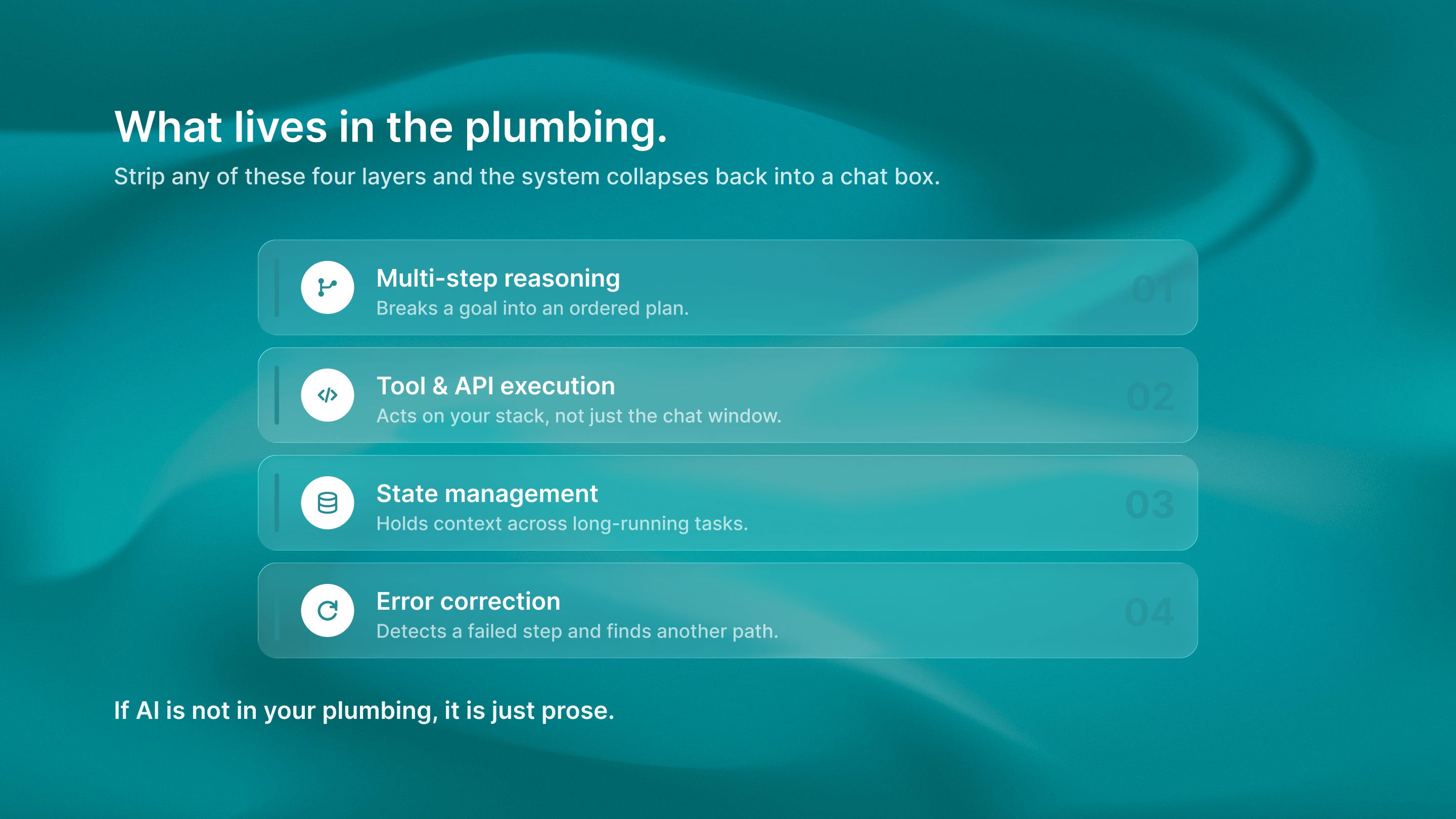
The architecture of these systems reflects a clear break from old methods. In a traditional SaaS model, the software is a tool for a human. In an AI-native model, the software performs the labor. This requires moving away from thin wrappers. It moves us toward agentic AI systems with multi-step reasoning and independent API execution. Implementing true autonomous workflows ensures that these systems can operate without constant human oversight.
The architectural divide: assistants vs. agents
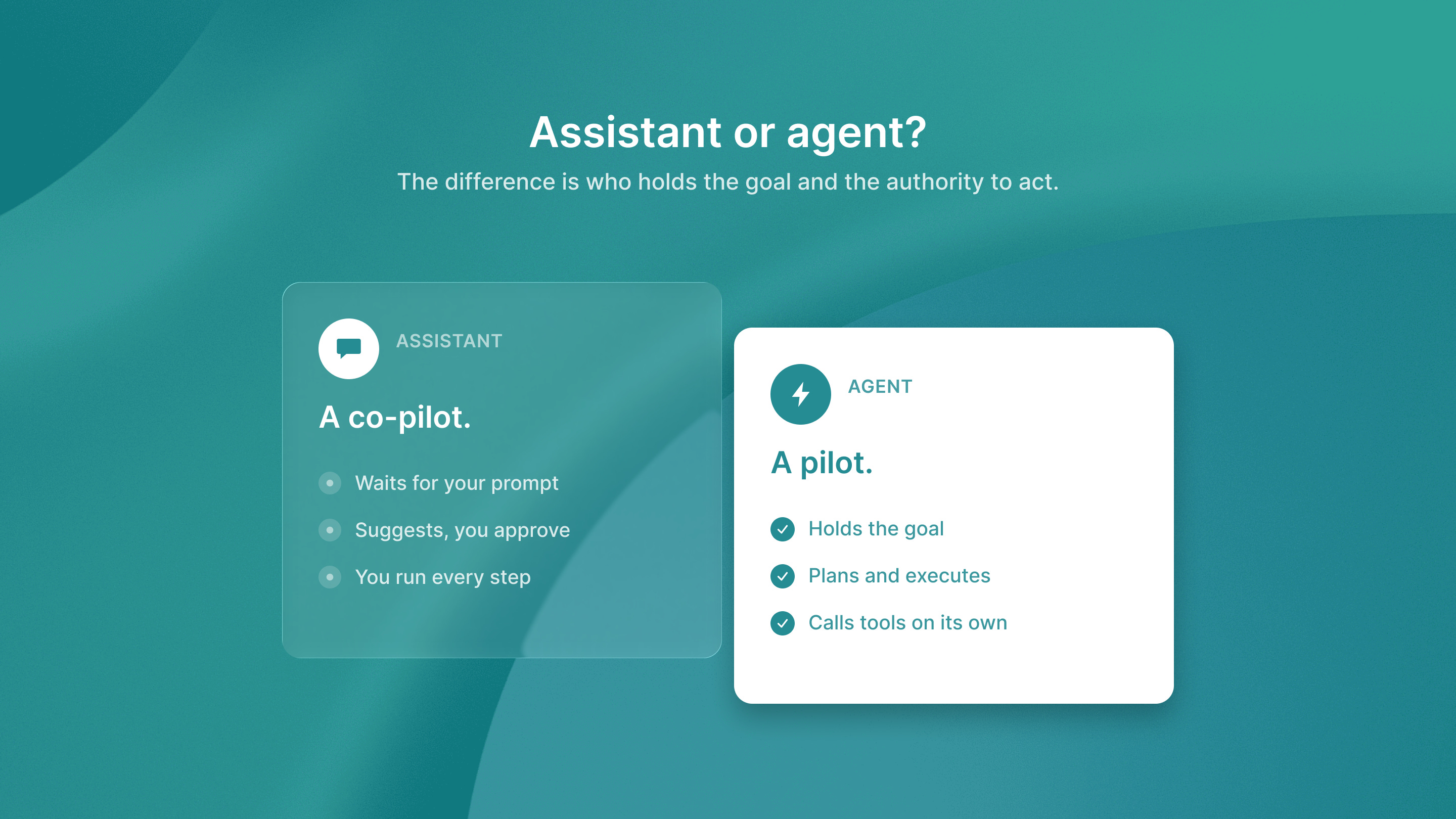
Most technical leaders are currently paying an oversight tax. They deploy assistants that need a human to check each output, which often takes longer than manual work. To break this cycle, you must understand the technical requirements of true autonomy and AI agent architecture:
State management: The agent must maintain context across long-running tasks without losing the objective.
Tool orchestration: The system must independently decide which API to call and how to handle the data it receives.
Feedback loops: Autonomous agents need built-in evaluation layers to self-correct when an output drifts from the goal.
Planning layers: The architecture must let the agent split a high-level goal into tactical steps before execution starts.
Context persistence: The ability to store and retrieve historical interaction data to inform future reasoning cycles.
If your system lacks these pillars, you are building a chat interface. This explains why only 16% of enterprise AI agents (Islands) are actually autonomous today. The rest are just assistants waiting for instructions.
Lessons from the portfolio: QA and social distribution
This architectural rigor pays off in specialized ecosystems. For example, autonomous test generation (QA flow) reads design artifacts to understand the user journey. It then generates the testing infrastructure on its own. It removes the human bottleneck from the QA cycle.
Similarly, advanced distribution systems like ReachSocial work as an autonomous layer. They monitor market trends, match them to a brand voice, and run the publishing schedule. These are systems that people manage at the objective level. This shift is why many founders skip seed rounds (Islands). They work directly with studios that offer pre-built infrastructure.
The AI-native roadmap
CTOs and VPs of Engineering at Series B+ startups should improve their core systems, not build more assistants. In my experience, this is the only way to avoid the headcount trap. Here is how to begin:
Audit existing plumbing: Identify which parts of your stack are human-dependent for routine data movement or decision-making.
Identify autonomous workflow candidates: Look for high-frequency, high-logic tasks that can be mapped to an agentic loop rather than a static script.
Deploy the orchestration layer: Move away from direct API calls and build a middle layer that manages agent state and tool access.
The shift from linear solutions to exponential problems is necessary. If AI is not in your plumbing, it is just prose. You cannot scale a Series B company by adding more humans to watch more chatbots. You need systems that act.
The bottom line
Technical leadership must build true agentic infrastructure. If your AI cannot interact with your stack independently, you are managing a headcount trap. Rewire the plumbing to secure long-term ROI.
Build. Run. Maintain.
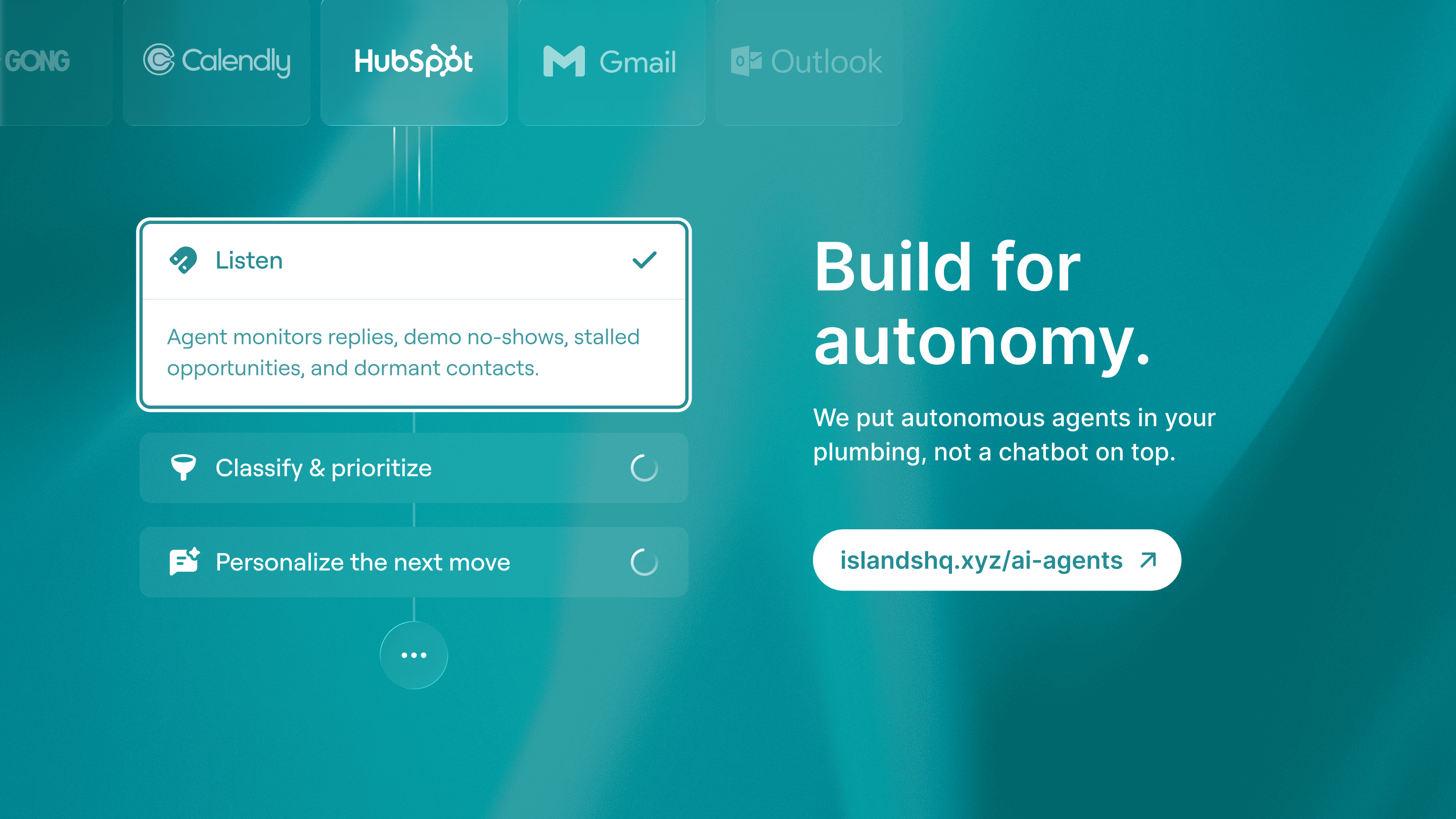
How are you distinguishing between assistants and agents in your current roadmap? Book a call with Islands to start building your autonomous infrastructure today.