
I have been watching B2B SaaS founders and CMOs struggle with a specific, frustrating pattern. They know they need lots of content to compete in an AI-driven search market. But when they use a generic AI tool, the output reads like a high school essay. Even worse, if they are in a regulated space like fintech, their compliance team kills the post before it ever hits the CMS. The technology is not the problem. The architecture is.
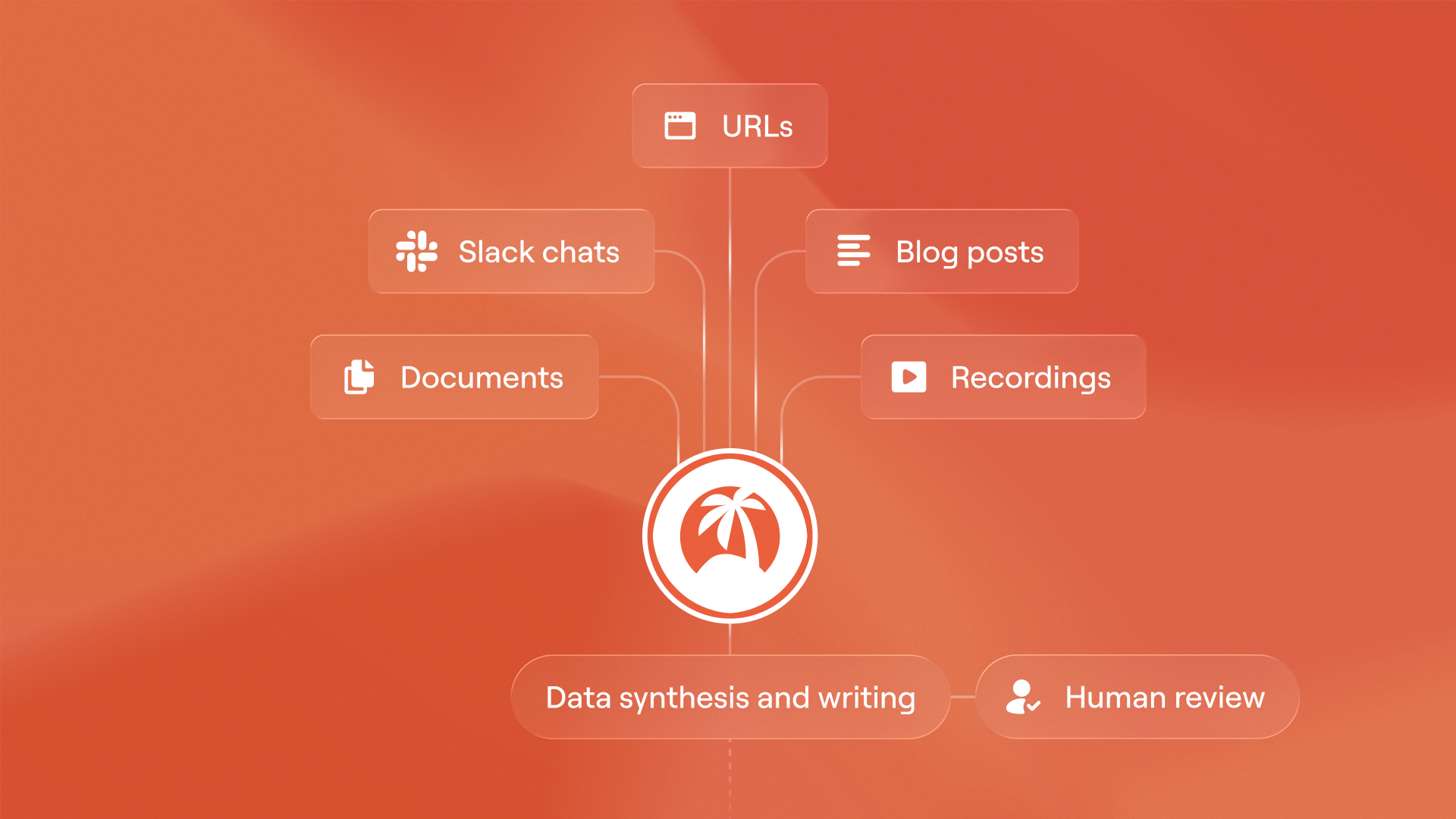
At Islands, we have spent the last year building an alternative to the traditional $10,000 per month agency model. Most agencies are essentially black boxes that charge for human labor while secretly using basic prompts. We flipped that. We use autonomous content agents to handle data synthesis and writing. We keep humans in the loop when judgment and legal safety are needed.
Key results:
$7,500 monthly savings - Replaced $10k agency retainers with a $2,500 pipeline
3 pieces per week - Unlimited content volume across multiple channels
3-day deployment - First high-fidelity piece live within 72 hours of tool integration
100% compliance rate - Zero-fail workflow for regulated B2B SaaS and fintech
The agency gap and the hybrid AI content workflow
Most founders are stuck between two extremes. On one side, you have the traditional marketing agency. They are slow, expensive, and often lack the technical depth to understand your product. On the other side, you have the DIY AI approach, which produces generic noise that degrades your brand. This is the agency gap.
We solved this by building a hybrid AI content workflow that costs roughly $2,500 a month. Instead of paying for an account manager’s time, you pay for an orchestration layer. It connects Gemini and Claude directly to your internal data. This is a system that understands your voice because it has read your past blogs, your internal docs, and your meeting transcripts.
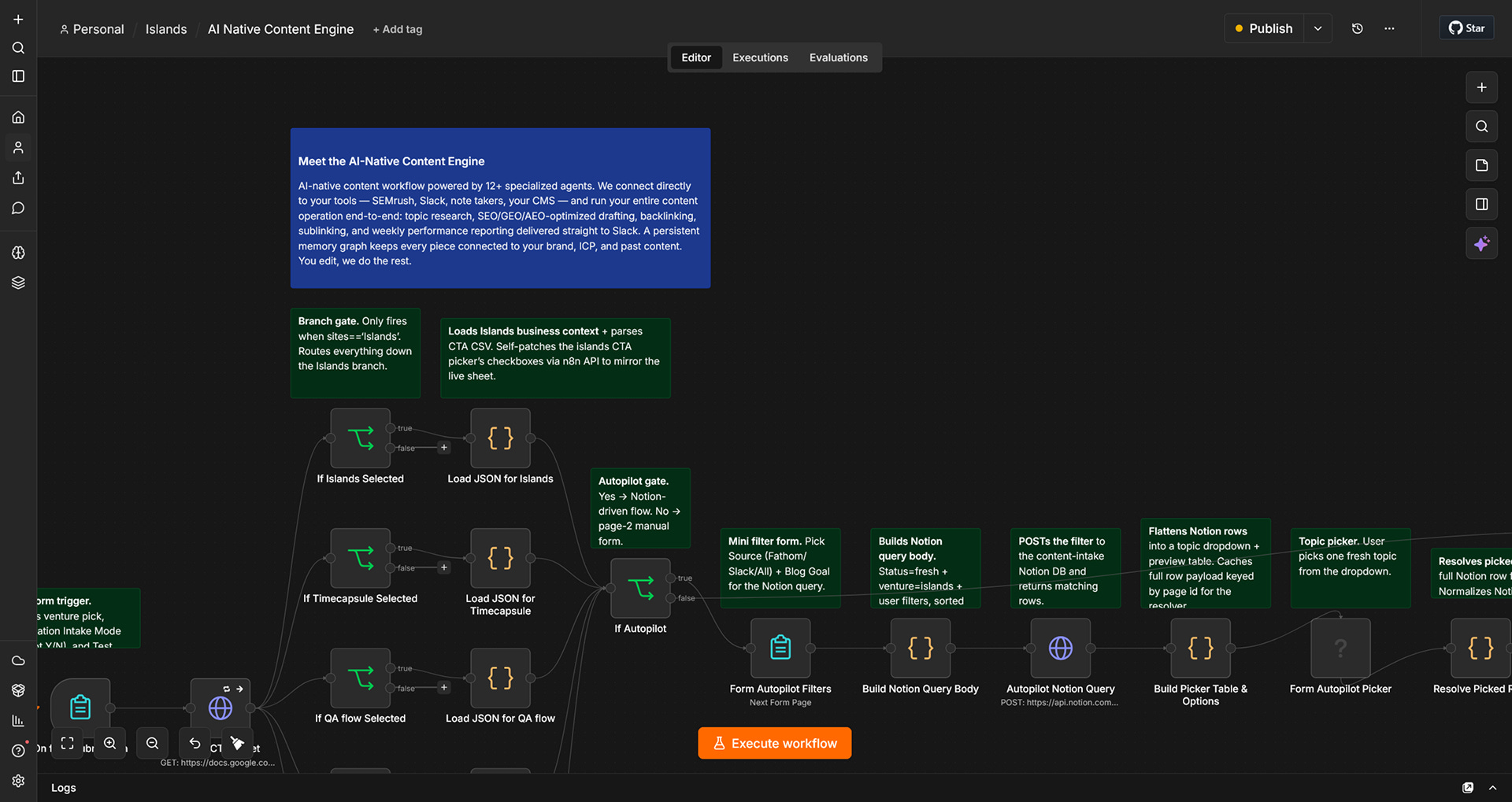
I have found that the most effective way to scale is to treat content as an engineering problem. You need a system that can handle the scale of three pieces per week without the quality dropping as volume increases. For teams that want to scale, I suggest reading about how multi-agent content systems ship. It explains the state management logic in these pipelines. Our B2B SaaS content strategy focuses on this technical foundation rather than just creative prompts.
Technical implementation through RAG
Data integration
When we onboard a new fintech prospect, we do not start with a blank page. We integrate our agents with their existing tech stack. We pull from Fathom recordings to capture the way the founder actually speaks. We index their Intercom knowledge base and Notion pages. This is the difference between generic prompting and Retrieval-Augmented Generation (RAG).
Specialized agents
By referencing the client’s own data, the agents produce content that is personalized from day one. The agents are not guessing what your product does; they are citing your actual documentation. This architectural shift is critical. If you build a monolithic AI system, you repeat the same mistakes of 2010-era software architecture. You want task-specialized agents that handle specific parts of the writing process, from research to first draft to formatting.
The human-in-the-loop AI safety net
In regulated industries, a hallucination is not just a mistake. It is a legal liability. This is where the human-in-the-loop AI model becomes non-negotiable. Our workflow includes clear validation checkpoints where a team member reviews the agent’s work for nuance and accuracy.
We also provide the client’s compliance team with a separate approval status in the workflow. This ensures that nothing goes live on Webflow or LinkedIn without a final green light from the people who hold the licenses. This level of oversight helps us maintain a 94% accuracy rate. This is essential when using autonomous AI agents for news or high-stakes financial content. This compliance-ready AI content protects the brand while maintaining velocity.
This hybrid model allows for a speed that traditional agencies cannot match. Because the agents do most of the research and drafting, the human reviewer can focus on strategy and compliance. It is a more efficient use of human capital. It removes the financial penalty of slow ramp-ups. These ramp-ups often happen when you brief a freelance marketing specialist.
Winning in the age of AI Search and GEO
Content density is the new requirement for organic growth. Traditional SEO is dying, and it is being replaced by AI Search and GEO. This requires content that is optimized for AI citation through semantic depth rather than keyword stuffing. We have seen AI-referred traffic grow significantly for teams that lean into this shift.
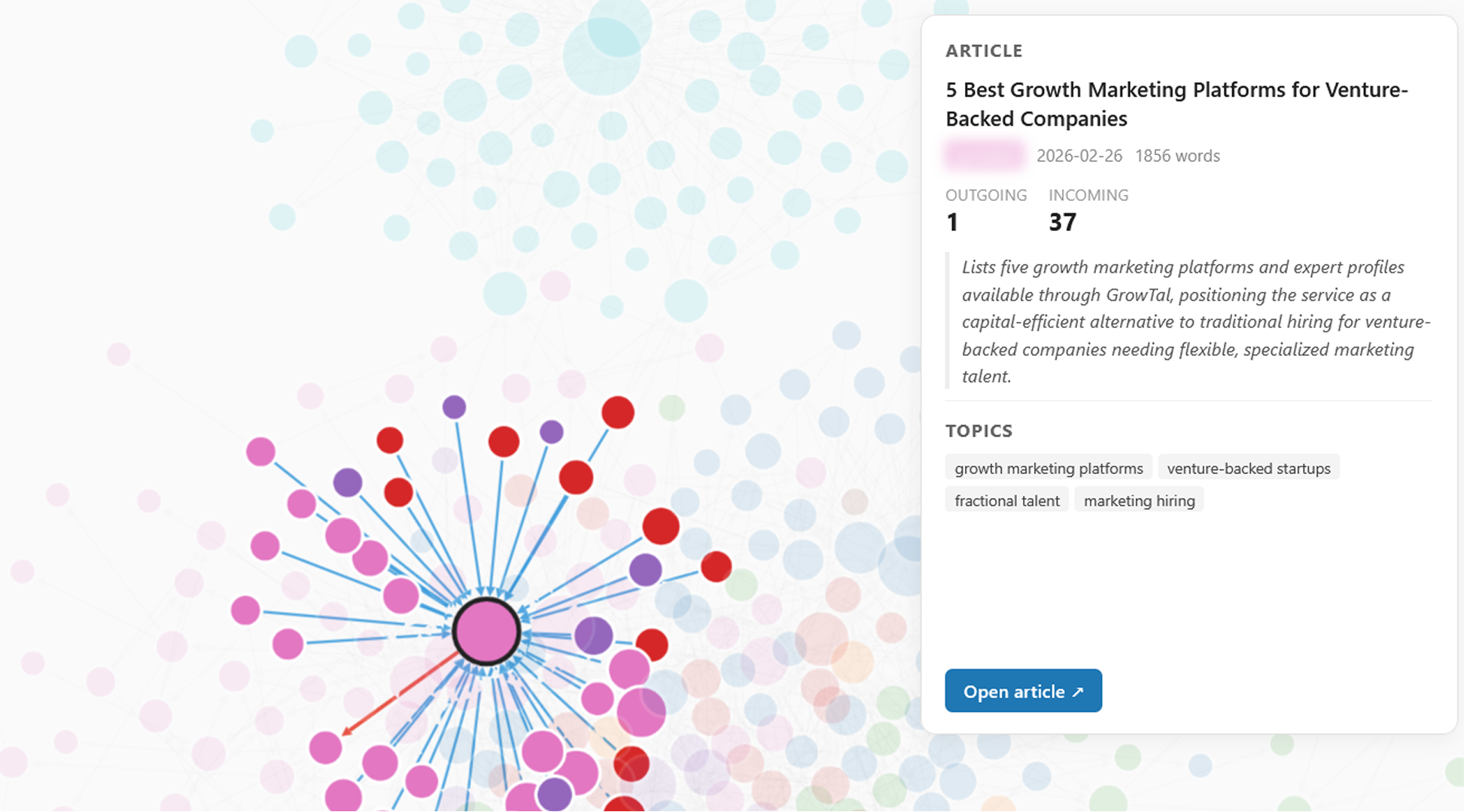
To support this, we plug our clients into a proprietary backlink network. Agents across our portfolio companies, including Islands and GrowTal, cite each other’s content when it is contextually relevant. This builds domain authority over time. It also helps LLMs see your content when they answer user questions. You can explore more about best generative engine optimization practices to see how this differs from the old playbook.
Auditing your content workflow
The reality is that the $10,000 per month agency is a legacy model. If you are a B2B SaaS founder, you need a pipeline that moves at the speed of your code deploys. The hybrid model is not a compromise. It is the only way to achieve production-grade volume without sacrificing the technical accuracy your audience demands.
Here is how to think about your next 90 days:
Audit your sources - Stop prompting from scratch and start indexing your Fathom logs and Notion docs
Define your loops - Identify exactly where a human must sit to ensure compliance and brand voice
Scale the distribution - Move beyond a single blog to a multi-channel presence including LinkedIn and Substack
We back this model with a 90-day guarantee on search traffic and subscriber growth because the system is predictable. If you want to see how this orchestration layer could work for your specific product, let’s talk about a content workflow audit. Reach out to the team at Islands to get started.
I’ve seen plenty of founders wait for the perfect AI tool to appear on Product Hunt. The winners aren’t waiting for a tool; they are building the system.
Ready to scale your output without losing control? Build your custom content pipeline with AI agents today.