


I have been talking to founders lately who think scaling a marketplace to 1M listings needs a 50-person engineering team. They are wrong. Most traditional businesses get stuck in an architectural trap where they throw headcount at data ingestion problems. They hire legions of data entry specialists or junior engineers to build manual scrapers that break every Tuesday. In my experience, linear headcount growth with non-linear data growth leads to technical debt. This is why AI marketplace automation has become the primary differentiator for high-growth platforms.
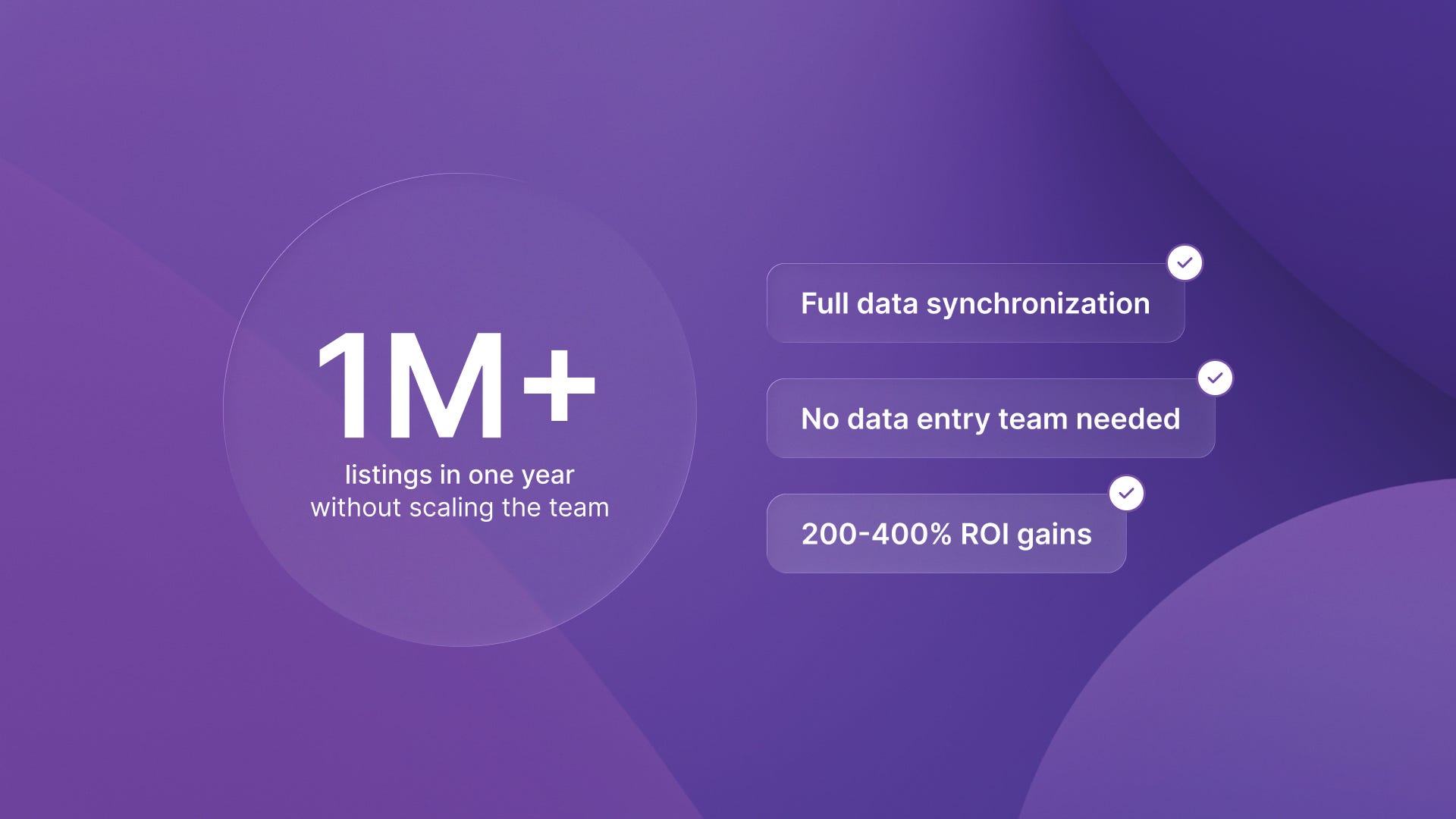
At Islands, we approach this differently. We do not build assistants that help people do work. Instead, we build autonomous layers that replace the work entirely. When we launched DomainEasy, the goal was to create a high-scale alternative to legacy systems. It needed to handle massive volume without the massive overhead. By using a proprietary AI layer architecture, we scaled to 1M+ listings in a single year. This was not a productivity gain. It was a business model transformation.
The architecture of the AI layer
The fundamental shift here is moving from manual engineering to autonomous synchronization. Most platforms are built as a series of features. If you want to add a listing, you build a form. If you want to sync a marketplace, you build an API connector. This is 2010-era thinking. As we explored in Islands 2026, monolithic systems replicate the failures of the past. Production systems are where most teams fail because they lack the orchestration layer to handle scale.
Instead, an AI layer acts as a horizontal foundation. It handles the ingestion, classification, and synchronization of data across multiple endpoints simultaneously. For DomainEasy, this meant the system could ingest domain data from fragmented sources. It could then sync that data across marketplaces without a human ever touching a spreadsheet. This architectural choice is why choosing assistant architecture caps ROI while autonomous agents enable 200-400% gains. We saw the same pattern when building systems for Amazon resellers where data-backed buying decisions replaced manual forecasting.
Three steps to building an autonomous marketplace
I have identified a framework for moving from manual operations to an autonomous system that scales. This is the blueprint we use at the Islands venture studio. It helps us scale digital marketplaces without breaking the bank
Define the ingestion workflow. Find each point where data enters your system.
Map the logic you use to sort it.Build the orchestration layer: Use tools to manage state and logic across agents so they do not conflict.
Implement autonomous synchronization: Allow the system to push updates to external marketplaces based on internal triggers without manual approval.
Automate metadata: Use generative tools to optimize each listing for search visibility. This approach is like the GEO strategies we use for high-growth brands.
This framework allows a small team to manage assets that would normally require an entire department. We have seen similar results in our other ventures. For instance, ReachSocial 2026 shows how integrated workflows eliminate operational overhead in outbound messaging. Integrated tools that eliminate copy-paste friction enable consistency better than fragmented tool combinations.
The real economics of automation
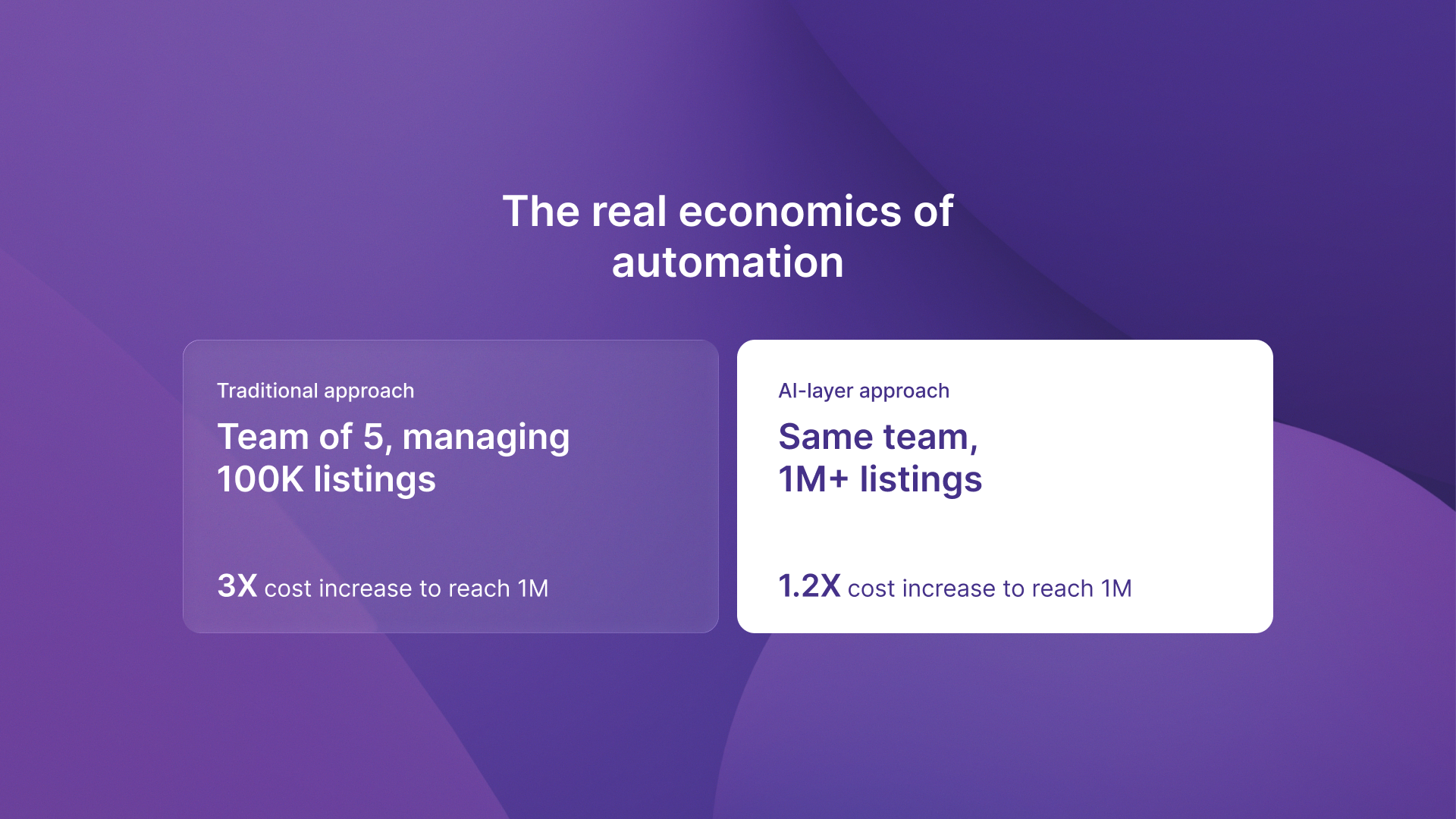
Consider the difference between a traditional marketplace and one powered by an AI layer. A traditional firm might pay $15,000 a month for a team of five to manage 100,000 listings. As they scale to 1M listings, those costs often triple. The AI layer approach allows you to hit that 1M milestone with the same original team. The cost of compute is tiny compared to the cost of human management. According to DN Journal 2024, DomainEasy launched as a platform. It offers a new option for high-volume automated domain management.
This speed to market is a primary competitive advantage. While your competitors are still recruiting and onboarding, an autonomous system is already live and indexing. DomainNameWire 2024 noted that the platform helps users build their domain business through automated sales tools. We apply this same logic to small business growth where AI tools replace manual operations to protect margins. Even in hiring, the sequence of growth must prioritize operational efficiency before adding headcount.
The strategic insight for 2026
The shift from building features to building autonomous layers is the most important transition for CTOs this year. If you are still building human-in-the-loop tools, you are building a ceiling for your own growth. The window for capturing high-revenue traditional industries with this speed is closing. Competitors who adopt an autonomous architecture will simply move faster than you can hire. Demos are easy. Production systems are where the winners are decided.
I recommend auditing your current data ingestion workflows. If you find a human is the primary bridge between two systems, you have found your first opportunity for an AI layer. You must also ensure your tracking is precise. As we noted at Timecapsule, low automation accuracy often costs more than it saves. Choose your architecture accordingly. If you want to see how we use this in other areas, check out our work in technical docs and bug detection.
See how QA flow 2026 handles latency and accuracy at scale.
Auditing your workflow
Before you scale, you must identify the bottlenecks. Look for repetitive tasks that require manual data entry or verification.
Choosing the right tools
Select an orchestration layer that allows for autonomous synchronization across all your marketplace endpoints.
Ready to move beyond manual scaling? Explore how Islands builds autonomous systems to help your marketplace reach its next million listings today.