


A Series B founder recently shared that his senior engineers spend 20% of their month cleaning data for client reports. This architectural trap stems from having data without autonomy. When skilled, expensive employees get stuck doing manual synthesis and formatting, the business wastes time. It also reduces the margins needed to scale.
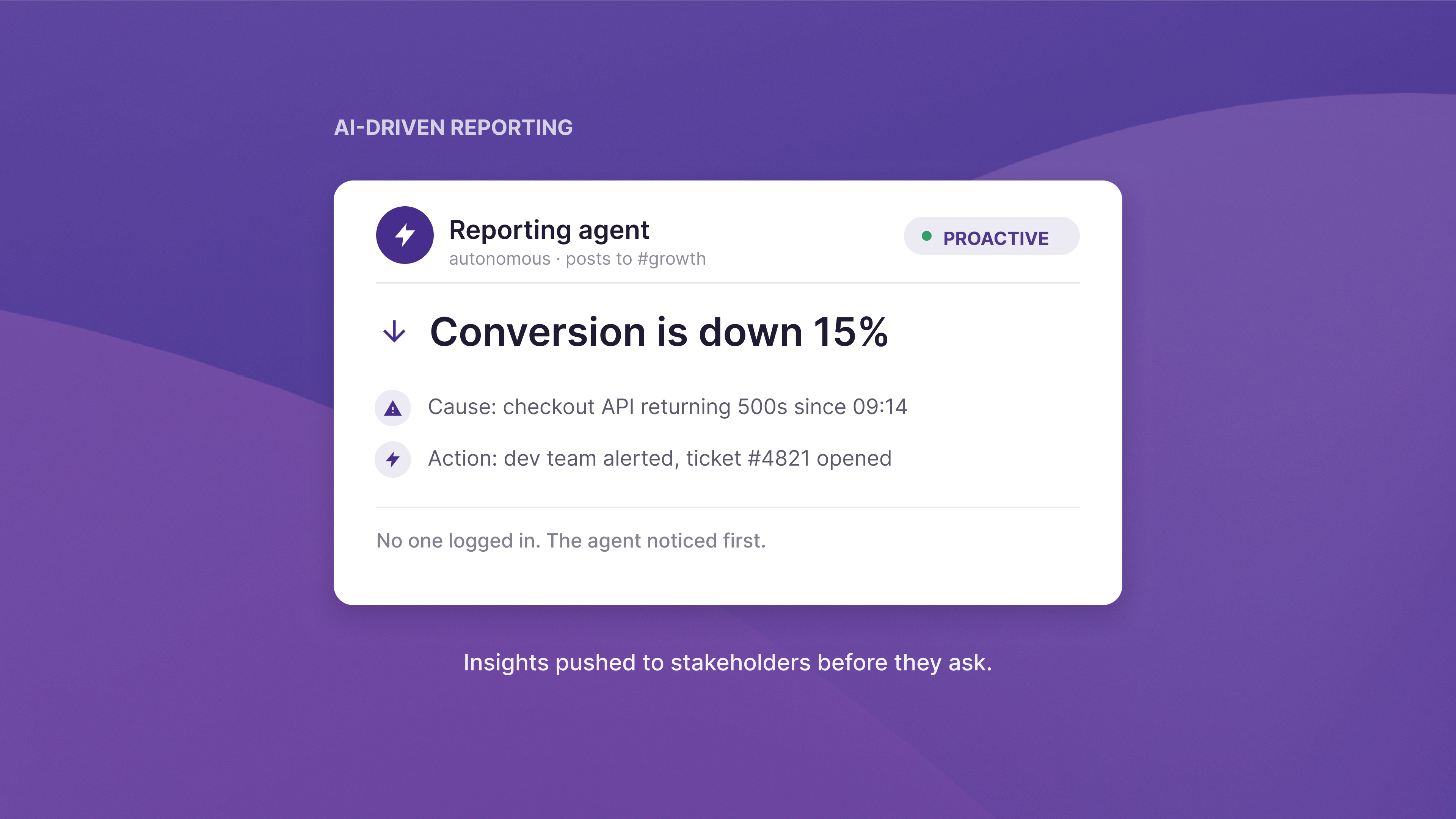
AI-driven client reporting represents a fundamental shift in information flow. Most scale-ups treat reporting as a periodic chore. They deliver PDFs or a static dashboard that clients rarely open. In a world of agentic AI systems, this reactive model is a liability. Engineering teams must transition from visualizing the past to predicting future needs. Build. Run. Maintain.
The economics of autonomous reporting
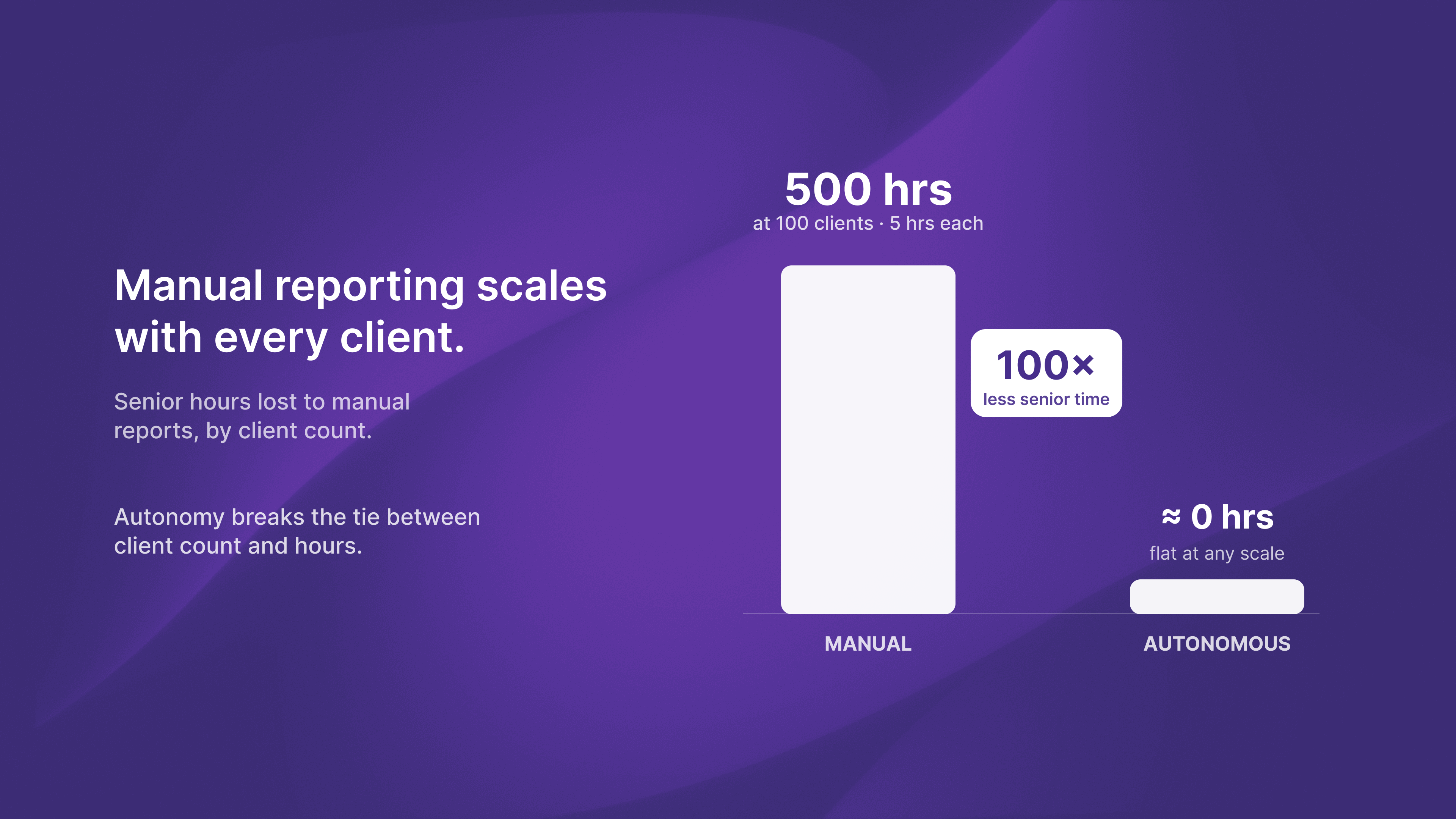
The hidden cost of human synthesis is often the largest line item that never appears on a P&L. When a senior analyst or engineer spends five hours a week pulling API data into a spreadsheet, twenty hours a month of high-value cognitive load is diverted from product innovation.
Charles Babbage identified this inefficiency in 1832, and it still carries his name. Dividing work by the skill each part actually demands, he wrote, lets a manufacturer:
“...purchase exactly that precise quantity of both which is necessary for each process.”
Charles Babbage — On the Economy of Machinery and Manufactures, 1832
His point was that when one person performs the whole job, you are forced to pay for the hardest part of it across every hour they work. A senior engineer reconciling CSV exports is that exact arrangement. You are buying the skill required to architect a system and spending it on the skill required to reformat a column.
The Babbage principle usually gets applied by hiring cheaper people for the simpler work. An agent removes the step instead of redistributing it, which is the version that does not add headcount. High-growth startups face significant margin erosion due to manual data synthesis and reporting cycles. To solve this, firms are implementing agency reporting automation to reclaim engineering hours.
Manual work creates friction that limits how many accounts one team can manage well without hiring more people. Dashboards often fail at scale because they require human interpretation to be useful. Traditional tools provide the data points but leave the explanation to a human account manager.
AI-driven automation is more common now. It helps optimize resource allocation. It also improves financial reporting accuracy. This is true in fast-growing tech sectors (KPMG). As you scale to dozens of high-value accounts, this human-in-the-loop need becomes a bottleneck. It prevents a real operational advantage. It is essential to build a marketing dashboard that prioritizes time to insight.
Defining the autonomous reporting agent
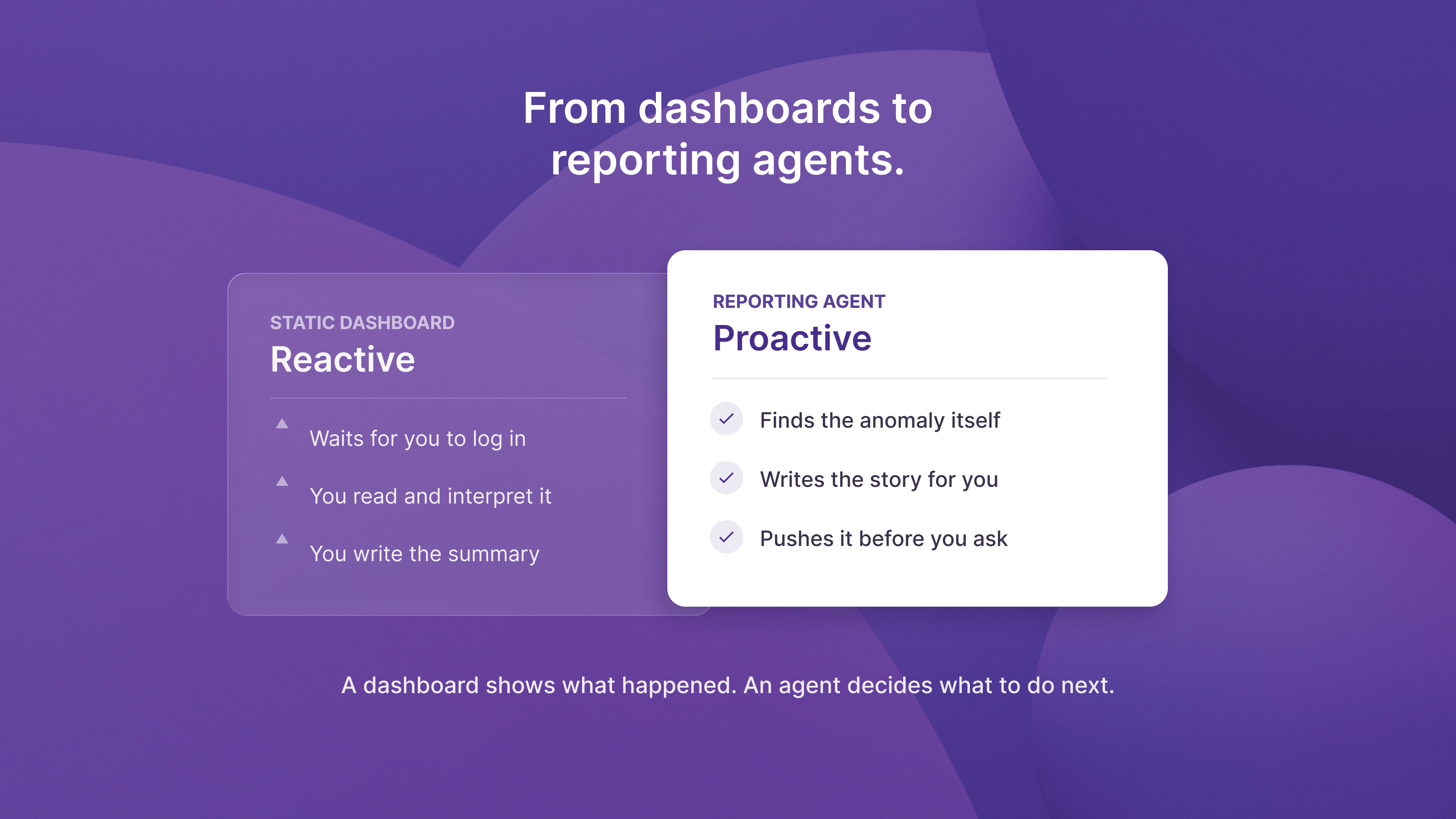
AI-driven client reporting uses autonomous agents to combine data from many sources. These agents analyze trends and create proactive updates for stakeholders, without human prompts. This transition is why many firms are choosing agents over assistants to ensure true scalability. By deploying AI reporting agents, companies ensure that data remains actionable at all times.
This approach differs from traditional reporting in several ways:
Independent data synthesis: Agents pull from CRM, ad platforms, and internal databases without manual exports.
Proactive insight generation: The system identifies a trend and writes the explanation before a human asks for it.
Goal-oriented alerts: Notifications are based on business objectives rather than simple threshold triggers.
Continuous state management: The agent remembers past performance context to inform current analysis.
Building the autonomous reporting infrastructure
Moving to an autonomous model requires a deliberate architectural shift. Layering a chatbot on top of a database is insufficient. It requires an orchestration layer that manages how the AI interacts with data sources. Many AI agency websites reveal a failure to integrate these production-grade systems, opting instead for surface-level prompts. The adoption of autonomous reporting systems ensures the data pipeline remains resilient against manual errors.
Establish the orchestration layer. This central nervous system manages API calls and maintains the memory of the reporting agent. It ensures the AI understands the difference between a seasonal dip and a performance failure.
Implement real-time anomaly detection. Instead of waiting for the end-of-month review, the system monitors data streams for deviations. When a metric falls outside of expected parameters, the agent immediately begins a root-cause analysis.
Deploy proactive stakeholder alerts. The agent creates a short summary of the anomaly and the proposed fix. It sends the summary to the client by Slack or email.
Lessons from the playbook
This shift transforms how technical teams operate. In recent deployments, the focus moved from building better visualizations to building better logic. For example, a QA flow agentic workflow does not just report a bug. It also checks how it may affect user retention. It then suggests a priority level using past data.
When moving from demo to production, edge cases present the main challenge. A reporting agent that works for one client might struggle with the unique data schema of another. A standardized infrastructure is necessary to solve this.
Building a unified data layer lets agents work across many client environments without custom code for each account. This facilitates autonomous workflow replacement rather than just faster task completion. A total reporting workflow replacement allows organizations to scale without adding administrative overhead.
Auditing your reporting stack
If you rely on manual synthesis, your margins are at risk. Evaluate where your team spends time and identify the low-hanging fruit for automation. Start by tracking the hours spent on report preparation versus strategic execution. Transitioning to autonomous agentic systems can eliminate the middle-management bottlenecks that stall growth.
Identify the most repetitive data synthesis tasks in your current cycle.
Map the data sources required for those reports to a unified API layer.
Build a proof-of-concept agent that handles one specific metric loop.
Measure the time to insight compared to your manual process.
The bottom line
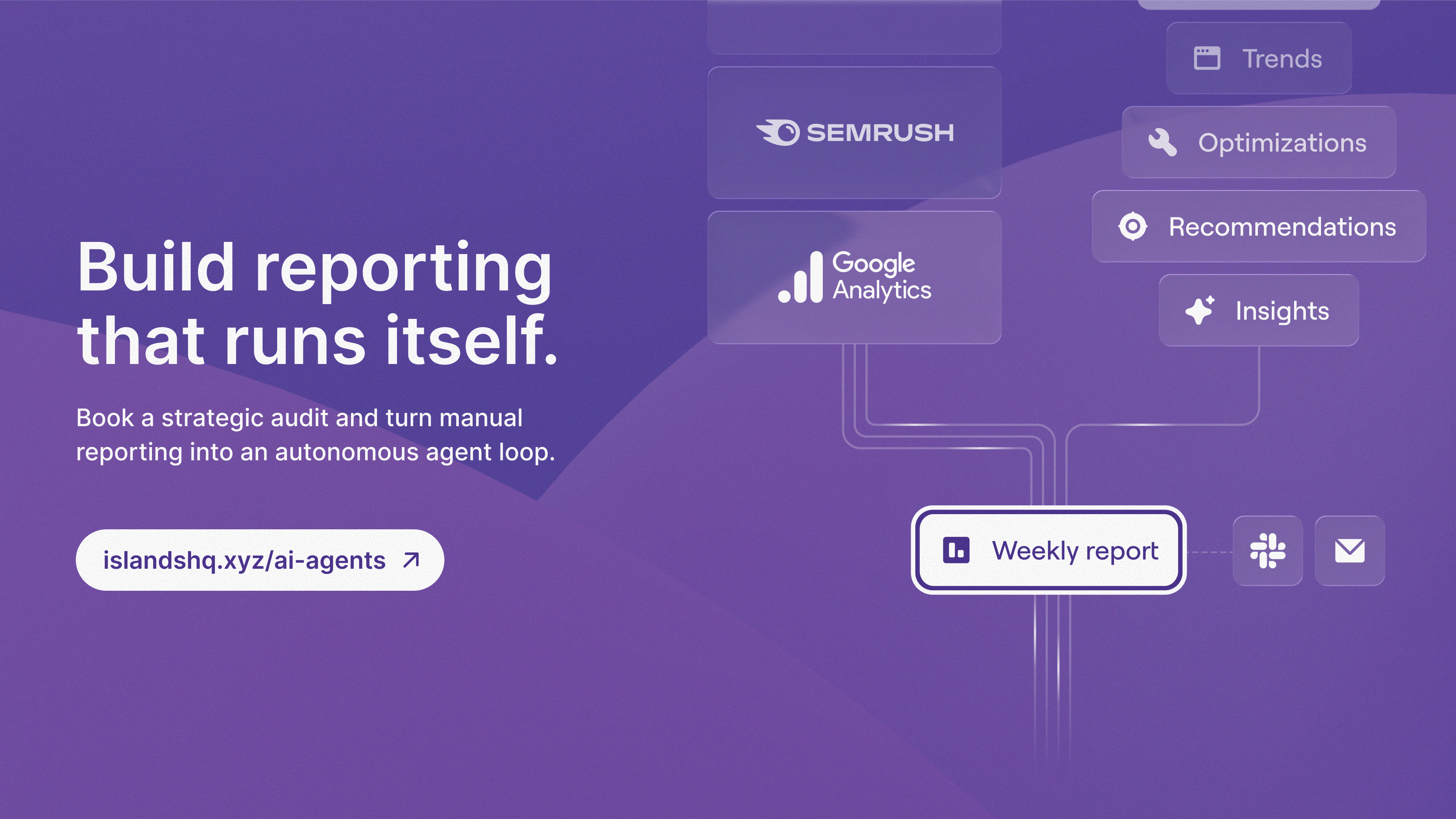
Moving to autonomous systems is a commitment to a new way of operating. If you are ready to stop cleaning data and start building autonomous value, reach out. Ask for a strategic AI audit through our agentic assessment.