


I have been looking at the burn rates of Series B scale-ups lately and the data is consistent. Founders are still paying for their providers to learn. When you hire a traditional agency or a full-time generalist to build your go-to-market engine, you help pay for their learning. You pay for discovery sessions and architectural setup fees that produce zero revenue in the first ninety days. This is an architectural trap that kills momentum.
At Islands, we changed the model. We stopped charging for the education and started charging for the results. We use productized go-to-market pipelines for AI to ship functional engines in days. The reason is simple: we already built the playbooks. We have trained the models on industry context. You are not paying us to figure out your market. You are paying to plug into a system that already understands it.
Key results:
Zero discovery lag : workflows deploy immediately because industry context is pre-built
10x production speed : daily content cycles reduced from one week to under four hours
Turnkey automation : sales calls convert into customer-facing stories automatically
The collapse of the custom agency model
For a long time, the standard advice was to find a specialized agency to build a custom strategy. But here is the reality: custom is often a synonym for inefficient. When I look at how ReachSocial handles outbound, I see the same problems. I also see them in how we manage content across our portfolio. Teams struggle to extract internal expertise. They fail to turn it into a steady stream of narrative-driven marketing.
Most founders think they need a custom build because their business is unique. While your product is unique, the mechanics of high-performing go-to-market pipelines for AI are not. You need a way to capture raw data and a system to refine that data into stories. If you are building this from scratch every time, you are wasting capital. We use a plug-and-play approach because it removes the friction of starting from zero.
Leveraging autonomous agents
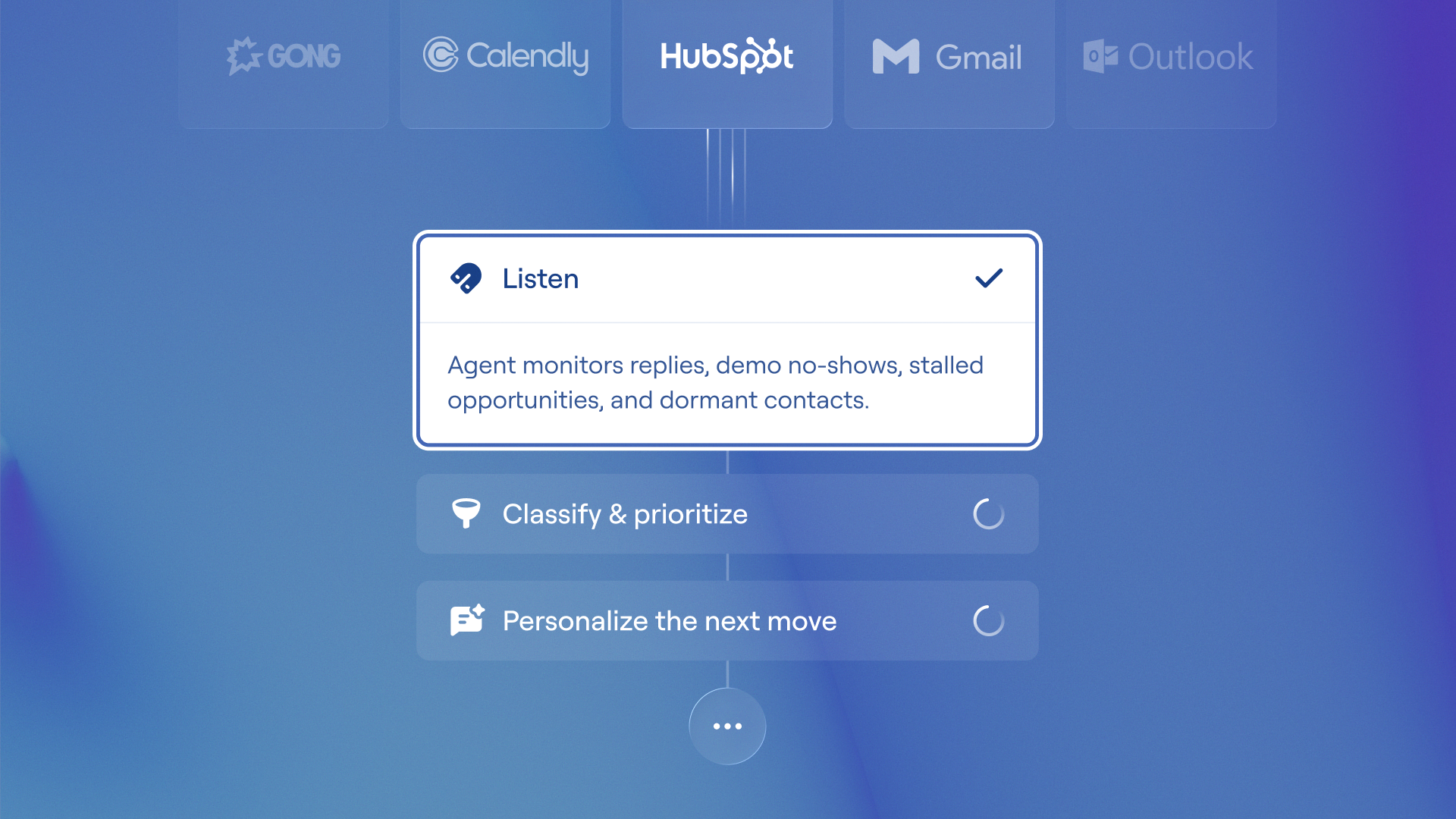
If you are still throwing people at data problems, you are falling behind. A traditional content team takes a sales recording and spends days drafting a post. Our system takes that same Fathom recording and extracts the most compelling angles in minutes. This is why we can offer these pipelines for a fraction of the cost of an in-house hire. We use specialized autonomous GTM agents to perform the heavy lifting.
Why pre-trained industry context beats human discovery
Traditional consultants spend the first month of any engagement asking questions. They want to know your personas and your pain points. We view that manual discovery phase as a sign of institutional inefficiency. Because we have worked in specific B2B and SaaS verticals, our agents already have basic knowledge. They can write with authority. These AI content pipelines don’t start from zero.
When we deploy a pipeline, we are not starting with a blank prompt. We use pre-configured workflows tested across dozens of companies. This ensures the output is strategically sound. We moved from the era of assistants to the era of agents. An assistant waits for a prompt. An agent follows a playbook.
Generative engine optimization
This shift is critical for Generative Engine Optimization (GEO). Search engines and AI answer engines no longer reward generic keyword stuffing. They reward depth and unique narrative. By processing data sources like Slack threads and emails, we create more detail. A manual writer cannot match this level of detail. You can see this in our guide on top 6 GTM strategy roles to hire. It argues for specialized talent over generalists.
From sales calls to story-driven distribution
I watched the transformation of a recent client who was struggling with inconsistent output. Their marketing team was always two weeks behind the actual product velocity. We plugged their Fathom recordings into our automated pipeline and things changed overnight. This B2B content automation layer handles the extraction without human intervention.
What was previously a manual bottleneck became a turnkey system. The workflow captures the nuance of how the founder speaks. It identifies the specific objections customers raise. We are building a narrative foundation that attracts and converts. This level of production used to require massive overhead.
Now, infrastructure and observability patterns allow us to maintain high quality at scale. We documented what actually costs money when you deploy these agents. We also explain how to cut spend without losing performance. It is about architectural choice.
The ROI of the plug-and-play pipeline
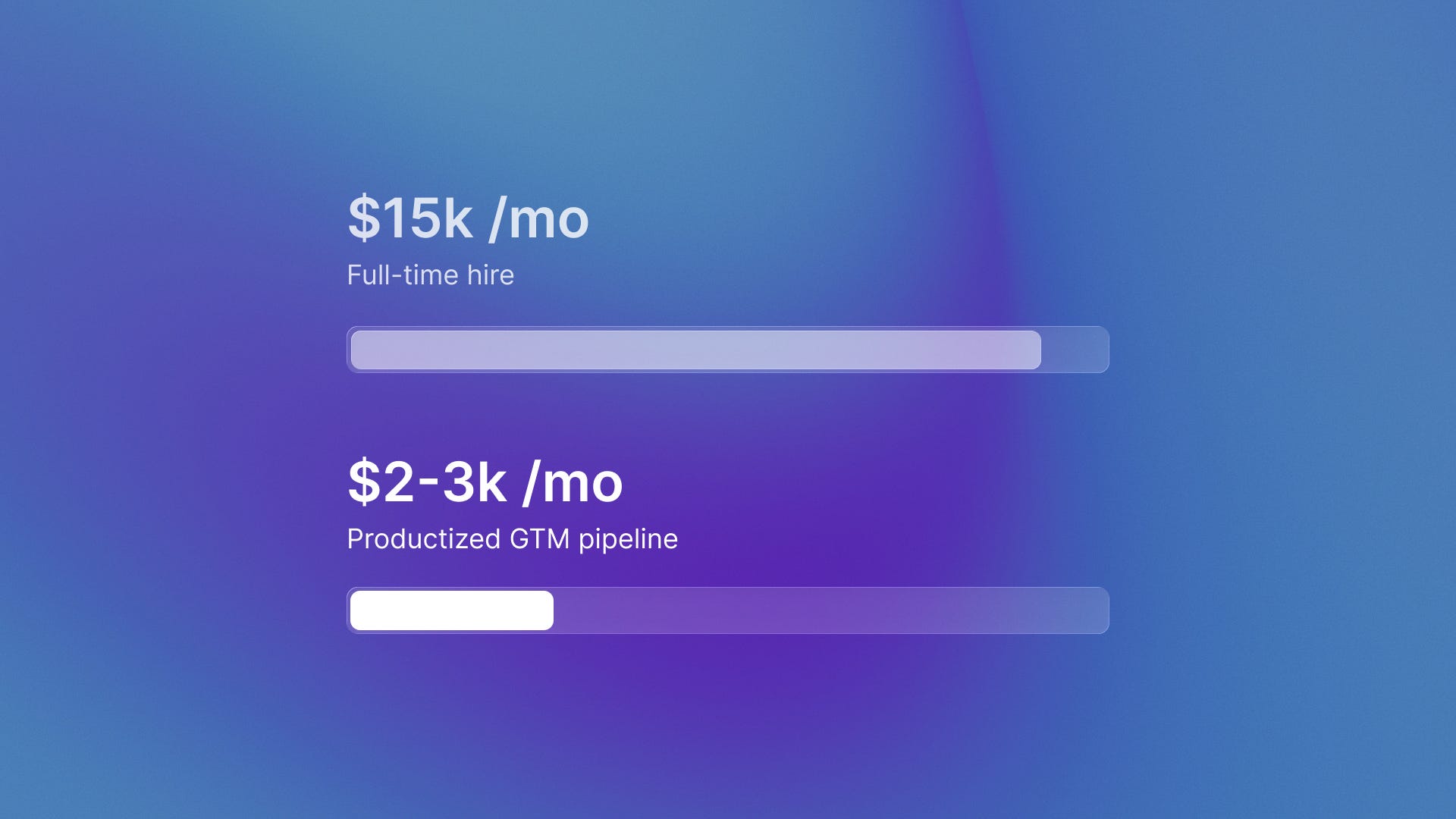
When you compare the $2,000-$3,000 monthly cost of a productized pipeline to a full-time lead, the choice is obvious. A full-time hire at Series B scale-ups often takes months to ramp up. Our system starts producing on day one. We created a cost and operational framework that breaks down exactly how to weigh these options for startups.
Here is the breakdown of why this works:
Reduced coordination cost : you do not need to manage a team of writers or project managers
Contextual accuracy : the system learns from your real conversations, not a static brief
Continuous production : the pipeline does not take holidays or get writer’s block
Predictable pricing : moving from hourly rates to a results-based subscription model
I often tell founders that the real value is not the AI tooling itself. There are thousands of tools. The value is in the industry-specific playbook that makes the tooling effective. If you have to teach your provider your market, you are in the wrong partnership. We have already learned it.
The path forward for non-technical founders
If you are a CEO and need a better go-to-market engine, you must choose a custom build or a turnkey system. The window of competitive advantage for manual content is closing. As more companies move toward automated, narrative-driven GTM, speed and consistency become the only metrics that matter.
We proved this model ourselves at Islands. We documented how we landed 3 clients in 30 days without any traditional sales team. We used automated value-led audits and AI-driven onboarding. That same logic applies to your GTM pipeline. Stop building assistants and start plugging into agents that already know how to win.
Identify your most labor-intensive data ingestion workflow
Replace the human-in-the-loop with a goal-driven agent
Scale the infrastructure using a shared technical stack
If you want to see how a plug-and-play pipeline would look for your specific vertical, just reply to this email. I am happy to show you how we are using these systems to collapse the time between raw data and revenue.
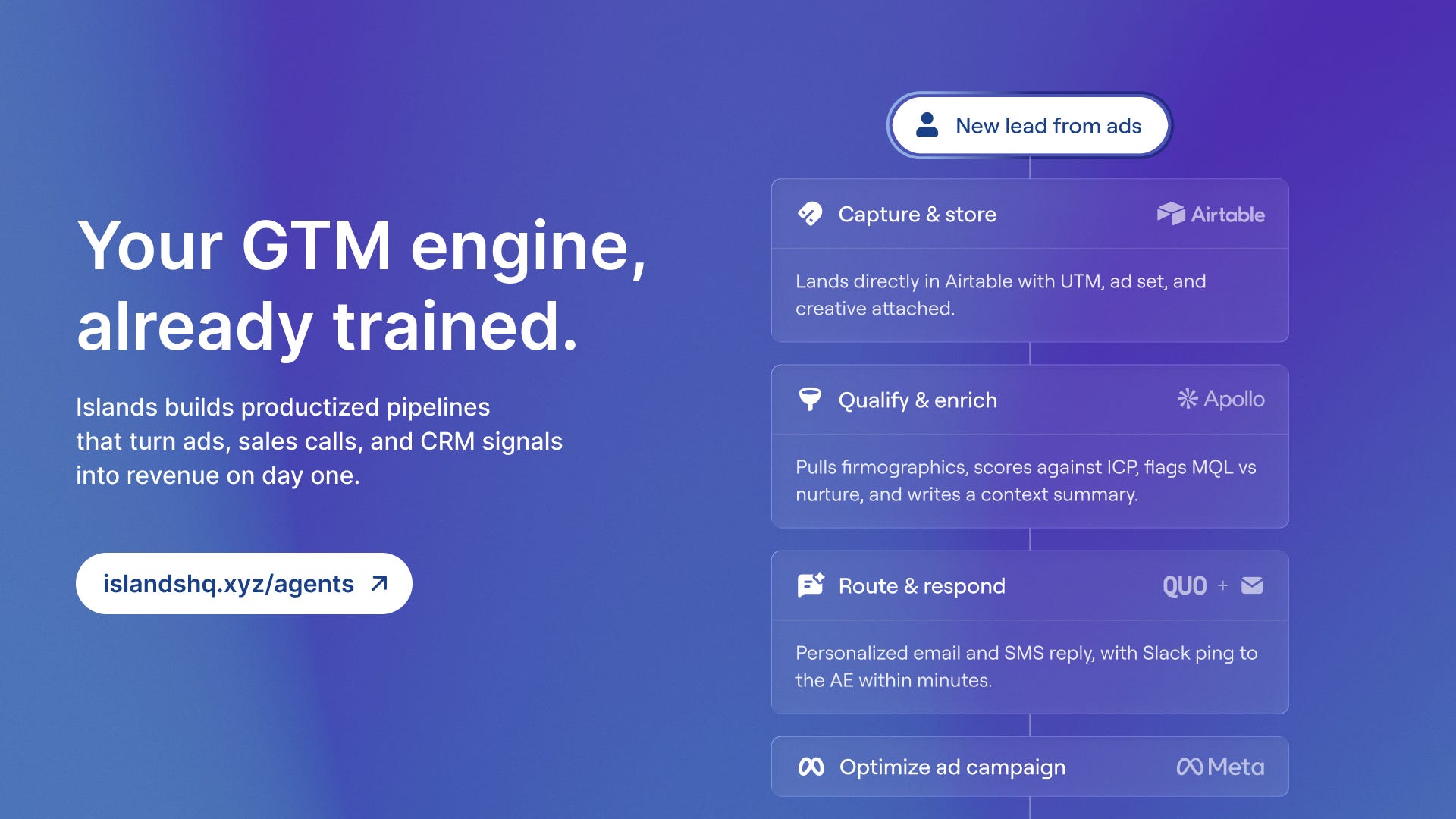
Ready to scale your presence? Automate your GTM pipeline with Islands today.