


Everyone’s celebrating the AI spending surge to $37 billion. Almost no one’s talking about whether those dollars actually survive production.
I’ve been reviewing budget requests across our portfolio for the last six weeks. Same pattern everywhere: leadership approved POC budgets based on demo costs, then production reality hit. The gap between what consultants promise and what really works at scale is causing a budget crisis. No one is ready for it.
Here’s the pressure point: 59% of enterprise leaders expect measurable ROI from AI investments within 12 months (KPMG Q4 2025). Only 16% of enterprise deployments are true autonomous agents. They have planning and execution loops (Menlo Ventures State of Generative AI 2025). The rest are fixed-sequence workflows with agent-sized price tags.
That mismatch is about to separate companies that scale AI from those that stall on budget objections.
What Actually Costs Money When You Run AI Agents in Production
Everyone’s celebrating the AI spending surge to $37 billion. Almost no one’s talking about whether those dollars actually survive production.
I’ve been reviewing budget requests across our portfolio for the last six weeks. Same pattern everywhere: leadership approved POC budgets based on demo costs, then production reality hit. The gap between what consultants promise and what really works at scale is causing a budget crisis. No one is ready for it.
Here’s the pressure point: 59% of enterprise leaders expect measurable ROI from AI investments within 12 months (KPMG Q4 2025). Only 16% of enterprise deployments are true autonomous agents. They have planning and execution loops (Menlo Ventures State of Generative AI 2025). The rest are fixed-sequence workflows with agent-sized price tags.
That mismatch is about to separate companies that scale AI from those that stall on budget objections.
The Real Cost Structure Nobody Shows You
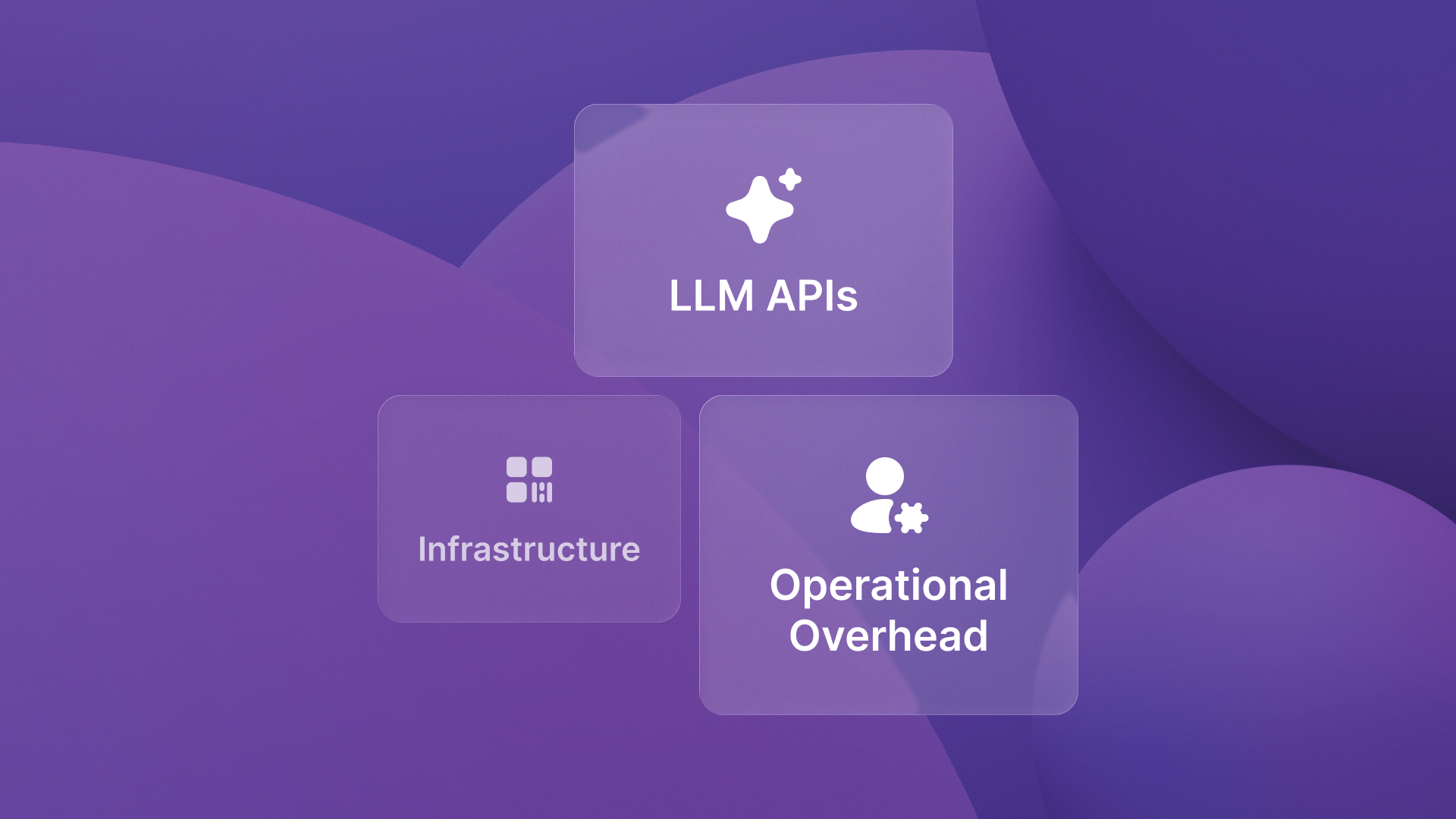
Most technical leaders think production agent costs mean LLM API fees. That’s roughly 40-55% of the actual bill.
Last month I was talking to the team at QA flow, our autonomous testing platform. They run agents that generate and execute test suites from Figma designs. When they hit production scale, they discovered something critical: LLM costs were $2,400/month, but total infrastructure was $4,200/month.
The missing $1,800? Observability systems (15-25% of total spend), error recovery infrastructure, multi-agent orchestration, and state management across execution loops.
Here’s what actually costs money in production:
LLM API consumption: Token costs vary wildly by model selection. GPT-4 costs 10-30x more than GPT-3.5 for identical tasks. Claude Sonnet sits in the middle. Most teams start with premium models everywhere, then optimize based on task complexity. Budget $2,000-5,000/month for serious production workloads.
Observability and monitoring: You cannot run autonomous systems blind. Agent execution traces, decision logging, performance metrics, and error analysis require dedicated infrastructure. Budget 15-25% of LLM costs. QA flow spends $600/month here.
Error handling and retry logic: Agents fail. API timeouts, malformed outputs, unexpected state transitions. Recovery systems add orchestration overhead and duplicate LLM calls. In our portfolio deployments, retry loops add 10-20% to base API costs.
Orchestration infrastructure: Multi-agent systems need coordination layers. Message queues, state databases, workflow engines. ReachSocial, our LinkedIn campaign orchestration platform, runs agent conversations across days and weeks. The infrastructure to maintain context and coordinate handoffs costs $800/month before any LLM calls.
Human-in-loop systems: Most production agents need human oversight for high-stakes decisions. Approval queues, escalation paths, manual review interfaces. These aren’t agent costs directly, but they’re deployment costs you cannot skip.
Total production cost for a serious autonomous system: $4,000-8,000/month minimum. Not $200/month like the POC suggested.
The Optimization Patterns That Cut Costs 40-60%
Here’s what we’ve learned from running autonomous systems across portfolio companies: strategic optimization post-deployment typically reduces costs 40-60% without degrading performance.
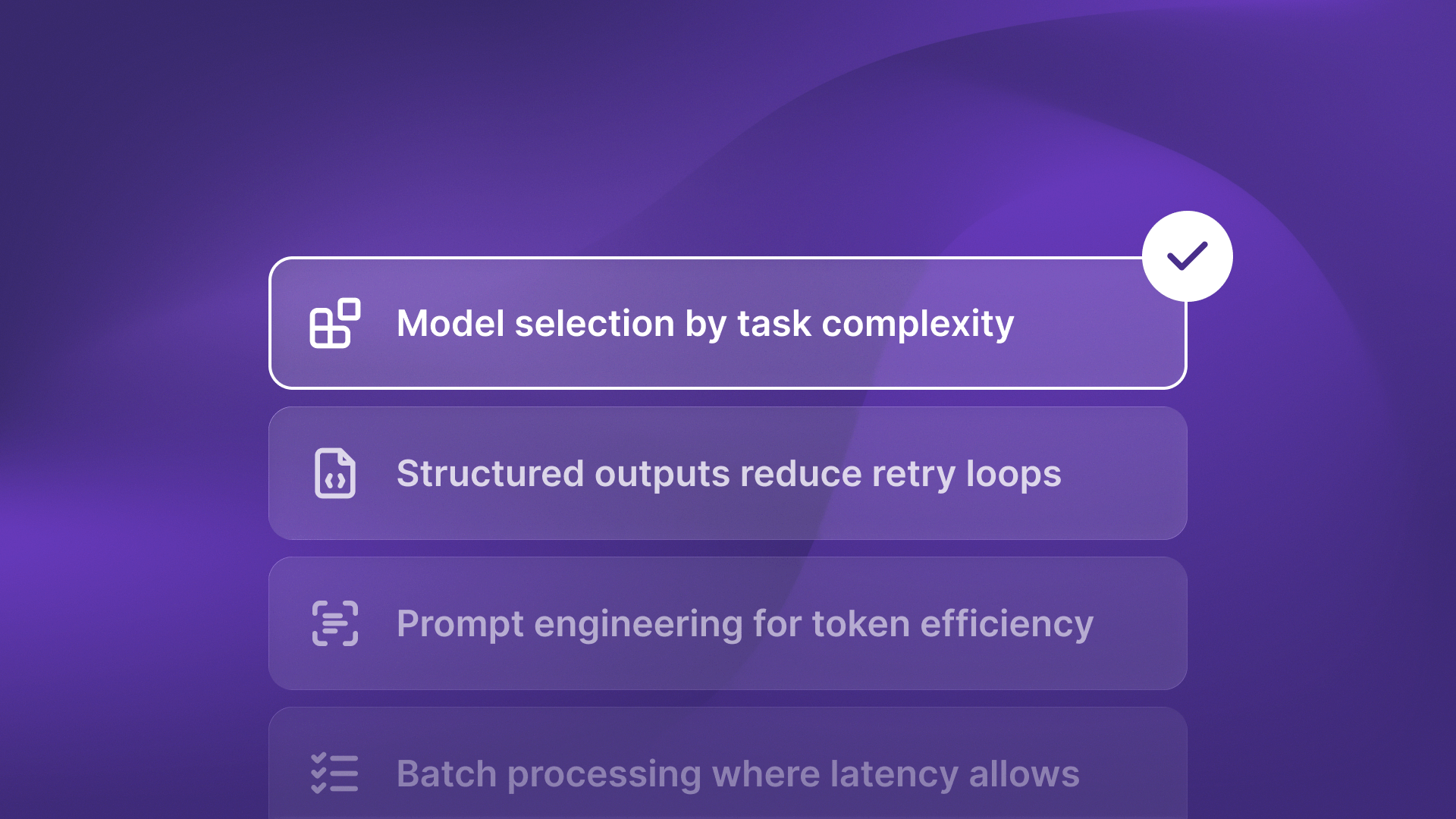
Model selection by task complexity: Use expensive models (GPT-4, Claude Opus) only for complex reasoning. Route simple tasks to cheaper models. We’re seeing teams cut API costs 35-50% by tiering model selection based on task analysis. Pattern: classify task complexity at orchestration layer, route to appropriate model tier.
Structured outputs reduce retry loops: Forcing LLM responses into validated JSON schemas eliminates malformed outputs that trigger retries. Across portfolio deployments, structured outputs cut retry costs roughly in half. Instead of 3-5 attempts to get valid output, you get it first try.
Semantic caching for redundant calls: Many agent tasks repeat similar queries. Caching LLM responses based on semantic similarity (not exact match) eliminates redundant API calls. I wrote about the full cost breakdown here, but the short version: caching cuts API costs 25-40% in production.
Prompt engineering for token efficiency: Verbose prompts waste tokens. We’ve seen teams reduce token consumption 20-30% by refining prompts to be concise while maintaining output quality. Every unnecessary word in system prompts multiplies across thousands of calls.
Batch processing where latency allows: Real-time requirements drive costs. When tasks allow 5-10 minute delays, batch processing reduces API overhead and enables cheaper model tiers. Not every agent action needs sub-second response.
The teams that optimize fastest are running production agents at sustainable unit economics. The ones still using POC architectures at scale are hitting budget walls.
Why This Matters for the Next 18 Months
Enterprise AI spending jumped from $11.5 billion in 2024 to $37 billion in 2025 (Menlo Ventures). That 3.2x year-over-year increase means companies are moving from experiments to production deployments.
But here’s the competitive dynamic: leadership expects 12-month ROI. Only companies that build realistic cost models and optimize aggressively will justify continued investment. The rest will face budget cuts when actual costs exceed projections.
The winners in AI transformation won’t be those who spend the most. They’ll be those who master production economics fastest.
If you are looking at AI agent investments or have early projects, the process is simple. First, budget for complete production infrastructure, not just LLM APIs. Then, optimize step by step using proven methods. You can achieve a 40-60% cost reduction. However, this is only possible if you include observability and optimization in your deployment process from the beginning.
Companies that figure this out in 2025-2026 will scale autonomous systems while competitors stall on budget objections. The gap between demo costs and production reality is where most AI transformations die. Don’t let yours be one of them.