
I've been talking to founders who are thrilled about their venture studio partnership: until they see the term sheet. The equity ask can feel steep, especially without benchmarks. Most content on this topic is generic or outdated. Here's what I've learned from reviewing dozens of deals. This covers 2026 venture studio equity ranges, why AI ventures get higher stakes, and how to negotiate well.
What the data says: venture studio equity ranges
This support can include ideation, development, and go-to-market work. A studio that provides development and launch support but not ideation typically takes 20-25% equity. When a startup co-creates the idea, builds the MVP, and receives go-to-market support, the range moves to 25-35%. For full-stack support everything ideation, development, go-to-market, and initial funding expect 35-40% equity.
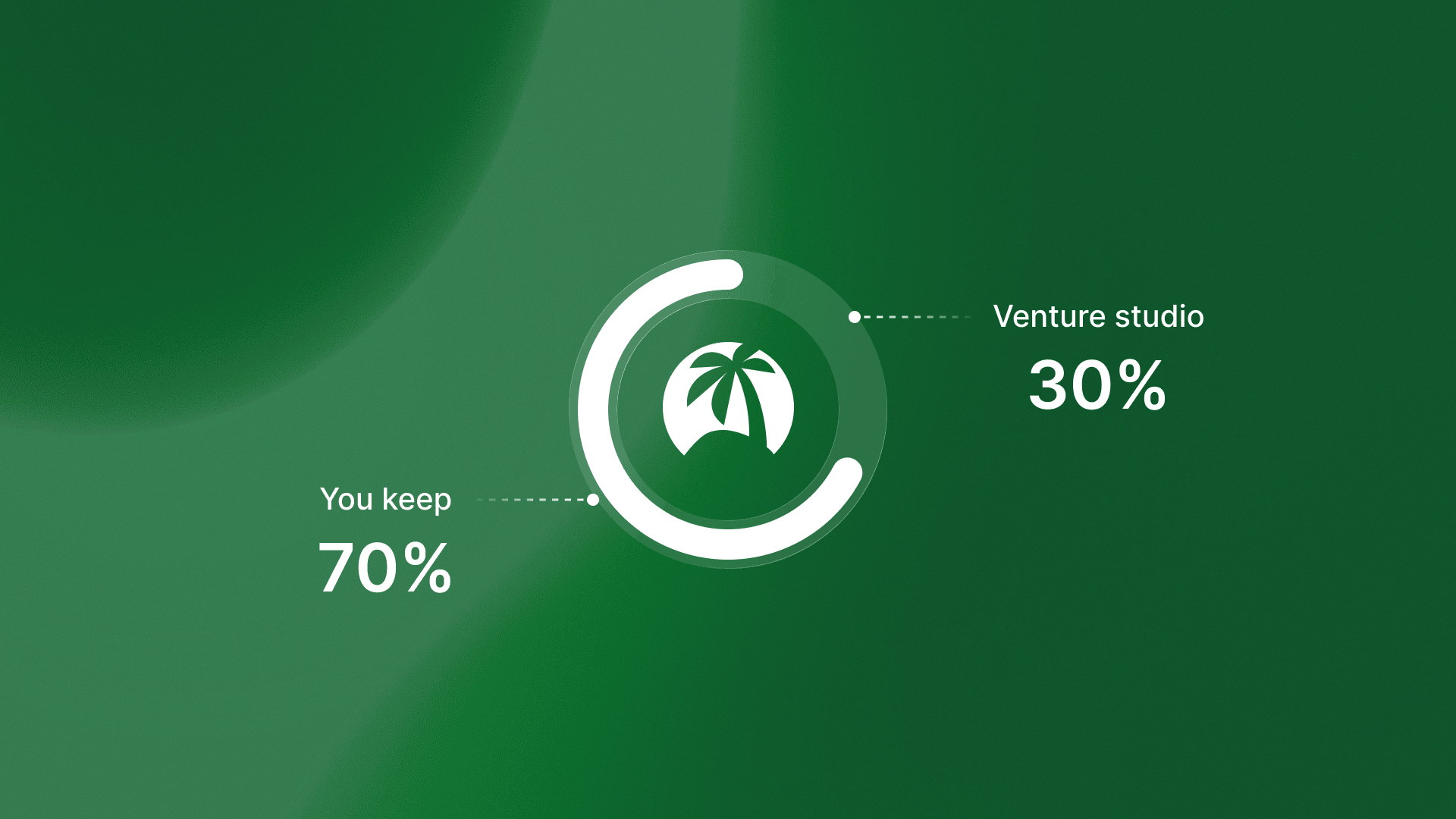
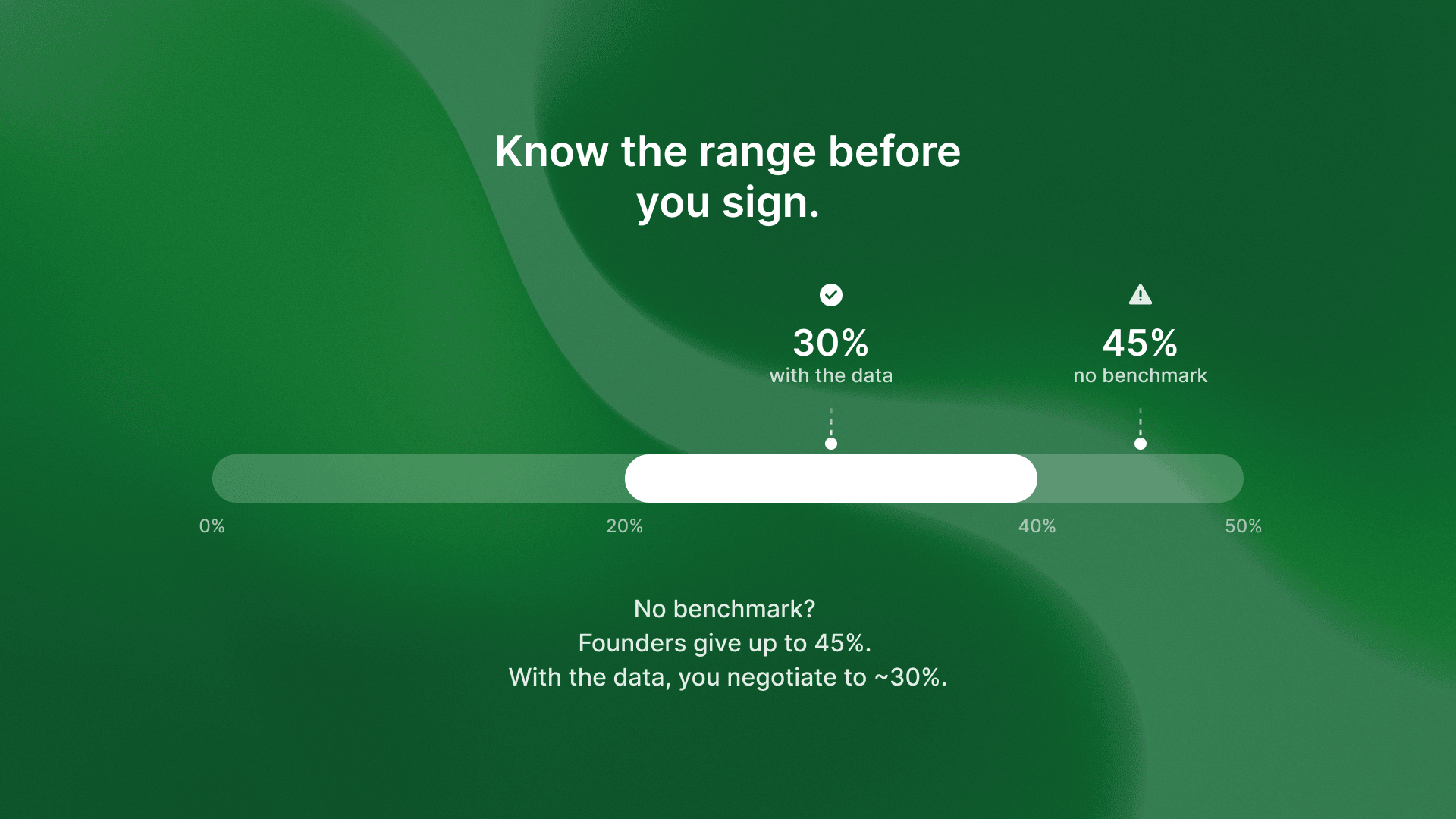
Venture studio founder equity deals vary dramatically. I’ve watched founders accept 45% equity because they had no benchmark. The data is your first line of defense.
Why AI ventures hit the 40% ceiling
AI startup equity venture studio deals often hit the 40% ceiling due to technical complexity and capital intensity. AI startups need specialized talent, data infrastructure, and longer development cycles. If you’re building a simple chatbot, you might get 20%. If you’re building an autonomous agent with proprietary data pipelines, expect 35-40%. AI startups also need to optimize for new discovery channels. Brands that invest in generative engine optimization see AI-referred traffic grow by over 500%.
The hidden layer: revenue-sharing models
Many studio partnerships layer revenue sharing on top of equity. Venture studio revenue share models typically add 10-20% of future revenue for ongoing support. The equity covers the build phase. The revenue share covers post-launch support, product updates, scaling, and maintenance. Some studios offer a lower equity stake in exchange for a higher revenue share. Mapping your projected revenue against both structures helps you decide which path preserves more value for you.
When revenue share makes sense for founders
If you want to preserve equity for future fundraising, a higher revenue share might be better. If you expect high margins, a lower revenue share is preferable. I’ve also seen founders underestimate the cost of ongoing support. Calculating the true cost of freelancers shows that freelancers often come with hidden costs. These costs include onboarding and management. They can raise your burn rate by 30% to 50%. The same logic applies to studio support fees.
A founder’s framework for evaluating studio equity offers
Step 1: Map the studio’s contribution to your journey
What is the studio actually providing? Ideation, development, go-to-market, funding? The more they contribute, the higher the equity. Be honest about what you need and what you can do yourself. Evaluate your partnership with a structured lens using this 12-question checklist.
Step 2: Benchmark against alternative capital sources
Compare the studio’s equity ask to what you’d give up in a VC round or to a co-founder. A typical seed round might take 15-25% equity. A technical co-founder might take 40-50%. The studio’s 30% might be cheaper than both, especially if they also provide hands-on development. Alternatively, consider fractional executives for specific functions instead of full studio commitment. Or compare costs against curated talent platforms which can eliminate hidden vetting costs at scale.
Step 3: Negotiate the ‘what if’ scenarios
What happens if the product fails? Do you get equity back? What if you want to buy the studio out later? Negotiate these terms upfront. A good studio will be transparent.
Key takeaway: The best deal aligns with the studio’s actual contribution. Measure that, not the equity percentage alone.
Real-world signals: what I’ve seen across portfolio companies
At Islands, I’ve worked with dozens of founders navigating these decisions. Those who understood the benchmarks negotiated better terms. For example, a founder built a QA automation tool like QA flow’s autonomous testing platform. They used the 20–40% range to push back. A studio had asked for 45%. Another founder built a hiring platform. They picked a higher revenue share. This helped them save equity for a future Series A. They used fractional hiring guidance to structure their team.
I’ve also seen venture-backed startups invest in thought leadership to build authority before approaching studios. Thought leadership delivers 156% ROI versus 9% for traditional B2B marketing. That can shift negotiation leverage.
The lesson: data is power. Know the benchmarks before you sign.
The bottom line
Equity ranges are guides, not rules. The best deal depends on the studio’s actual contribution to your startup’s success. Use the framework above to evaluate offers and negotiate effectively.
Ready to build your AI agent without giving away the farm? Let’s talk.