


I have been talking to a lot of founders lately who are staring at venture studio term sheets that look identical on paper. In 2026, the equity split is the least important line item you will sign. The market has shifted. We are no longer in an era where capital is the primary bottleneck for a startup. Today, the bottleneck is technical infrastructure for founders. It also limits how fast they can ship production-ready AI systems before competitors. Use this venture studio checklist 2026 to see if your partner can really build. Or, check if they are just a bank with a nicer website.
Too many founders fall into the venture studio trap. They sign with studios that provide high-level strategy and beautiful slide decks. These studios leave the technical heavy lifting to a founder who does not yet have a CTO. This leads to architectural debt that can kill a company before it finds product-market fit. You need a partner that provides a technical stack rather than a boardroom seat. Demos are easy. Production systems are where most teams fail.
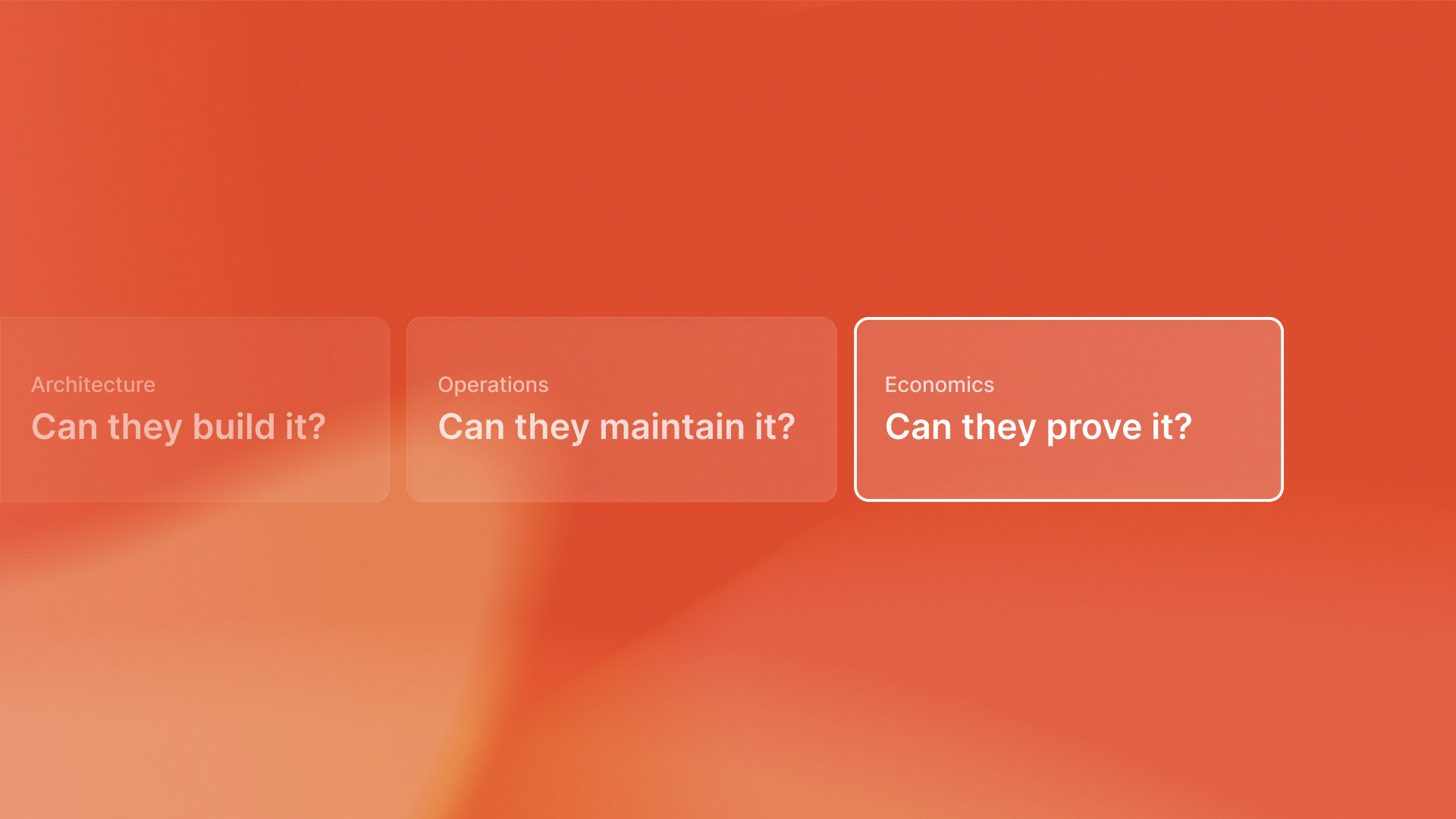
The shift to technical infrastructure for founders
Founders seek studios that offer shared technical infrastructure to mitigate the risk of unproven AI initiatives. According to Gartner, this is a top strategic trend. At Islands, we provide this bedrock through the NAN workflow. This allows our portfolio companies to inherit proven architectures rather than starting from a blank page. Choosing a venture studio requires looking past the brand and into the codebase.
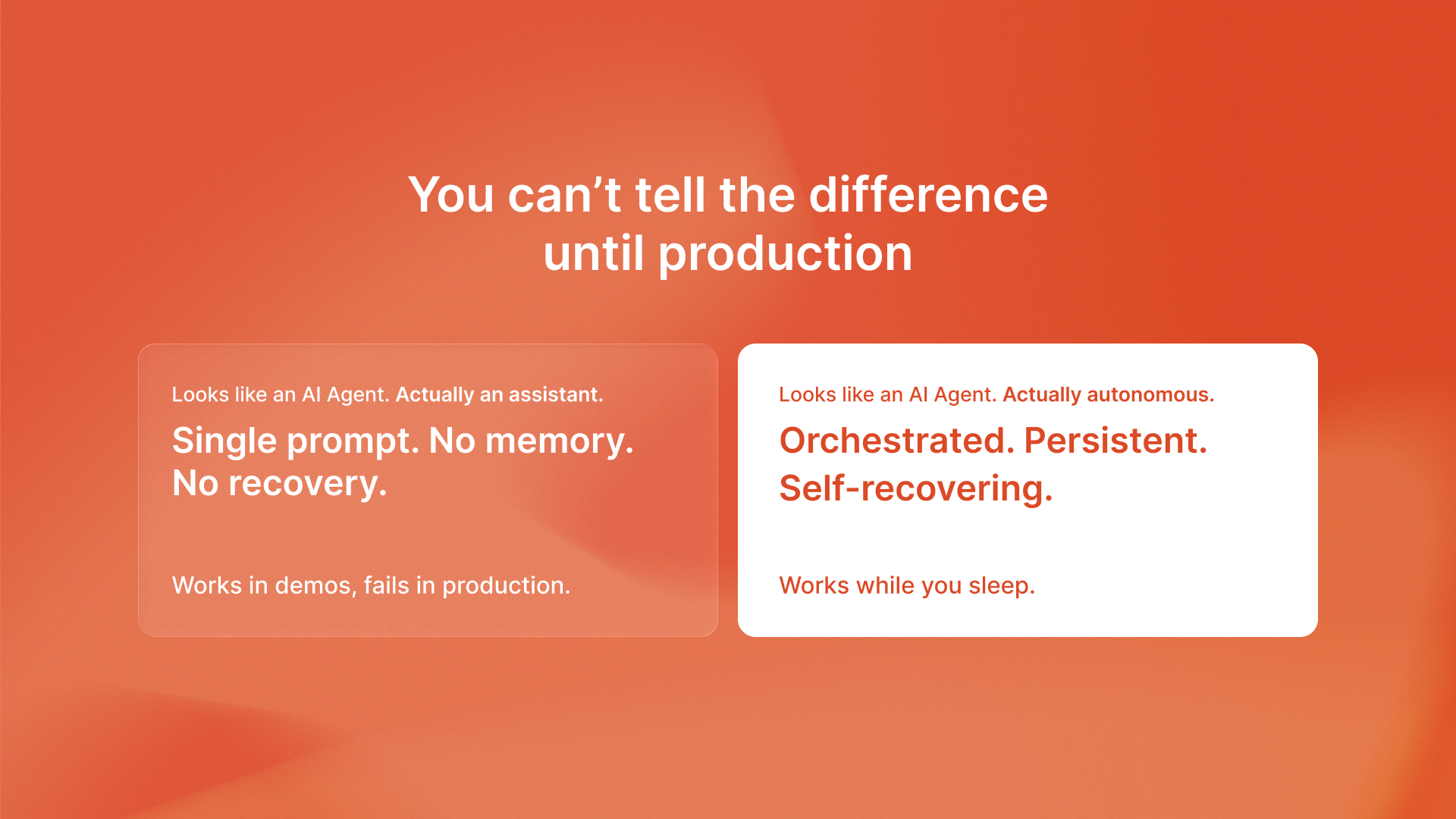
Fractional CTO leadership is a necessity during the zero-to-one phase. Most startups fail at the architectural stage where simple assistants are mistaken for autonomous agents. As we discussed in Islands 2026, fractional CTO engagements compress deployment timelines from 11 months to 2 months. A studio without this technical depth is just a consultancy in disguise.
The 12-question evaluation framework
Before you sign a term sheet, ask these questions to evaluate their production readiness:
Do you have a shared technical orchestration layer I can use on day one?
Can you show me a production-ready agent currently managing 100,000+ tasks?
What is your framework for state management and error recovery?
How do you handle AI hallucination risks at scale?
Do you provide fractional CTO leadership or just advice?
What is the documented economic ROI of your previous AI builds?
How do you manage technical documentation across portfolio companies?
Do you have pre-built workflows for common tasks like outbound sales or QA flow?
How long does it take to move from concept to a production-grade system?
What is your plan for maintaining agents after the initial launch?
How do you handle data privacy and security in a multi-tenant environment?
Can you point to a success story where your architecture replaced a human workflow?
If the studio cannot answer these with technical specifics, they are a consultancy. We use QA flow 2026 to show how autonomous testing breaks the time-scaling constraint. This provides a concrete example of what production-ready output looks like. Without this, you are just hiring for roles you cannot yet manage.
The maintenance moat and real economics
Production-ready agents require documented economics and maintenance plans. This is the maintenance moat. I saw this clearly at ReachSocial 2026. Coordination overhead is the primary reason traditional models fail. A good studio helps you navigate these costs before they become a crisis. They understand that fractional vs full-time hiring is a decision based on workload predictability and cash flow.
Choosing a studio without a technical stack is a one-way door that leads to architectural debt. You will spend your seed capital hiring engineers to build what a production-ready studio already has. Shoreline 2026 warns that unstructured technical hiring can cost startups up to $200,000 per mis-hire. A studio’s infrastructure protects you from this risk. Even in non-tech sectors, like when you start a beauty brand in 2026, the infrastructure determines your speed to market.
Choose your architecture wisely
The window for a wait and see approach on AI architecture is closing. You need to choose your architecture before you choose your investors. If you are a founder looking for a partner that prioritizes systems over slides, let’s connect. You can also explore how fractional executives help startups grow faster 2026 to see if that model fits your current stage. Agencies often fail to calculate the true cost of freelancers, and founders make the same mistake with studio equity.
Evaluating the studio model
When reviewing a term sheet, look for specific mentions of technical deliverables. A studio should offer more than capital. It should provide code and workflows that help you scale fast. You can grow without hiring a large engineering team right away.
The importance of speed
In 2026, the first mover advantage is tied directly to technical efficiency. If your studio partner is still debating strategy, while competitors ship agents, you are in the wrong partnership.
Choose accordingly. Next week, I will dig into how we use the AI venture studio model and the NAN workflow. We use them to launch new ventures in weeks, not months. Which of these 12 questions do you think is the most critical for your current stage? Reply and let me know.
Ready to build on a foundation that prioritizes production over slides? Explore how Islands can accelerate your venture.