


I recently joined a meeting with a Series B founder. They were ready to hire six more writers to keep up with their SEO roadmap. I told them they were walking into a headcount trap. The traditional math of content production is fundamentally broken for scale-ups. Most leaders believe that doubling output requires doubling the creative payroll. It is a linear solution to an exponential problem. It is also the fastest way to bloat your burn rate while your unit economics crater.
In my experience, the cliff isn’t a lack of traffic. It’s a lack of a scalable system. When you add headcount to solve a volume issue, you aren’t just adding talent. You are adding a management tax. You are adding more Slack channels, more revision cycles, and more institutional friction. To hit aggressive growth targets in 2026, you need to stop hiring writers. You must start architecting an agentic content supply chain. This is the only way to master how to scale content creation at a sustainable margin.
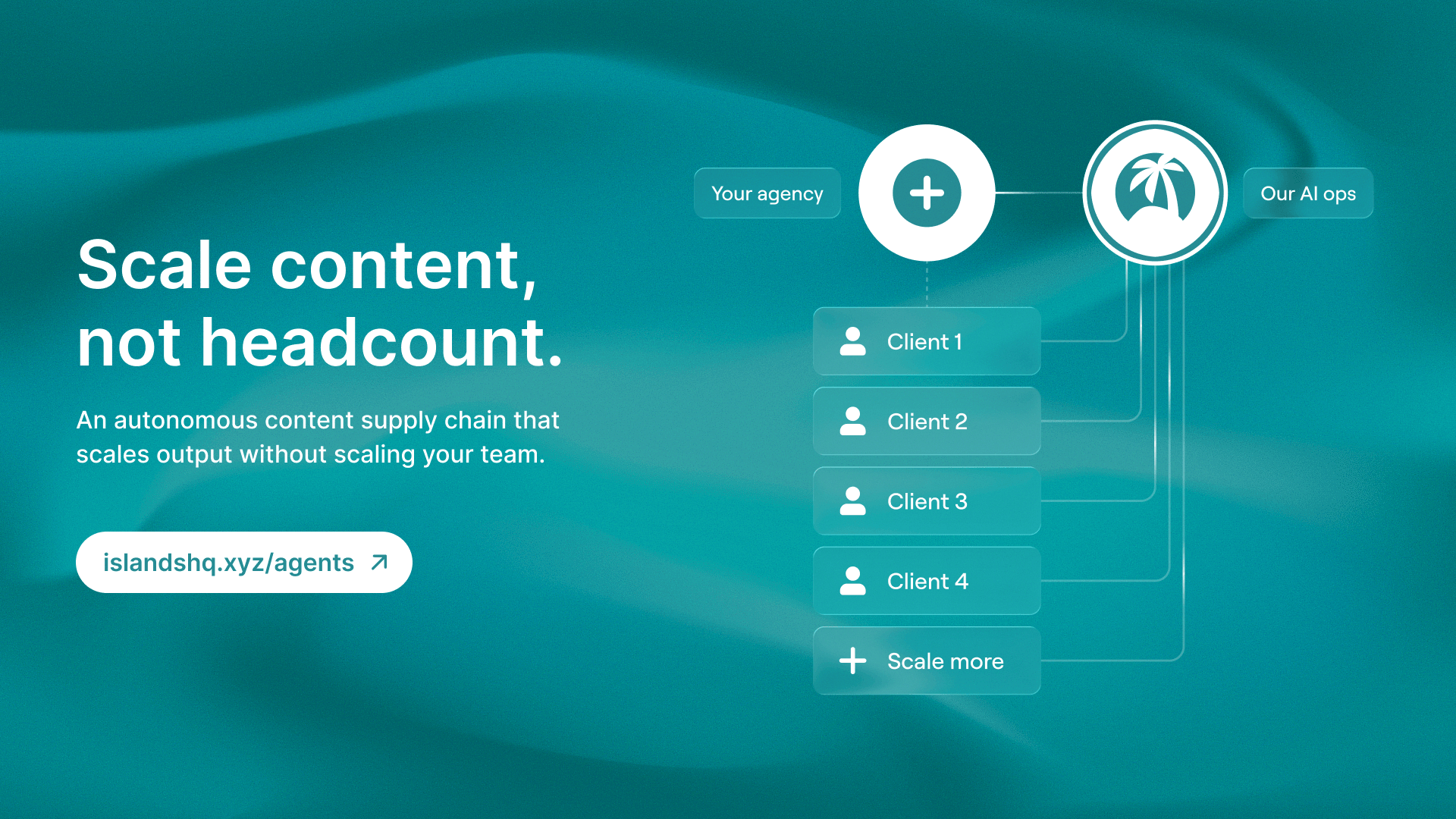
Key results
Reduce reliance on manual drafting from 100% to less than 10%
Cut the editorial lifecycle from weeks to hours by automating research
Maintain brand consistency across high-volume output without human oversight
Shift creative staff from prose production to strategic orchestration
The failure of the assistant model
Most startups are stuck in the assistant phase. They give a writer an AI tool and tell them to write faster. This is a mistake. Using AI as a drafting assistant still keeps the human at the center of the bottleneck. The writer still has to prompt the tool, verify the facts, and massage the prose. It is a marginal gain at best.
The real shift happens when you move from assistants to autonomous supply chains. This means building systems where AI agents handle the heavy lifting of generation without constant human intervention. I have seen this work through multi-agent orchestration used to manage GTM pipelines. Instead of a writer staring at a blank page, the system finds the topic, pulls the data, and creates a ready-to-use draft.
When you implement automated workflows, you allow production to scale without increasing your creative team size. You are essentially avoiding the Series B scaling trap. This is where management overhead eventually outpaces output. The goal is to make content a byproduct of your infrastructure, not a result of human labor. This is the foundation of content scaling.
Why how to scale content creation requires internal data ingestion
The primary bottleneck in content scaling isn’t the writing itself. It is the research and structuring phases. This is where most human-led teams lose days of productivity. A writer has to find sources, verify claims, and outline the argument. Advanced tooling can now handle this pre-writing process entirely by using a content aware scale approach to data.
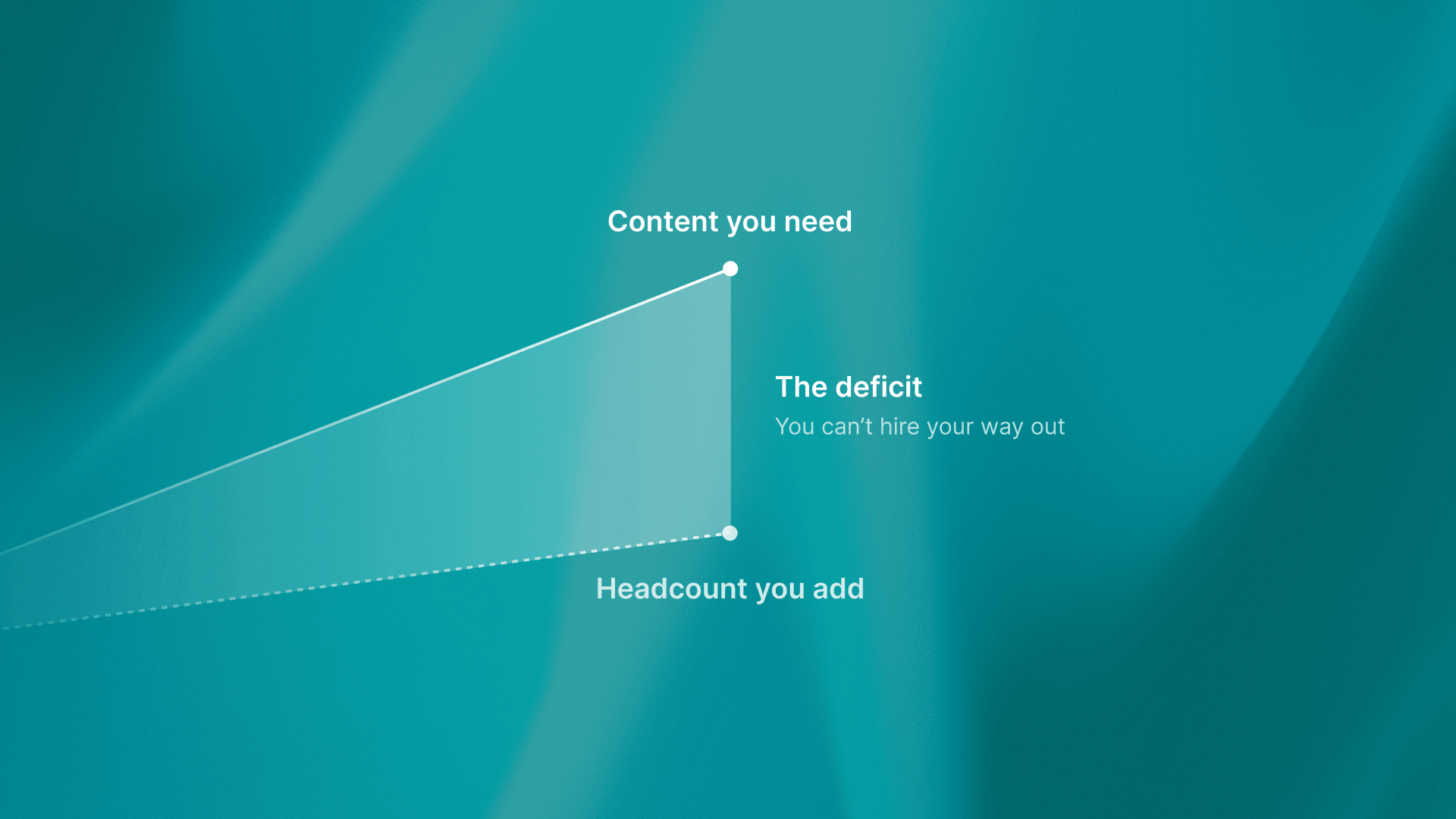
We have moved toward a model where internal knowledge is the primary fuel for the system. For example, you can ingest expert conversations from Slack and Fathom. Then, you can turn your internal knowledge into high-authority posts. You can do this without asking your subject matter experts to write a single word. The system extracts the insights and structures the narrative. It also ensures the technical depth matches your brand standards. This bypasses the need for a content at scale ai detector because the insights are original and human-led at the source.
This approach solves the three biggest hurdles in how to scale content creation:
Data extraction: Automatically pulling facts from unstructured internal data
Semantic mapping: Ensuring the content aligns with your actual expertise
Structural integrity: Building a logical flow that serves the reader and the search engine
Redefining the human as an orchestrator
When agents replace the drafting workflow, the role of your creative team changes. They are no longer writers. They become strategic orchestrators. Their job is to manage the agentic output. They ensure it aligns with the high-level brand strategy and market positioning. This shift is critical for maintaining quality while hitting volume for content at scale.
I often point to software testing as a parallel. In software testing, you don’t scale by hiring more manual testers to click buttons. You scale by building autonomous systems that handle the execution while humans focus on the test architecture. Content is no different. Your team should be designing the supply chain, not working on the assembly line. This helps you figure out content at scale? and how to maintain it.
This integrated approach is the only way to build a sustainable AI content workflow. It can survive the next algorithm update. By removing the operational overhead of drafting and editing, your team focuses on the strategy that drives revenue.
Action steps for the next quarter
Audit your current editorial lifecycle to identify where humans are doing repetitive research tasks.
Map your internal data sources, like meeting transcripts or Slack history, that can fuel an automated pipeline.
Identify one high-volume content channel to transition from a manual workflow to an agentic system.
Redefine your creative job descriptions to focus on system orchestration rather than word counts.
The competitive reality
Companies that continue to scale headcount for content creation will lose. They will be buried by the management tax and the high cost of human-led production. The winners will be those who scale systems. If your content strategy depends on hiring six more people to hit your SEO goals, you are already behind. It is time to audit your workflows for agentic potential. Build a system that scales with your ambition, not your payroll.
Ready to scale without the headcount trap? Book a call and let’s talk about building your first agentic supply chain.