


I’ve spent the last six months talking to growth marketing founders who are hitting a specific wall. They are drowning in expertise but starving for content. Their cloud accounts are full of expert interviews, internal debates, and technical deep dives. But their blogs are empty or filled with generic AI fluff. The problem is a massive bottleneck between the conversation and the keyboard.
Most agencies try to solve this by asking for more of your time. They want one hour each week for a briefing. They also want 30 minutes for a review. They keep sending Slack pings to help with the process. It is a model built on manual labor rather than architectural leverage. At Islands, we moved the intervention point upstream by linking our content engine to where work happens.
Key results:
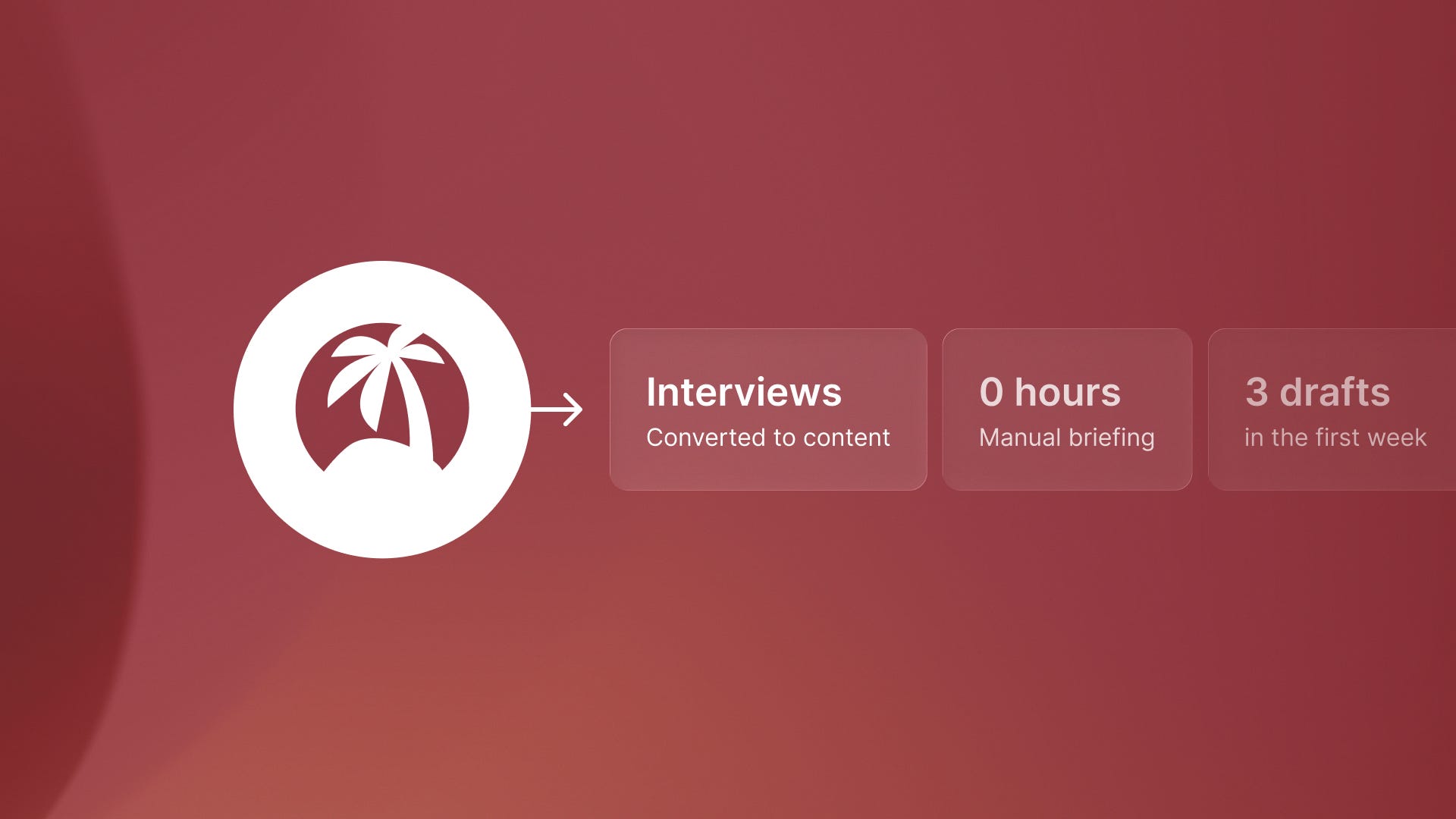
40 idle interviews converted into an automated content pipeline
Zero manual briefing hours required from the founder to generate draft topics
3 validated blog drafts produced in the first week of integration
100% domain authority maintained by using actual expert transcripts instead of generic prompts
The content discovery bottleneck problem
I recently worked with a founder who had an incredible archive of material. We reviewed about 40 past podcast interviews on Riverside. We also reviewed dozens of Fathom recordings from technical coaching calls. We reviewed a Slack workspace filled with product insights. Despite this goldmine, their content strategy was stalled. They felt they needed to hire a content strategy consultant just to figure out what to write about next.
The friction was not a lack of ideas. It was the manual labor required to mine those ideas. When your content team relies on you to hand-deliver topics, you become the narrowest part of the funnel. If you are busy, the content stops. If you are tired, the quality drops. This is why many founders feel their LinkedIn posts are dying in ChatGPT (ReachSocial 2024). They are using AI as a standalone writer rather than an integrated part of their existing knowledge base.
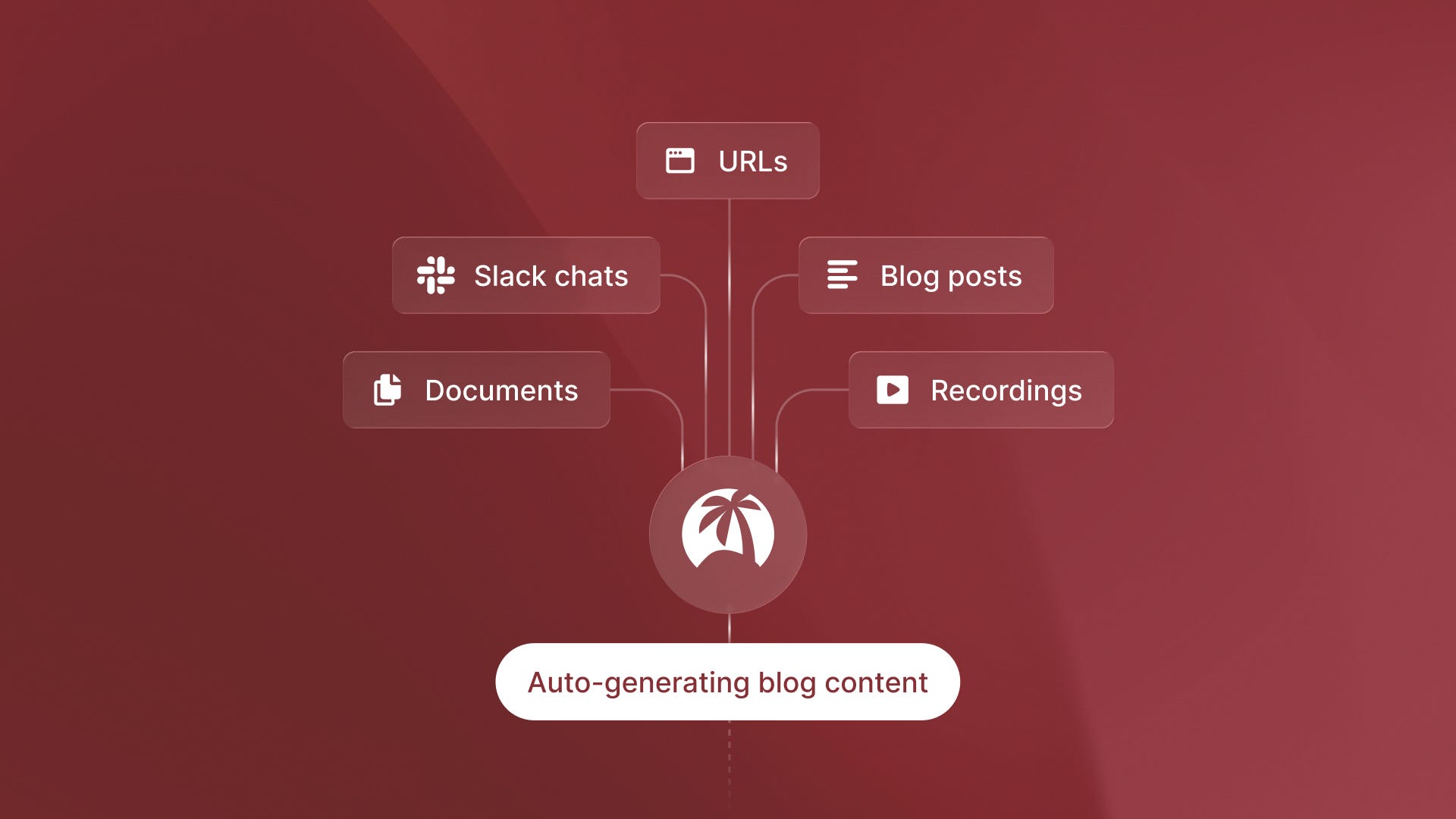
I noticed that the real advantage is in the pipeline, not the prompt. You do not need a better prompt to tell an AI to write a blog post. You need a better way to feed that AI the specific, technical context that only your team possesses. By building an automated content pipeline in tools like Slack, Fathom, and Google Drive, we remove the need for content briefings.
Moving from manual requests to autonomous ingestion
Our first step was to stop asking for topics. Instead, we requested access to the archives. We connected our research agents to their Riverside account to handle Riverside content extraction from those 40 idle interviews. This changed the relationship from ‘tell us what to write’ to ‘here is what you have already said that people want to hear.’
This is a core part of the 5-agent content stack running Islands. One agent focuses on ingestion and extraction. It looks at a transcript from a coaching call and identifies the specific technical friction points discussed. It ignores the small talk and focuses on the ‘aha’ moments. Another agent then maps those insights against search data to ensure we are targeting the right AI search and GEO signals.
Why system integration matters
Most teams are still stuck choosing between ChatGPT, Buffer, or AI-native platforms. They treat content as something they have to create from scratch every week. But for a high-growth agency, content should be a byproduct of your daily operations.
The fathan automated pipeline
If a technical leader spends 45 minutes explaining deployment logic on a Fathom call, that Fathom transcript automation should handle the output. You just need the pipes to move it from the recording to the CMS.
What happens when the engine starts listening
Once we connected the generating content from Slack protocols for this client, the transformation was immediate. We stopped being a vendor that needed management and became an extension of their internal intelligence. Within the first few days, we had converted three complex interviews into full-length, high-authority drafts.
The shift in efficiency
Here is the shift I observed:
Before: The founder had to recall what they talked about two weeks ago, write a brief, and hope the writer caught the nuance.
After: The engine extracted the nuance directly from the audio, capturing technical terms and specific logic that a manual writer would likely miss.
The shift in volume
Before: Expert interviews sat in a Riverside folder like a digital graveyard.
After: Those recordings became a renewable fuel source for LinkedIn, newsletters, and long-form blogs.
This architectural shift is what allows platforms like ReachSocial to maintain consistent engagement. When the system is integrated into your communication tools, the friction of ‘starting’ is removed. You are no longer staring at a blank page. You are just refining the expertise that already exists in your ecosystem.
The strategic implication for marketing leaders
You have a choice. You can keep burning meeting hours trying to brief your content team, or you can build a pipeline that listens. The bottleneck is not your team’s creativity. It is the data architecture of your marketing department. If your leadership team is talking, the content already exists. You just haven’t connected the pipes yet.
The next evolution of this is autonomous. We are already exploring systems where an AI agent can spot a gap in your knowledge base. It can then ask your experts a specific question to fill it. Instead of a one-hour briefing, it is a two-sentence Slack reply that unlocks a 1,200-word authority piece.
You rebuild the workflow, or you keep working for your content team. If you are tired of being the bottleneck in your own growth, stop thinking about prompts and start thinking about pipelines. Connect your tools, unlock your transcripts, and let the engine do the work.
Ready to turn your team's conversations into high-authority content? Partner with Islands to build your automated pipeline today.