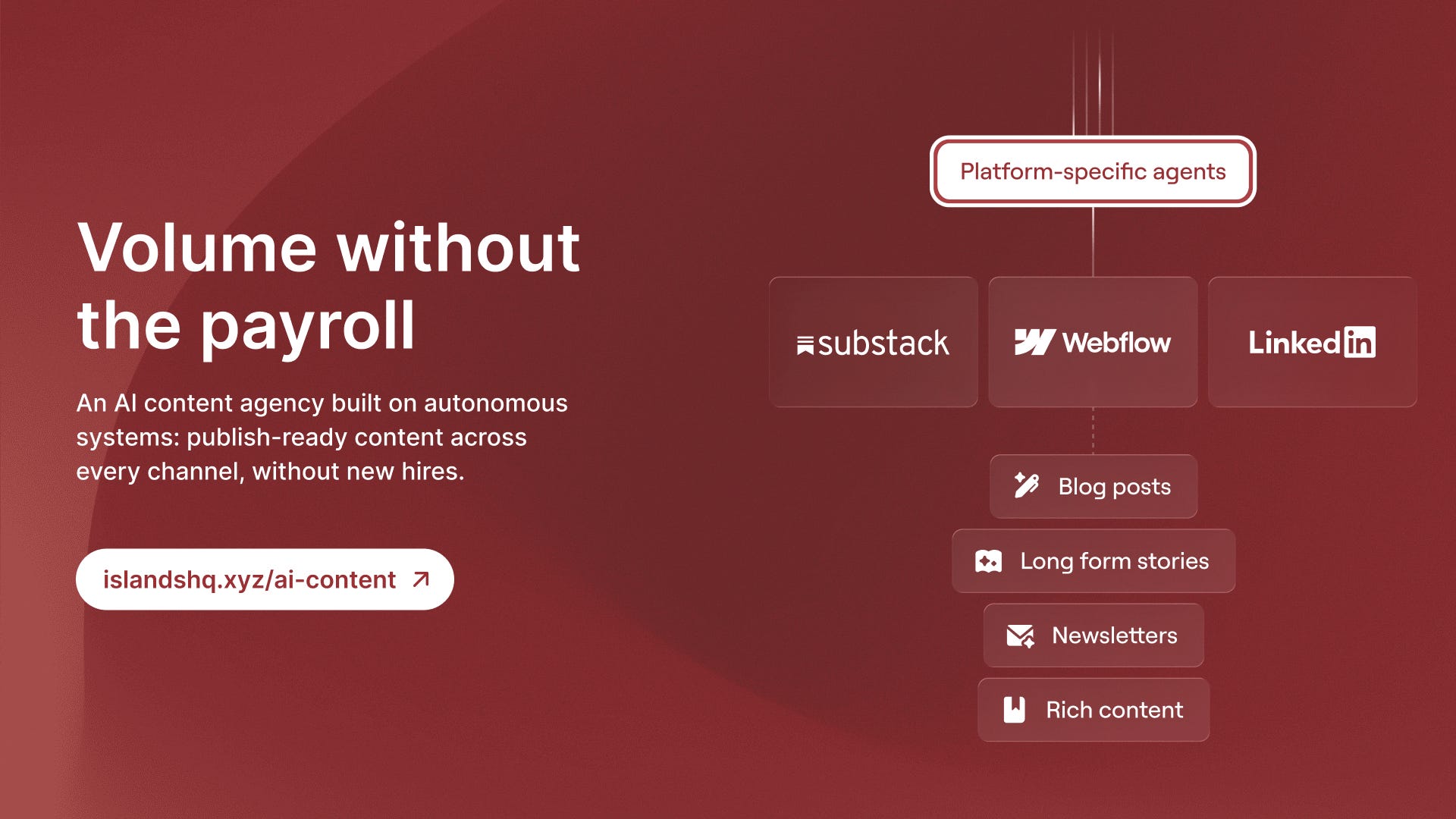

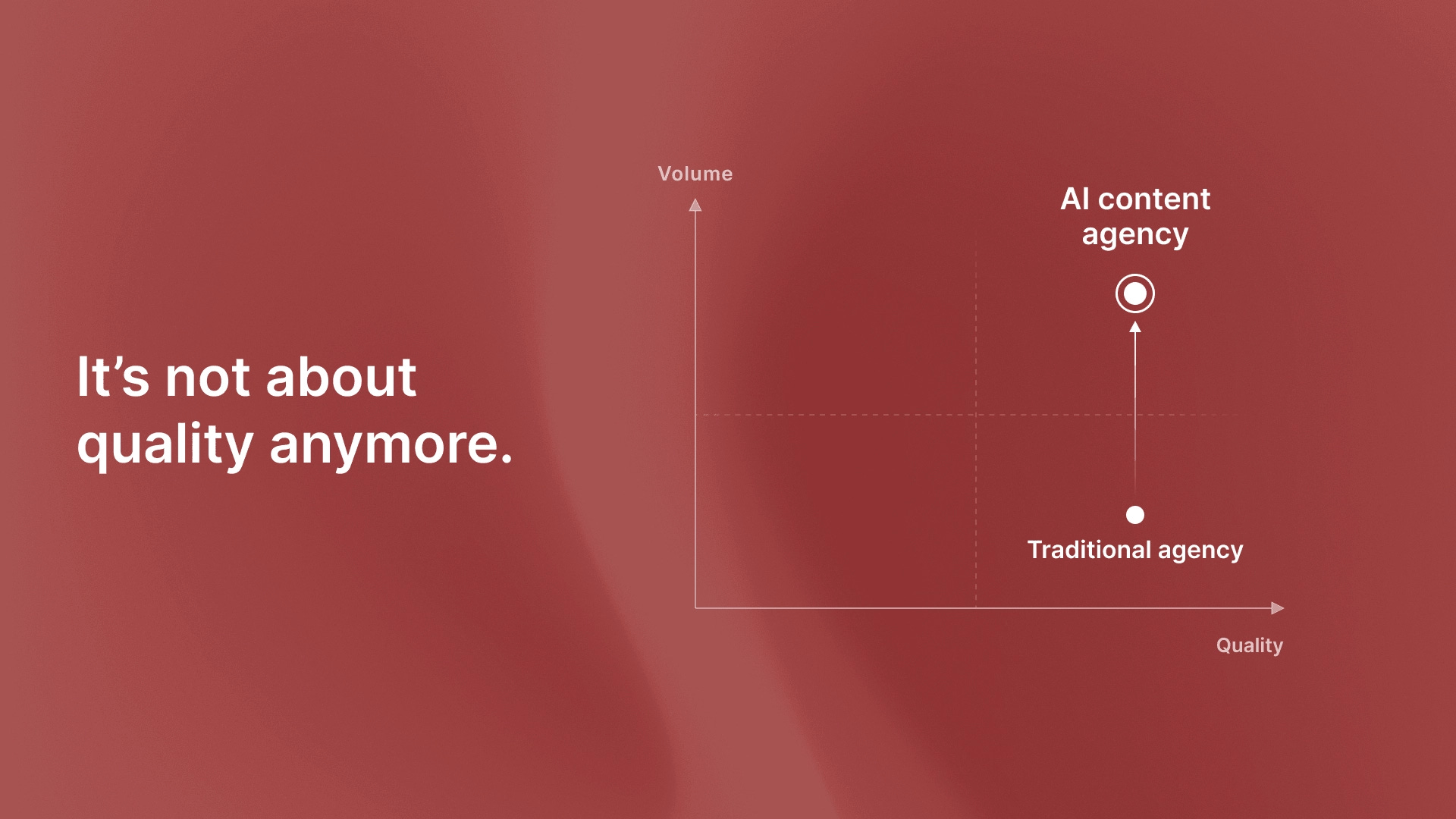
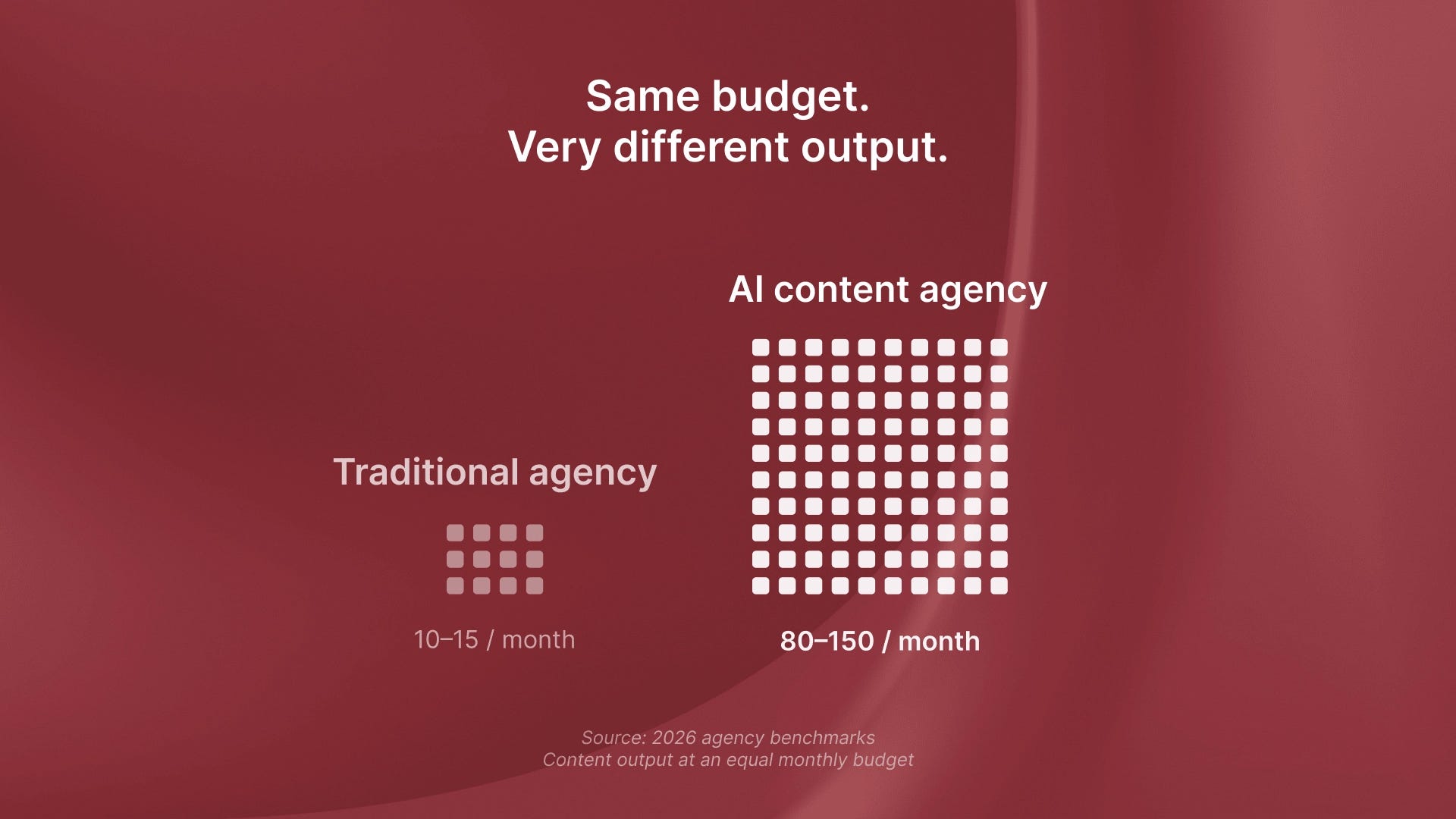
I was talking to a CMO at a Series B startup who was frustrated with their content marketing agency. They were paying a hefty monthly retainer but only receiving four blog posts and a handful of social updates. The problem was not the quality of the writing. It was the velocity. In 2026, a traditional, labor-heavy model simply cannot keep pace with a high-velocity market. Most leaders are walking into a headcount trap by thinking more writers equals more growth. The gap between shipping and waiting is now defined entirely by your agency’s tech stack.
Traditional agencies are struggling to stay relevant. They still use manual drafting and editing methods. These methods have not changed in a decade. AI-native agencies have rewritten the rules of production. They build systems that remove the human bottlenecks that ruin project timelines. This is a technical necessity for any team trying to maintain a competitive moat in a crowded market.

The death of the manual bottleneck
The primary difference between an AI content agency and a traditional agency is how they handle production. A traditional content creation agency relies on a linear sequence: research, outline, draft, edit, and revise. Each step is a friction point. If an editor is sick or a writer is busy, the entire pipeline stalls. This is the classic headcount trap where management overhead eventually outpaces output.
AI-native firms use integrated AI workflows to shorten these timelines from weeks to hours. By embedding AI into the initial generation process, real-time SEO adjustments are included from the start. This allows for a massive increase in output without adding more staff. This shift is why AI-driven firms often report 60% higher margins than their competitors.
Understanding the AI marketing ROI of autonomous production
When you look at the unit economics, the traditional agency model starts to fall apart. You are often paying for the overhead of a large team rather than actual results. In contrast, an AI content agency focuses on building an autonomous content production engine for your brand. This shift moves the focus from billable hours to business impact.
I have seen that many leaders misunderstand their team’s capacity because they look at the wrong metrics. In my experience, misinterpreting utilization gaps often makes agencies hire more people. The real issue is often pipeline demand. Instead, they should be fixing their workflow efficiency. An AI-native model solves this by making production work non-linear and scalable. This is how you achieve sustainable content production 2026 targets.
Key comparison points for 2026:
Production speed: Traditional agencies take weeks; AI agencies take hours
Scalability: AI systems can double output instantly without new hires
SEO integration: AI agencies use RAG-based orchestration for high-volume, compliant content
Cost structure: AI agencies offer better ROI by reducing manual labor costs
Why quality no longer requires a slow pace
The old argument was that you could have speed or quality, but not both. In 2026, that is a false choice. AI content agencies use sophisticated agents to handle the heavy lifting of data synthesis and technical drafting. This allows the human experts to focus entirely on the strategic narrative. This is the core difference between content marketing and traditional advertising.
Traditional agencies often treat SEO as a separate phase. A modern b2b content marketing agency understands that the search market has expanded. They don’t just look at keywords. They optimize for visibility in AI search answers. This requires specialized GEO expertise. Most teams simply haven’t developed this capability yet. The modern marketing role has expanded beyond human capacity, making automated content infrastructure a requirement rather than a luxury.
Choosing the best content marketing agencies for your growth
If you want to dominate your category, you can’t wait for a traditional agency to catch up. You need a partner that understands the technical necessity of autonomous systems. When comparing content agencies, choose ones moving away from billable hours and toward performance-based pricing.
How to transition your strategy
Identify the high-volume content areas where your traditional agency is slowest
Pilot an AI-native workflow for a single channel like LinkedIn or the company blog
Compare the geo vs traditional seo tools content planning results over a 90-day period
Reallocate budget from manual labor retainers to autonomous system building
Build your future today
The bottom line is that the market is moving faster than a human-only team can follow. To maximize your output in 2026, you need an agency that builds the future rather than clinging to the past.
Ready to scale your production? Book a call with Islands today.