


The marketing job description quietly tripled in 2025. What used to be “run a blog and a newsletter.” Now it is “run a blog and a newsletter.” You also have to run LinkedIn, Substack, Medium, X, Reddit, YouTube Shorts, and a podcast. You also need an SEO program for Google and AI search.
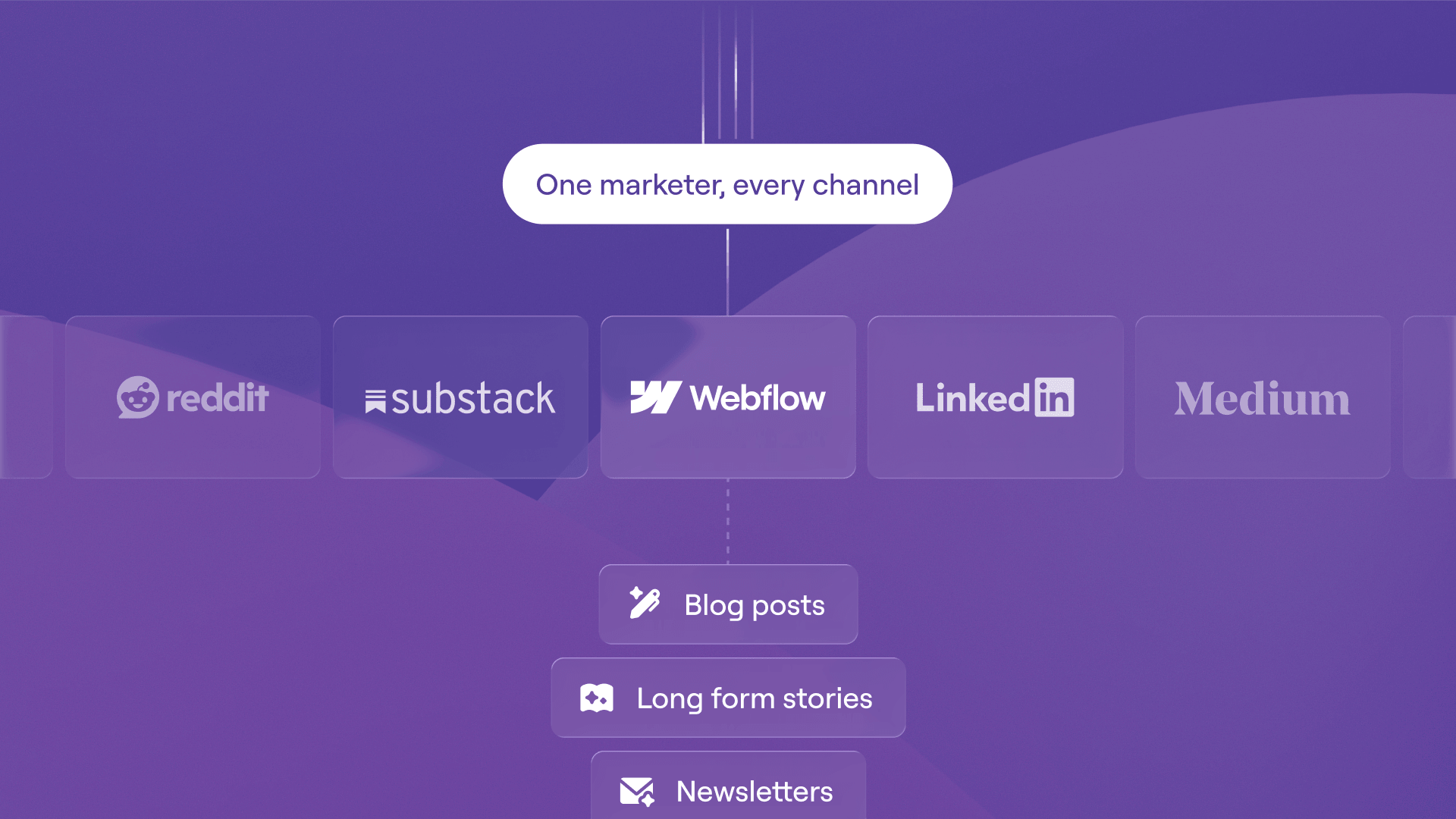
Headcount didn’t triple. Budgets didn’t triple. Something had to give. Most teams gave up coverage. They picked two channels and let the rest die. The ones that didn’t went looking for AI marketing tools that could carry the rest.
Buckminster Fuller was an engineer and futurist. He spent his career studying how systems break and what replaces them. He said this half a century before the AI era:
“You never change things by fighting the existing reality. To change something, build a new model that makes the existing model obsolete.” - Buckminster Fuller
That’s the unsexy story behind every “AI is a game-changer” headline you’ve seen this year. The change isn’t that AI got smart enough to replace marketers. It’s that the job got big enough to break them.
What actually changed
Strip away the AI marketing news cycle for a second. Three structural shifts are doing the real work.
Channels multiplied. Attention didn’t. Being present on five to ten channels stopped being optional. Each one needs a different format and a different cadence. No team scales linearly into that.
Herbert Simon, the Nobel laureate who coined the phrase “attention economy” in 1971, predicted exactly this moment:
“A wealth of information creates a poverty of attention.” - Herbert Simon
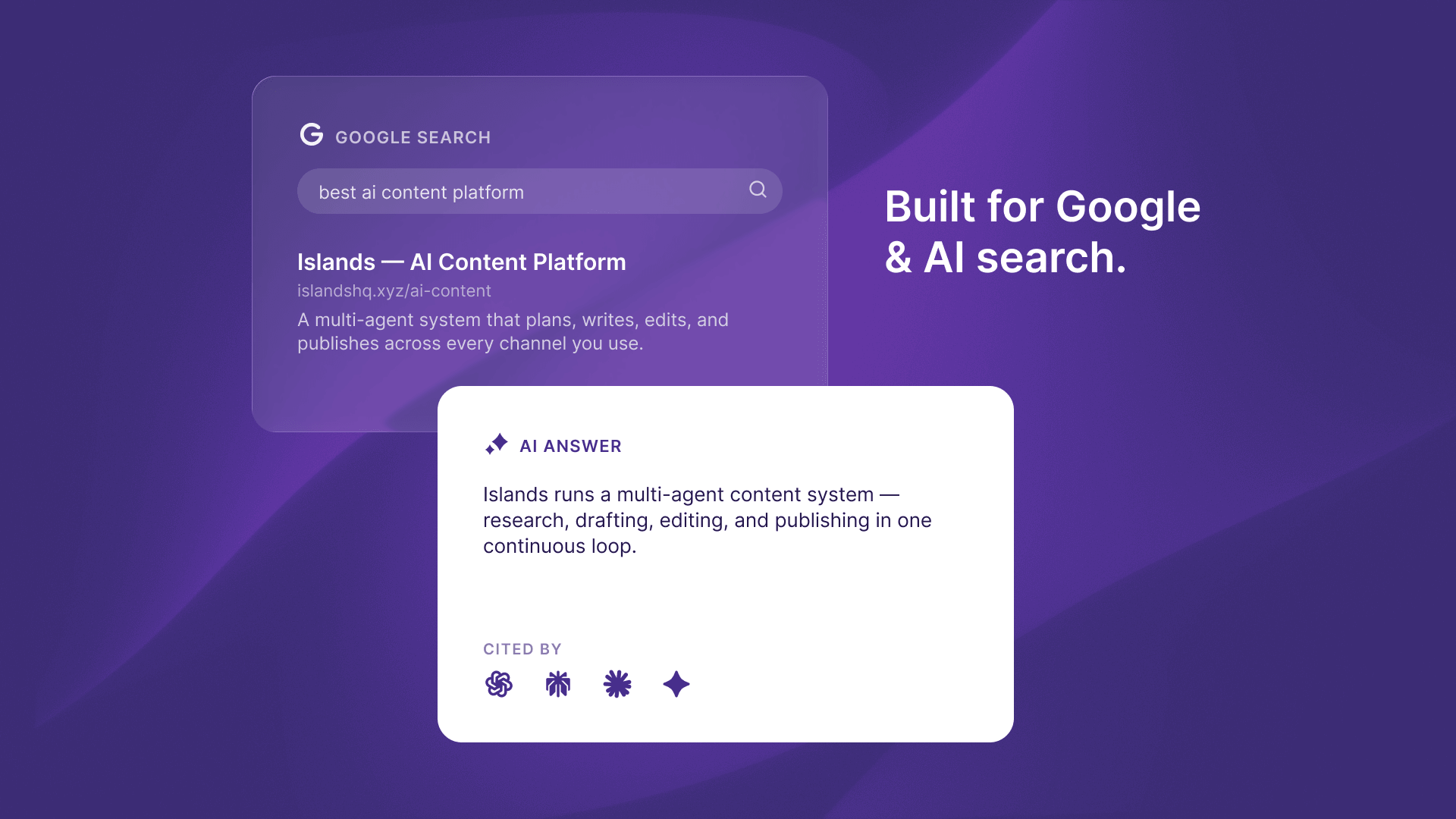
Search fractured. Half your prospects are on Google. The other half are asking ChatGPT, Perplexity, Claude, and Google AI Overviews. Marketers now need to create content for AI articles. These pieces should be structured for citation by language models. They should also rank on a SERP.
Mediocre content stopped working. Anyone with an AI content generator can produce a draft. So drafts stopped winning attention. The bar moved to original research, founder voice, and depth.
A single human writer can’t keep up with all three at once. A team of three can’t either. An AI powered content creation platform with humans in the loop can.
What the leverage actually looks like
Islands ran the system on its own properties before deploying it anywhere else.
The Islands Substack went from 6 to 1,266 subscribers in 180 days. Views: 295 to 10,800. Zero paid amplification.
The QA flow Substack went from 7 to 1,233 subscribers in the same window. Its LinkedIn account pulled 35,727 organic impressions.
The same pipeline now runs QA engineering content, LinkedIn content systems, agency operations resources, hiring playbooks, freelance marketing operator content, performance marketing playbooks, Canadian benefits content, beauty brand publishing, and vertical operational how-tos.
One system. Many brands. Zero extra headcount.
Archimedes captured the principle two thousand years ago in the one quote every founder knows:
“Give me a lever long enough and a fulcrum on which to place it, and I shall move the world.” - Archimedes
That’s what AI marketing means when it’s working. Not a chatbot that drafts faster. A production line that ships to every channel a brand cares about, every week, with a fraction of the staff the old playbook needed.
The trap most marketers are walking into
A lot of teams adopted AI content generator tools in 2024 and 2025 and then wondered why their output got worse. The reason was always the same: they bolted AI onto an inefficient process.
If your old workflow was: a writer drafts in Google Docs. An editor reviews using track changes. A marketing manager schedules it in WordPress. A social manager reposts it on LinkedIn. Adding AI will not fix this workflow. It speeds up the broken parts and leaves the handoffs intact.
The real game-change is replacing the workflow, not augmenting it. Strategy agent. Research agent. Writer agent. Editor agent. Reporting agent. Platform sub-agents that adapt one piece for every channel. Humans in the loop reviewing, not retyping.
That’s what an AI powered content creation platform is supposed to do. Anything less is a faster keyboard.
The unfashionable take
Most teams treat content like a project. Plan a batch, ship it, move on. Three months later the calendar collapses and they’re back at zero.
Content is infrastructure. It compounds when it’s running, and it bleeds when it isn’t.
The marketers winning in 2026 aren’t the ones with the most AI tools for marketing in their stack. They’re the ones who turned content generation into a steady background process that doesn’t need them in it every day.
If your content strategy still depends on you writing every brief, that’s the gap.
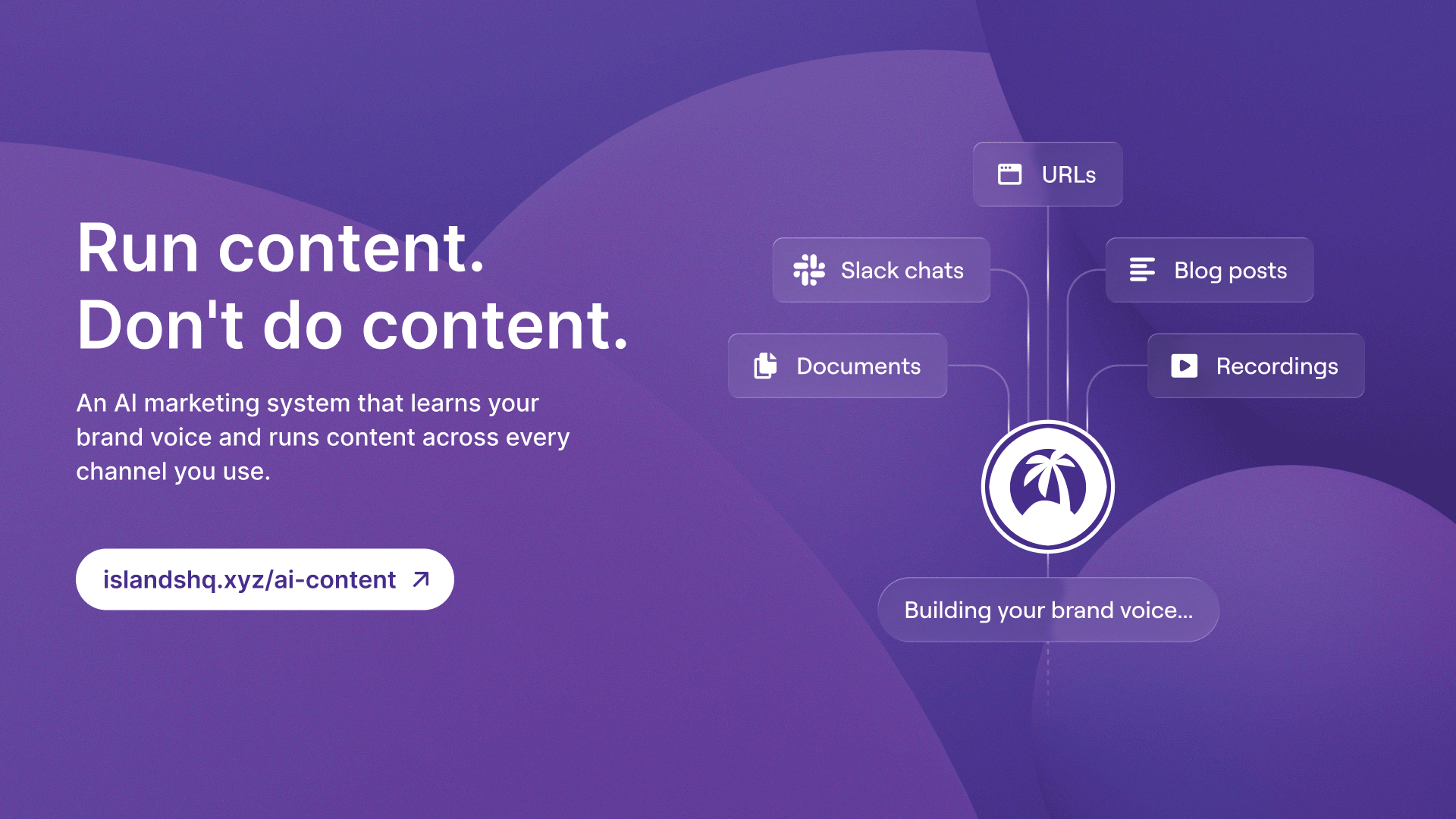
Sign-up for free and see what an AI marketing system would do inside your stack.
“One marketer, every channel” is the real shift — GEO means you now optimize for the model reading all of them, not just Google.
The job tripled because AI didn’t replace marketers, it replaced the excuse for not testing ten ideas instead of one.