


I’ve been thinking about a statistic that keeps me up at night. 95% of enterprise AI pilots deliver no measurable return on P&L.
That’s from MIT’s NANDA study. Not some vendor survey. Academic research tracking actual business outcomes.
But here’s what caught my attention. That same year, 15-20% of enterprises actually deployed agents in production workflows touching real customers and critical business processes. Same technology. Same market conditions. Completely different outcomes.
The difference isn’t the AI models. It’s that most companies are building assistants when they need agents.
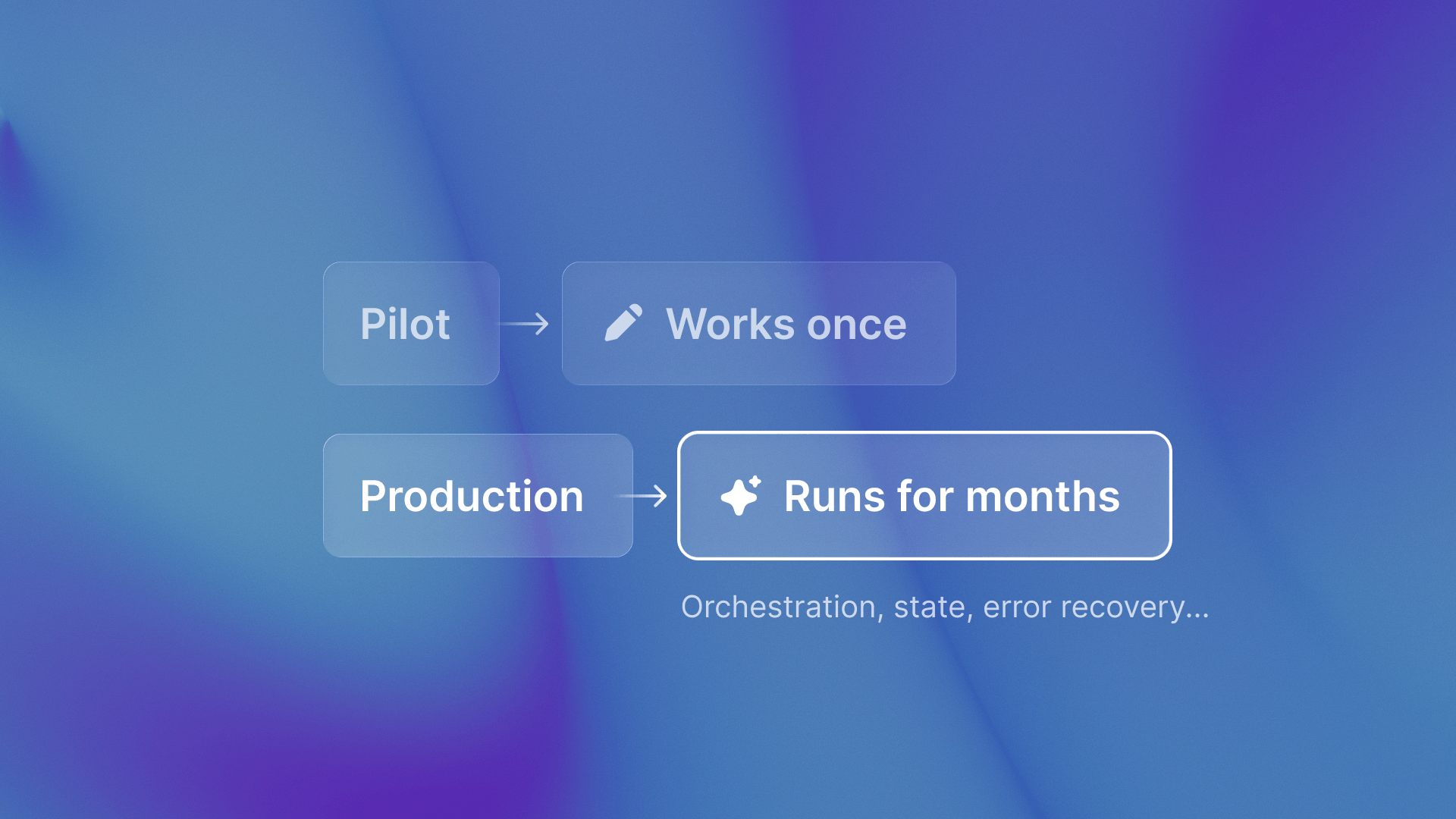
Assistants enhance. agents replace.
Let me explain what I mean by that distinction, because it’s the primary reason pilots fail.
An assistant is GitHub Copilot suggesting your next line of code. ChatGPT drafting an email. Salesforce Einstein surfacing insights. These tools enhance human workflows. They make you faster at tasks you’re already doing.
An agent is different. It replaces the workflow entirely.
I was talking to the team at QA flow last week, and they shared something that illustrates this perfectly. Their platform doesn’t suggest test cases for engineers to write. It watches your GitHub commits, generates the tests, runs them, and reports back which code changes broke what functionality. No human in the loop for the actual testing workflow.
That’s autonomous operation. And it requires completely different architecture than a suggestion tool.
The architecture gap nobody talks about
Here’s what happens in most enterprises. You build a demo that works beautifully in controlled conditions. Executives see it. They’re impressed. Everyone agrees to move forward.
Then production happens. And everything falls apart.
The architectural requirements are fundamentally different. Your demo handled the happy path. Production needs error handling for 847 edge cases. Your demo processed clean test data. Production gets malformed inputs, system timeouts, and integration failures at 3am.
Over 40% of agentic AI projects will be canceled by end of 2027, according to Gartner’s prediction. Not because the technology doesn’t work. Because teams underestimate what production-ready actually requires.
Last month I watched this play out at a Series B company. They built an AI agent for customer support ticket routing. Worked great in testing with 100 historical tickets. Put it in production and discovered it couldn’t handle tickets that referenced multiple issues. Or tickets where the customer changed their mind mid-conversation. Or tickets that needed escalation based on account value, not just technical complexity.
Their demo architecture had no concept of state management across interactions. No fallback logic for ambiguous cases. No monitoring to detect when the agent was making bad routing decisions.
They’re rebuilding from scratch now. Six months and significant engineering resources spent learning what production-ready meant.
Reliability requirements change everything
When I talk to CTOs about moving from pilot to production, the conversation always comes back to one question: what happens when it fails?
Because it will fail. Every system does. The question is whether your architecture can handle failure gracefully.
Production agents need real-time monitoring of decision quality. They need circuit breakers that catch runaway costs before your LLM bill hits five figures. They need audit trails showing why the agent took each action, because you will need to debug edge cases at 2am.
They also need economic efficiency. Your demo might call GPT-4 on every operation. That’s $4,200 per month at scale. Production systems optimize model selection based on task complexity. They cache common operations. They batch API calls.
I’ve written before about [AI agent economics] and the numbers are stark. The difference between a pilot that costs $500/month and a production system generating 420% ROI isn’t just scale. It’s architectural decisions about cost management, reliability patterns, and operational efficiency.
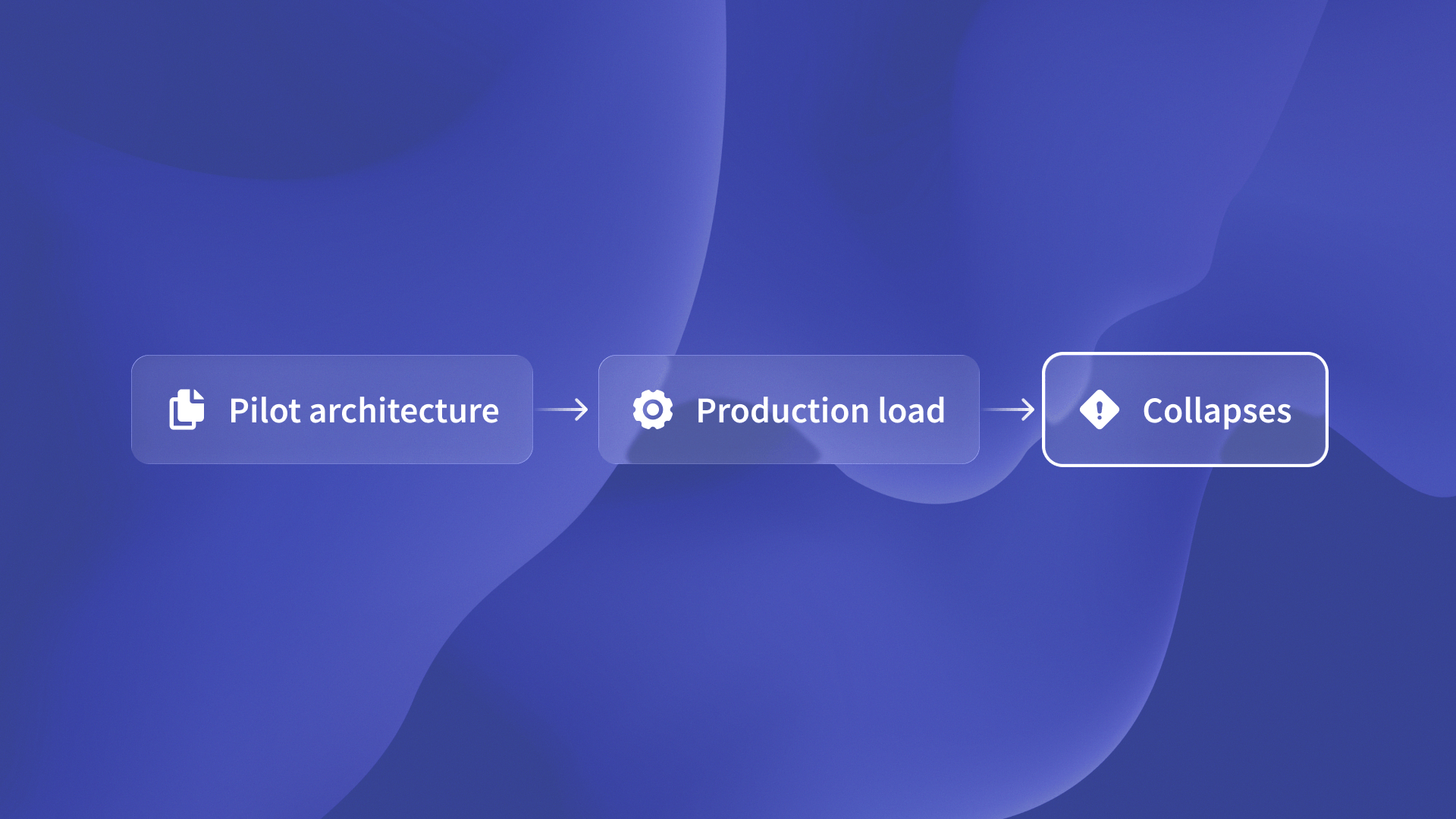
Organizational readiness matters as much as code
Here’s something most people miss: the technical architecture gap is only half the problem.
Most companies lack production AI experience internally. They’re building their first agent. They don’t know what questions to ask. They don’t know which patterns work and which create expensive maintenance burdens.
So they learn through expensive trial and error.
I saw this at Timecapsule when we first deployed autonomous time tracking. The team understood the basic agent architecture but had no playbook for tuning reliability thresholds. How many false positives are acceptable when auto-categorizing billable hours? What’s the right confidence score before requiring human review?
We figured it out through iteration. But that iteration took eight weeks and multiple deployments before we hit the right balance.
Companies building their first agent don’t have that pattern recognition. They make the same mistakes everyone makes on their first production deployment. The difference is whether you compress that learning curve from quarters to weeks.
Speed to production determines competitive advantage
Every company can build a demo. The hard part is production.
And the timeline matters more than most executives realize. Getting a working demo in three weeks means nothing if it takes nine months to reach production. By then, your competitors who understood the production requirements upfront have already shipped.
I’ve been working on [predictions for AI agents in 2026]. One pattern is clear. Companies that master production deployment this year will build automation moats. Competitors won’t match them with assistants.
The architectural patterns exist. Multi-agent orchestration. Persistent memory across interactions. Proactive problem detection. These aren’t theoretical concepts. They’re deployed in production systems right now.
But you need to understand [why autonomous systems deliver different ROI than assistants]. That architectural choice cascades through every technical decision you make.
What production-ready actually means
If you’re evaluating an AI agent project right now, here’s what to ask:
Does your architecture handle state across multiple interactions? Can it recover gracefully from API failures, bad data, and edge cases? Do you have monitoring that shows decision quality in real-time, not just error rates? Can you explain why the agent took each action six months from now when debugging?
If the answer to any of those is no, you’re building a demo, not a production system.
The good news is you don’t have to learn this through trial and error. The patterns exist. The playbooks exist. [Building your first agent in 30 days] is achievable if you start with production needs, not demo features.
What happens if you don’t figure this out
Companies that master production agent architecture in 2026 will build automation moats their competitors can’t cross. Those that keep running pilots will watch that Gartner prediction come true: 40% cancellation rate by 2027.
The difference isn’t in the AI models everyone has access to. It’s in understanding what production-ready actually requires. The reliability patterns. The cost optimization strategies. The operational monitoring. The architectural decisions that separate systems that ship from systems that get rebuilt.
Those lessons come from deploying multiple agents to production. From seeing what breaks at scale. From understanding the economics of autonomous operation versus human-assisted workflows.
Your competitors are figuring this out right now. The question is whether you’ll learn through costly trial and error. Or you can shorten that timeline with proven patterns from teams who shipped already.