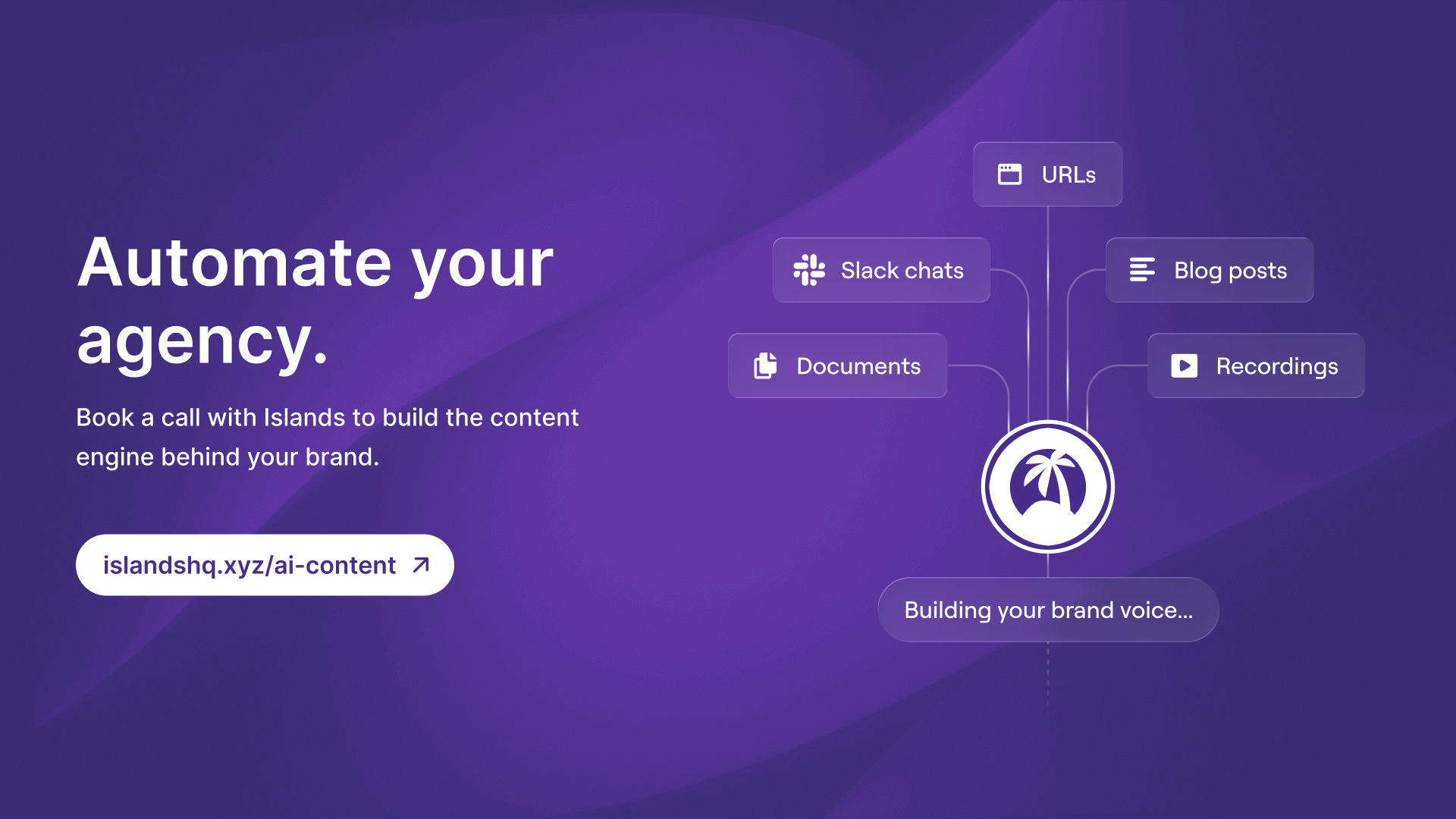

I was talking to a Series B founder last week who was watching his content operation turn into a house of cards. They had the volume, but the unit economics were failing. They tried to scale a content writing service with human writers and basic AI assistants. But they could not keep quality high and margins healthy. The traditional agency model is breaking. The gap is a lack of production-grade infrastructure.
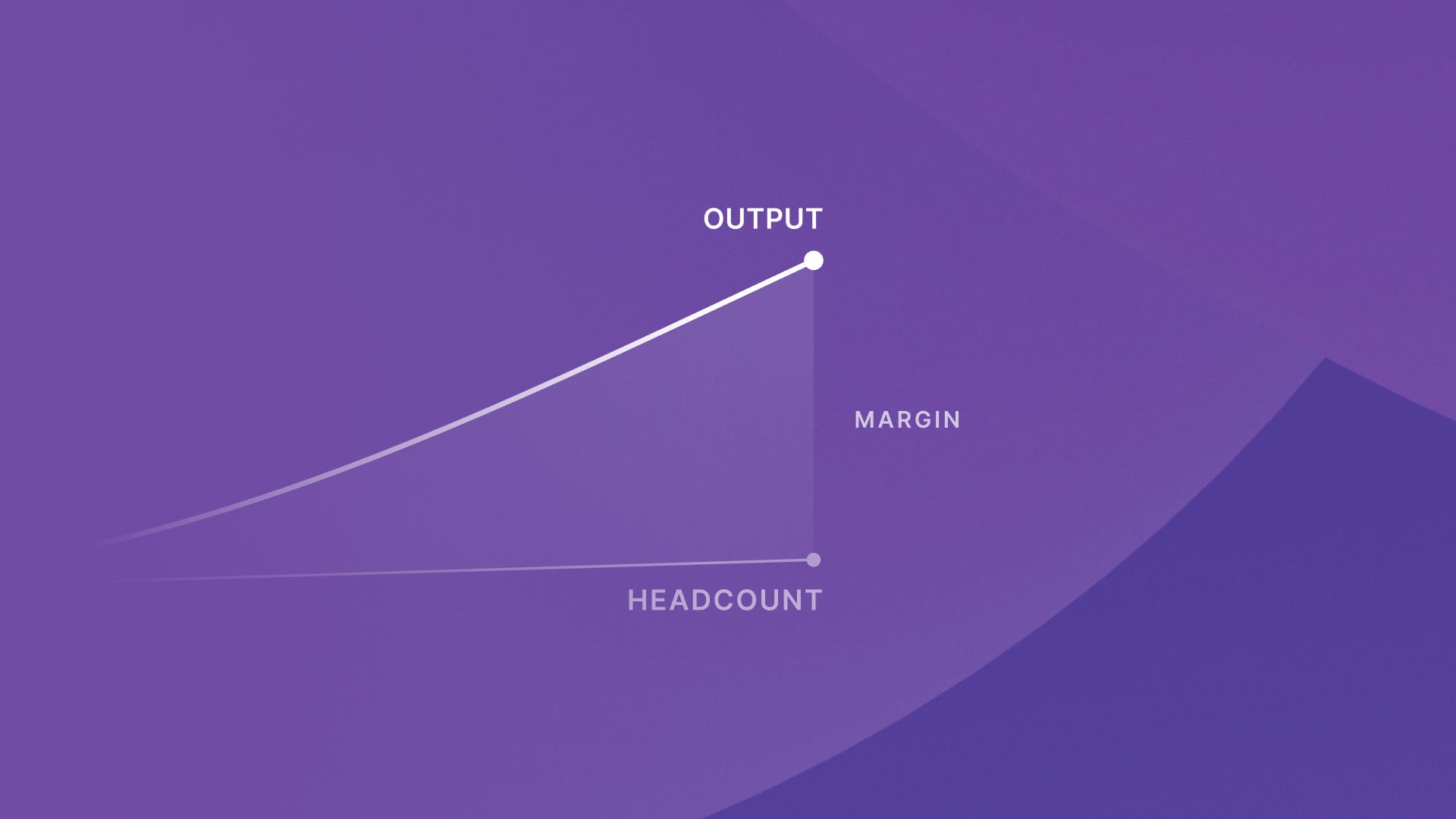
Modern generative engine optimization requires specialized content pipelines to drive measurable lead generation rather than traffic alone. Agencies often waste margins building basic assistants that fail to produce production-ready, human-grade output. The key shift this year is to move to white-label AI tools and infrastructure. This will replace manual work with automated processes.
Scaling with an AI powered content creation platform
Basic AI assistants fail because they require too much human oversight. If a team spends four hours editing a one-hour AI draft, unit economics do not improve. The cost of manual oversight grows with volume. The more clients you sign, the more editors you need. This stalls growth.
Andy Grove built Intel’s management system around exactly this distinction, warning in High Output Management that activity and output are routinely mistaken for one another:
“...stressing output is the key to improving productivity.”
Andy Grove — High Output Management, 1983
Hiring a fifth editor is an increase in activity. It is not an increase in output, because the draft being edited was already going to ship. Grove’s warning was that adding activity to a low-leverage process tends to produce the opposite of productivity, and a human editing queue sitting downstream of an AI draft is about as low-leverage as production work gets.
Success in this space belongs to those with the best agents. A system must handle the heavy lifting of research, drafting, and optimization without human-in-the-loop latency. Implementing high-end integrated AI workflows ensures that output remains consistent across all client accounts. Many firms find that specialized orchestration layers are the only way to build these pipelines faster than they could in-house.
The SEO playbook: from assistants to agents
The transition to agentic SEO requires a shift in how you think about content production. You are building an execution infrastructure. The new requirements include:
Specialized content pipelines that focus on high-intent lead generation
Autonomous systems that can manage multi-channel adaptation and distribution
A specialized orchestration layer for production-ready output
Systems that prioritize technical authority and E-E-A-T over raw volume
Integration with existing CRM and API layers for real-time reporting
How to humanize AI content at scale
Learning how to humanize AI content at scale is essential for modern marketing. Bypassing the AI content detector is about injecting expert-level nuance. This is where autonomous agents outperform simple wrappers. As Dario Amodei, CEO of Anthropic, noted in his analysis of AI’s path.
Value is shifting to systems that can reason over complex data sets.
An agent can research specific industry data and incorporate it into the text. This makes it indistinguishable from human expert writing. You can scale without sacrificing the quality that search engines demand. This is not just a tool; it is infrastructure.
The economics of white-label infrastructure
White-label infrastructure acts as a margin multiplier. Instead of hiring more headcount, you invest in a system that handles the workload of ten people. Most agencies resell a set of third-party SaaS products with light setup, which creates a basic conflict of incentives.
To calculate the ROI for these automated workflows, you should:
Audit current labor costs for content production and editing.
Compare the cost of a white-label platform against the billable hours saved by addressing workflow efficiency.
Measure the increase in output and lead generation potential without adding headcount.
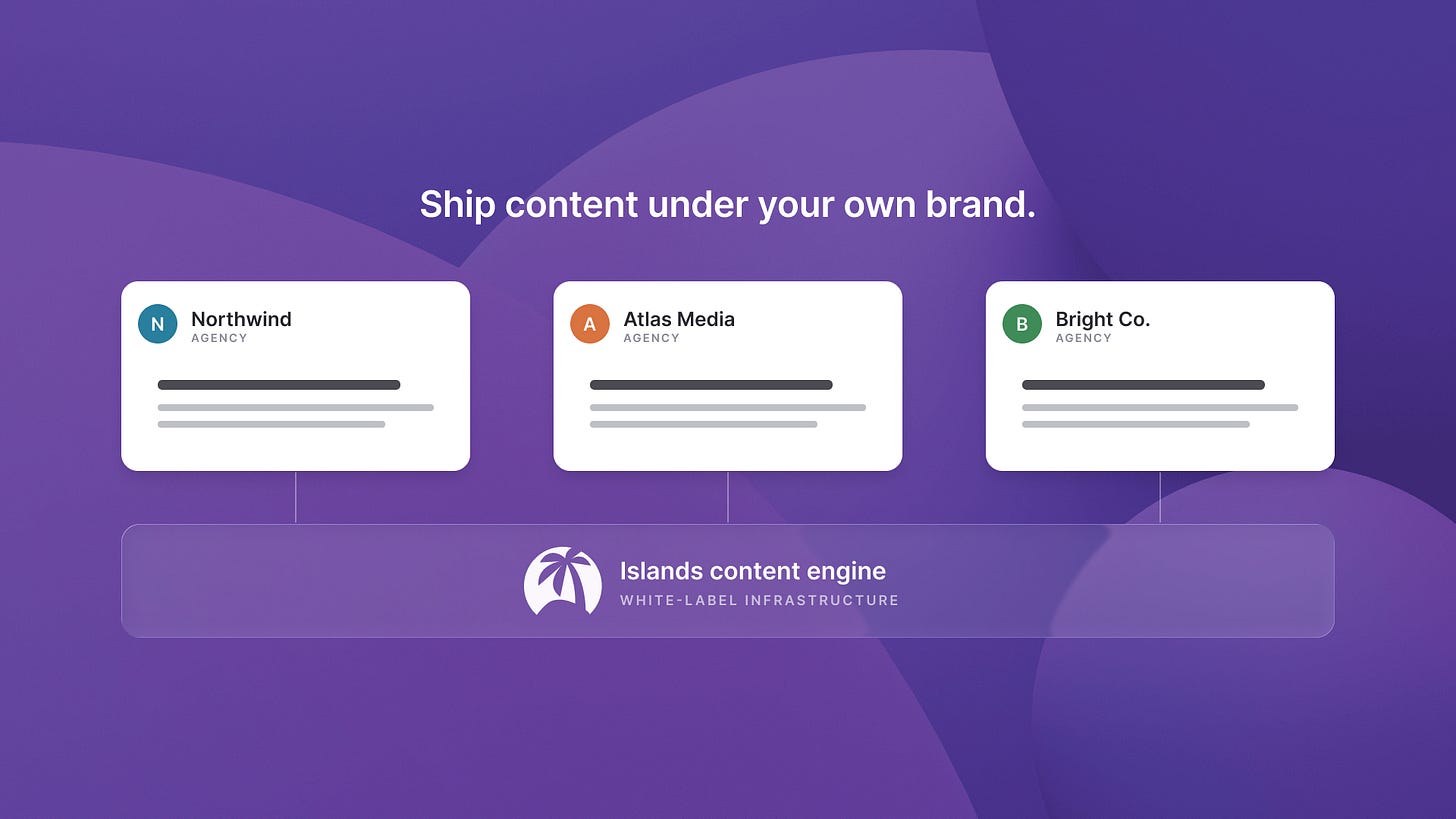
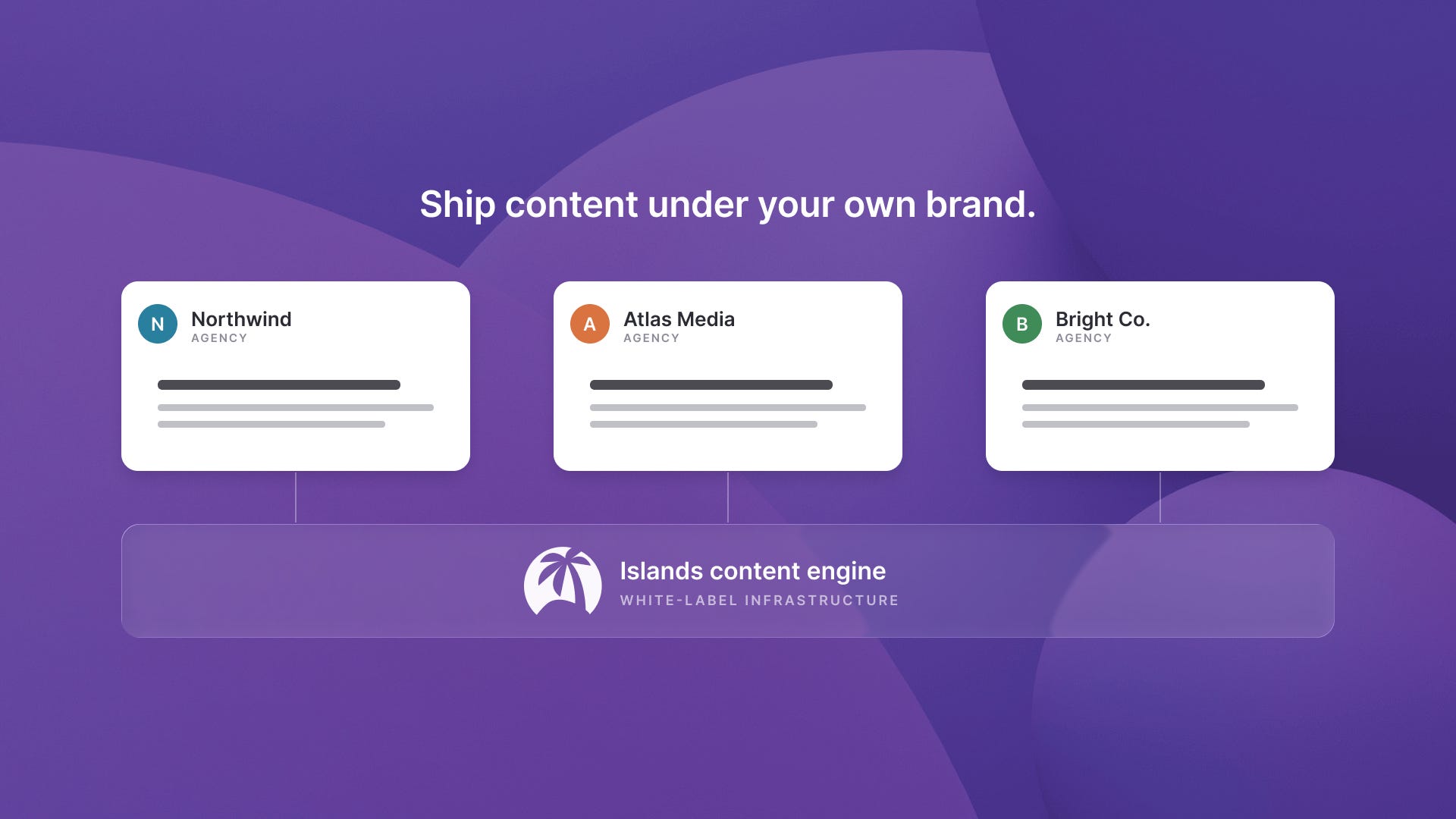
This methodology works across technical sectors where domain-specialized agent training replaces manual script generation. The goal is to move from labor-intensive to infrastructure-led growth. Build. Run. Maintain.
The bottom line
The shift to white-label AI is about reclaiming margins and scaling beyond the limitations of human labor. Infrastructure beats tools every time.
Build. Run. Maintain.
Is your agency ready to move to an infrastructure-led model? Reach out today to see how our white-label agents can transform your unit economics by helping you book a call.