


What It Actually Costs to Build AI Agents in 2025
Custom AI agent development costs $10,000 to $250,000+ depending on complexity. Add $1,000 to $5,000 monthly in LLM fees for mid-sized production systems.
I’ve been having the same conversation with CTOs every week lately. They’ve built a prototype AI assistant that works beautifully in demo. Now their board wants production deployment, and finance needs a budget.
The conversation always hits the same wall: nobody knows what this actually costs.
Not the PoC. Not the assistant that drafts emails or surfaces insights. The autonomous agent that runs workflows end-to-end without human intervention.
Here’s the problem. Most cost breakdowns you’ll find online give you vague ranges without explaining where the money goes. They’ll say “$50K to $200K” and call it done. That’s useless when you’re trying to justify a six-figure investment to your CFO.
So let me break down what we’ve learned deploying production agents across our portfolio. Real numbers, component by component, with the hidden costs most teams miss until month three.
Development Costs: The Wide Range Nobody Explains
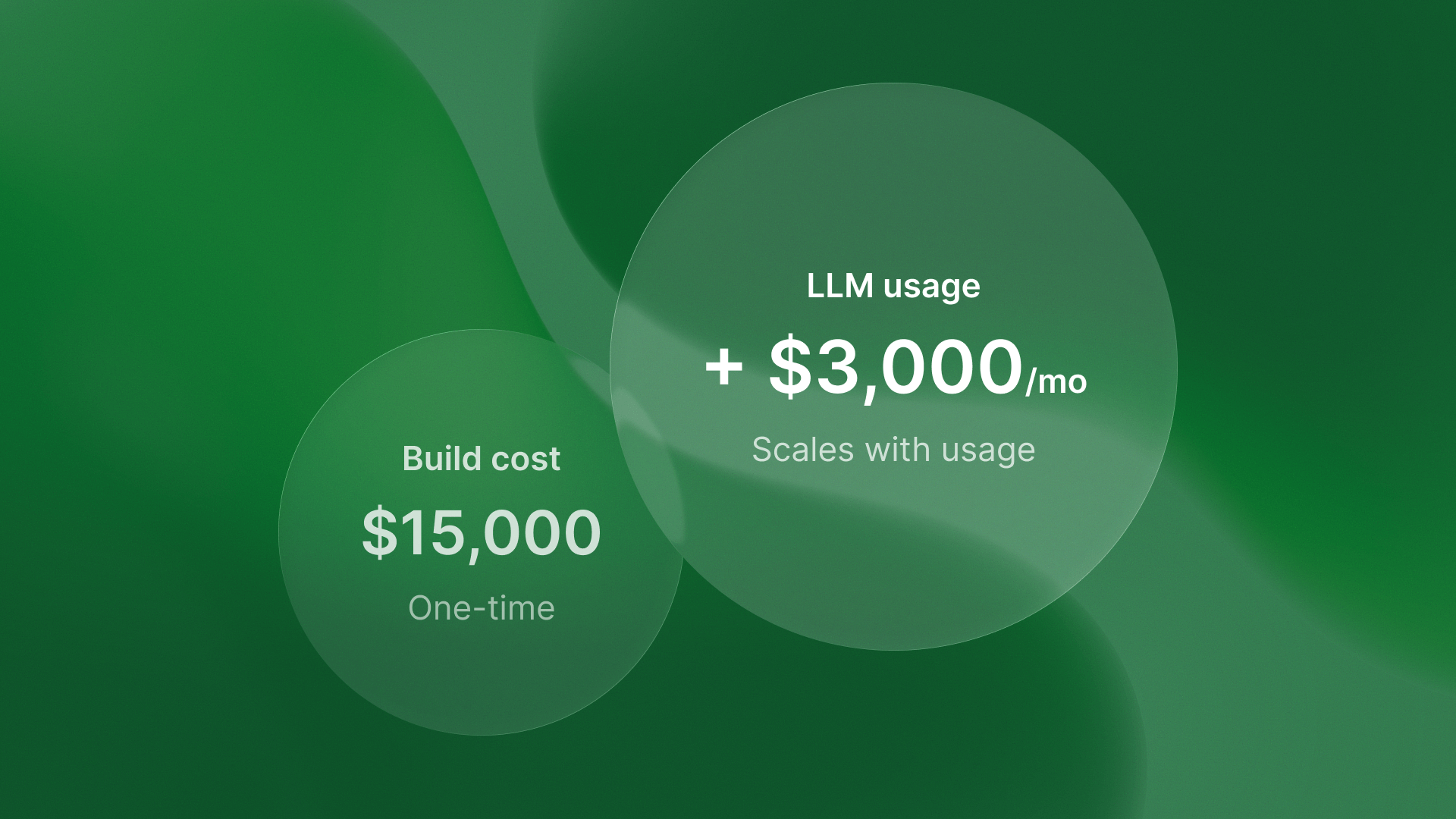
Simple AI agents start at $10,000. Enterprise-grade autonomous systems exceed $250,000 in initial development spend.
That range is real, but understanding where your project lands requires breaking down what “complexity” actually means.
A simple agent handles one workflow with clear inputs and outputs. Example: A support bot that categorizes tickets and routes them to the right team. You’re building perception (read ticket), reasoning (classify intent), and action (assign to queue). Three weeks of development, maybe four.
Compare that to an autonomous QA agent like QA flow. It must understand Figma designs and generate test scenarios. It must run tests across browsers, spot visual regressions, and file bugs with context. That’s perception across multiple data sources, complex reasoning about expected vs actual behavior, and orchestrated actions across testing infrastructure.
The development cost difference isn’t linear. It’s architectural.
Here’s what drives costs up:
Multi-step reasoning chains with branching logic
Integration with 3+ external systems
Real-time decision making with feedback loops
Custom training on domain-specific data
Error handling that adapts based on failure patterns
Most production agents earn $75,000 to $150,000. They need at least three of those capabilities to be truly autonomous.
The Operational Costs Nobody Budgets For
Development is one-time. Operations are forever.
Mid-sized production agents consume 5 to 10 million tokens monthly. That translates to $1,000 to $5,000 in LLM fees alone, before infrastructure and maintenance.
Last month I was reviewing costs with one of our portfolio companies running a customer service agent. Their agent handles about 2,000 conversations monthly. Each conversation averages 15 exchanges. They’re burning through 8 million tokens at $0.60 per million tokens for GPT-4.
That’s $4,800 monthly just in API calls.
Add infrastructure: $800 for hosting, vector databases, and monitoring. Add maintenance: 20 hours monthly at $150/hour for prompt tuning, edge case handling, and integration updates. You’re at $8,800 monthly in operational costs they didn’t budget for.
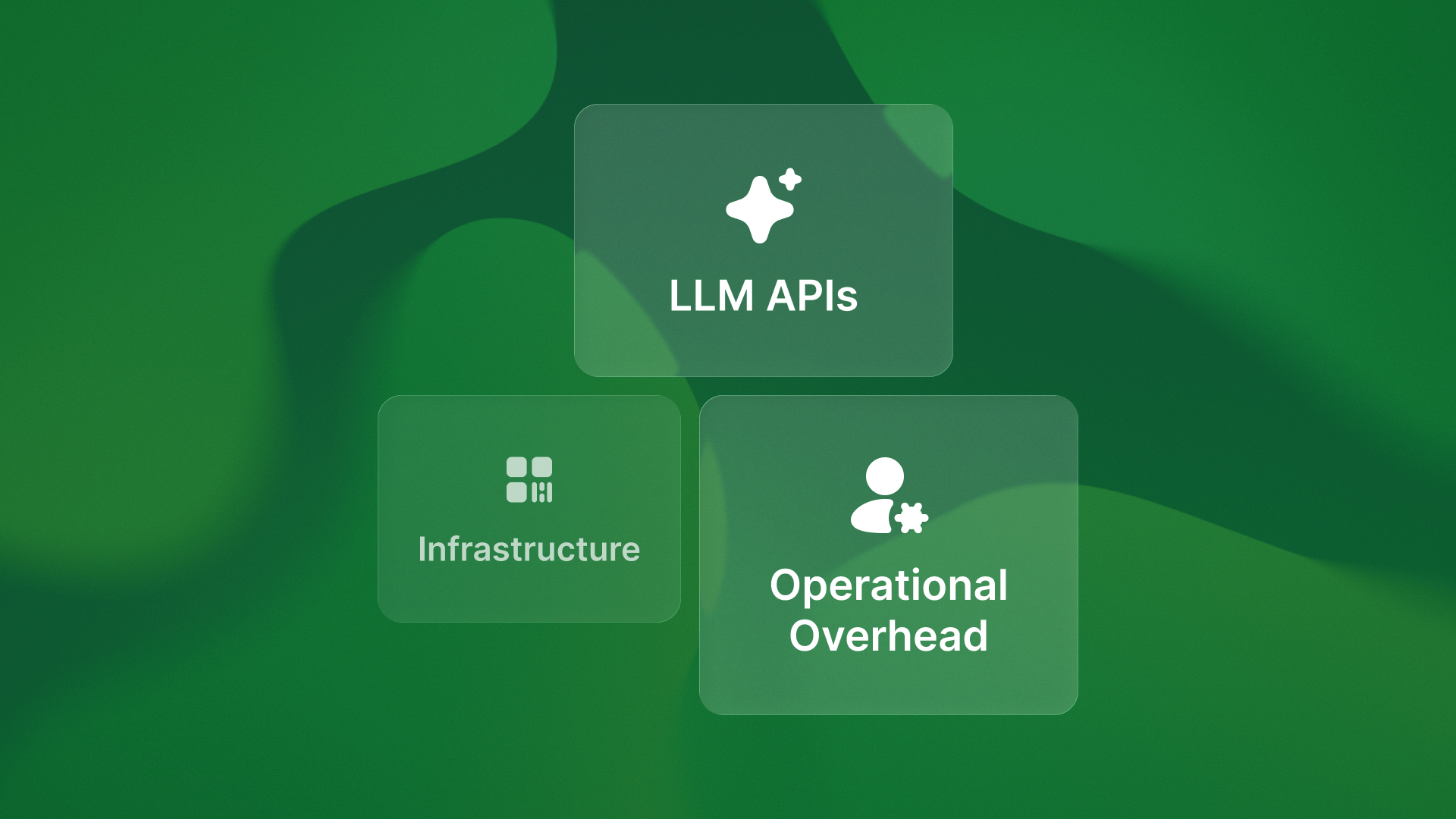
The pattern we see repeatedly: teams focus on development costs because that’s the big scary number. Then production launches and monthly bills start arriving. Finance calls asking why this “one-time AI project” has a recurring $10K line item.
Budget for operations from day one. If you can’t justify the monthly spend, you can’t justify building the agent.
Where ROI Actually Shows Up
Support automation agents deliver 300% to 500% ROI within five to six months. They handle 50% to 60% of routine tickets autonomously.
That’s the strongest ROI profile we’ve seen across workflow categories.
Here’s why support automation works so well financially. Calculate your current cost per ticket: agent time, tooling, management overhead. Now calculate how many tickets fit the “routine request” pattern that an AI agent can handle completely.
For most companies, that’s password resets, status checks, basic troubleshooting, and policy questions. If your support team handles 5,000 tickets monthly at $12 per ticket, and 55% are routine, that’s $33,000 monthly in addressable costs.
An autonomous support agent costs $90,000 to build plus $6,000 monthly to operate. Break-even hits at month four. By month six, you’re saving $27,000 monthly.
That’s 360% ROI in six months.
Sales automation and customer service often show similar returns. Well-run systems typically deliver 200% to 500% within three to six months. The key phrase is “well-implemented.” Agents that actually close the loop autonomously, not assistants that require human review at every step.
I wrote more about why that architectural distinction matters for ROI in this breakdown of agentic AI vs assistants.
Build vs Buy: The Real Tradeoff
Platform solutions offer faster time-to-value. Custom builds offer higher ROI ceilings.
Most CTOs frame this as speed vs cost. That’s wrong. The real tradeoff is flexibility vs constraints.
Platforms like Twin.so get you live in weeks instead of months. You’re paying monthly subscriptions instead of six-figure development. But you’re locked into their workflow patterns, their integration options, and their roadmap priorities.
That works great if your workflows fit their templates. It becomes expensive technical debt if your business has specific requirements the platform can’t accommodate.
I watched this play out with a company evaluating chatbot platforms versus custom development. The platform demo looked perfect: two weeks to launch, $500 monthly subscription, handles 80% of their use cases.
Then they mapped their actual workflows. They needed custom authentication with their internal SSO. They needed to trigger actions in three legacy systems the platform didn’t integrate with. They needed conversation data to flow into their data warehouse for analysis.
The platform couldn’t do that without extra custom development. They would pay subscription fees and development costs. They would have less control than building custom from the start.
They chose custom. $120,000 development, $4,500 monthly operations. Built exactly what they needed, owns the codebase, can iterate based on their priorities.
Custom development often costs less overall over 18 to 24 months. This is especially true for production autonomous agents. These agents must follow your business rules.
What This Means By Late 2026
By late 2026, companies that chose platforms for speed will hit customization walls. Teams that built custom will have compounding advantages as their agents learn their specific workflows.
The build-vs-buy decision isn’t just about year-one costs. It’s about whether your AI architecture can scale as your business grows, or becomes a constraint you must replace in 18 months.
Every production agent we’ve deployed has required iteration. User feedback reveals edge cases. Workflow changes require different reasoning paths. Integration requirements expand as teams see what’s possible.
Platforms let you iterate within their framework. Custom builds let you iterate without boundaries.
The financial implication: teams that invest in custom development now are building assets that appreciate. Every workflow refined, every integration added, every edge case handled increases the agent’s value and ROI.
Platform investments are operating expenses that deliver consistent but capped returns.
If you are building for lasting competitive advantage, not just quick efficiency gains, those are the economics that matter.
Want to see how we break down these costs in practice? Check out our detailed analysis of AI agent economics with real production deployment numbers.