


Before deploying AI in production, you need an audit. Here’s what that actually means-and why it matters for Series B+ companies.
The simple definition
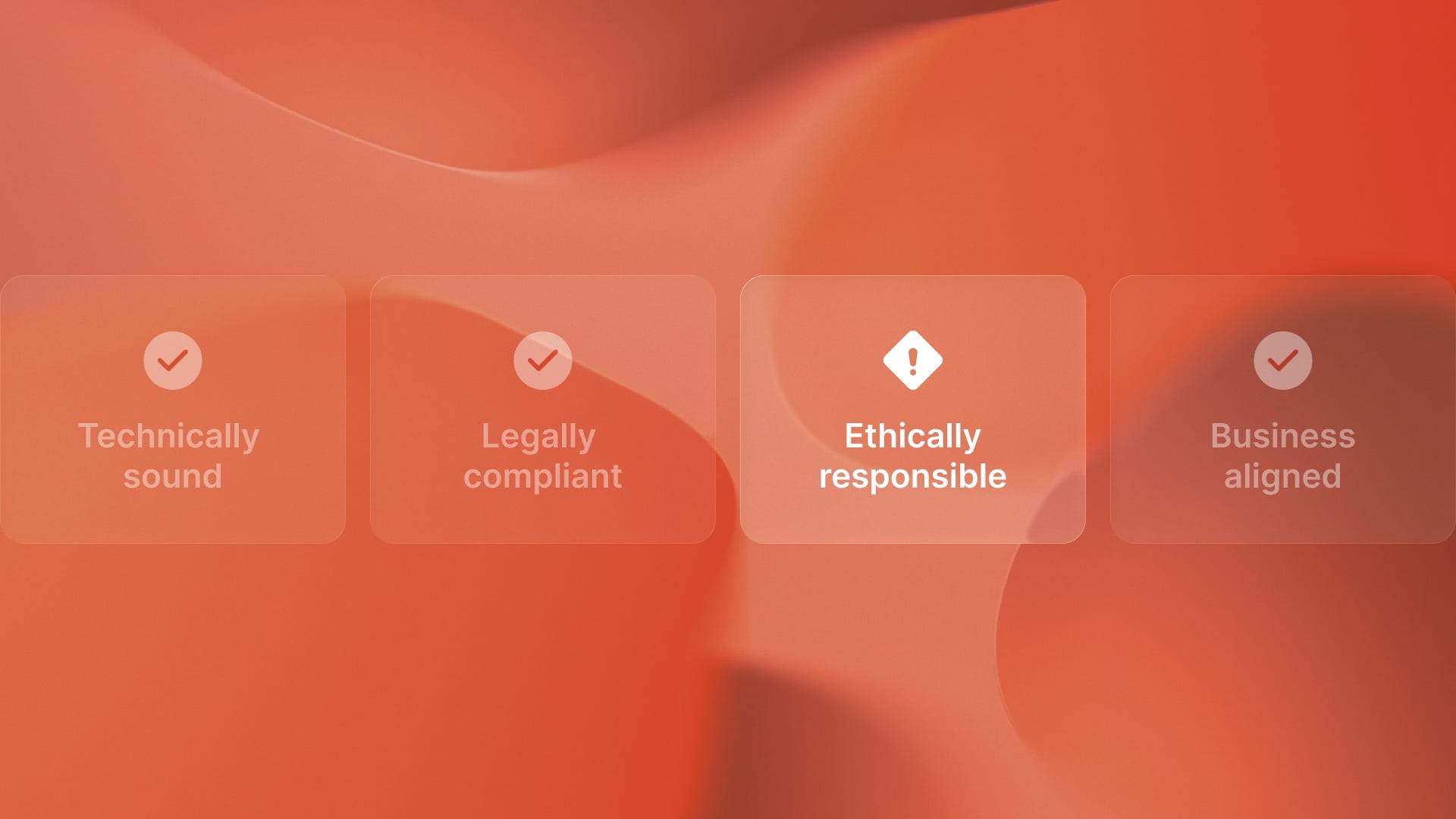
An AI audit is a systematic review of your AI systems to ensure they’re:
Technically sound
Legally compliant
Ethically responsible
Business-aligned
Think of it like a security audit, but for AI.
Who needs an AI audit
Enterprise buyers - Required by procurement teams
Regulated industries - Healthcare, finance, legal mandates
Companies with sensitive data - Privacy and security requirements
B2B SaaS selling to Fortune500 - Table stakes for enterprise deals
If you’re Series B+ and selling to enterprise, you’ll need this eventually.
What gets audited
1. Model audit
Training data quality and sources
Model architecture and performance
Bias detection and mitigation
Accuracy and reliability metrics
2. Data audit
Data governance and lineage
Privacy and security controls
Compliance with regulations (GDPR, CCPA)
Data quality and validation
3. Security audit
Access controls and authentication
Encryption (at rest and in transit)
Vulnerability assessment
Incident response procedures
4. Ethics audit
Bias and fairness testing
Transparency and explain ability
Human oversight mechanisms
Impact on stakeholders
5. Business audit
ROI and business value
Alignment with objectives
Risk assessment
Operational sustainability
Industry-specific requirements
Healthcare:
HIPAA compliance verification
Patient safety impact assessment
Clinical validation requirements
Finance:
SOC 2 compliance
Model risk management framework
Regulatory reporting capability
Legal:
Confidentiality controls
Conflict checking mechanisms
Professional standards compliance
HR/Hiring:
EEOC compliance verification
Adverse impact analysis
Human review in decision-making
DIY vs Hiring experts
DIY when:
Early stage, limited budget
Low-risk use cases
Internal tools only
You have compliance expertise in-house
Hire experts when:
Series B+ with enterprise customers
Regulated industry requirements
High-stakes decisions (hiring, lending, healthcare)
Preparing for major customer or investor due diligence
Typical timeline and cost
Basic audit:
Timeline: 2-4 weeks
Cost: $15K-30K
Scope: Single AI system, basic compliance
Comprehensive audit:
Timeline: 6-8 weeks
Cost: $50K-100K
Scope: Multiple systems, full compliance framework
Ongoing monitoring:
Timeline: Continuous
Cost: $5K-15K/month
Scope: Regular audits, compliance tracking
At Islands, we’ve developed a streamlined 5-step framework that takes 2 weeks and costs a fraction of traditional audits (more on this in a future post).
The three questions that actually matter
When we audit AI systems, we focus on three core questions:
1. Is this AI system technically sound and production-ready?
Does it work reliably?
How does it handle edge cases?
What’s the error rate?
Can it scale?
2. Does it create measurable business value that justifies the cost?
What’s the ROI?
What metrics prove value?
What are alternatives?
Is it sustainable?
3. Are we compliant with relevant regulations and can we prove it?
What regulations apply?
How do we prove compliance?
What documentation exists?
What’s missing?
If you can answer yes to all three with evidence, you’re in good shape.
What an AI audit actually delivers
Documentation:
Technical specifications
Data governance policies
Security controls
Compliance reports
Audit findings and recommendations
Remediation Plan:
Identified gaps
Priority rankings (high/medium/low)
Specific action items
Resource requirements
Timeline estimates
Ongoing Monitoring:
Key metrics to track
Regular review cadence
Alert thresholds
Escalation procedures
Common audit findings
Based on 40+ audits we’ve conducted:
Most common issues:
Insufficient documentation (90% of companies)
No bias testing (75% of companies)
Inadequate monitoring (70% of companies)
Missing governance policies (65% of companies)
No incident response plan (60% of companies)
The good news? These are all fixable.
The enterprise sales advantage
Here’s why this matters for B2B SaaS:
Without an AI audit:
Enterprise procurement raises red flags
Legal teams block deals
Security reviews take 6+ months
Lost deals to competitors who have audits
With an AI audit:
Procurement moves faster
Legal has fewer concerns
Security reviews take 2-4 weeks
Competitive advantage in enterprise deals
One client closed a $500K enterprise deal specifically because they had a completed AI audit. The competitor didn’t.
How to prepare
If you’re planning an AI audit:
Week before:
Gather existing documentation
Identify key stakeholders
Prepare system access
Compile performance metrics
During audit:
Provide honest answers
Share challenges openly
Ask questions
Take detailed notes
After audit:
Prioritize findings
Assign owners
Set timelines
Schedule follow-up
The bottom line
An AI audit isn’t just checkbox compliance. It’s your competitive advantage with enterprise buyers.
If you’re Series B+ and serious about enterprise sales, you’ll need this. Better to do it proactively than scramble when a big deal requires it.
Need an AI audit? Islands offers comprehensive AI audits for Series B+ companies. Visit islandshq.xyz/contact