


Most AI projects in 2026 fail at the architecture stage. Not the model. Not the data. The fundamental design pattern.
I’ve been spending time with CTOs who invested six figures into custom AI systems expecting workflow replacement economics. They’re getting 20-30% productivity gains instead. The gap isn’t capability. It’s architecture.
Here’s what’s happening: teams are building assistants when they need agents, or vice versa. The difference isn’t semantic. It’s structural. And it determines whether you capture 30% productivity enhancement or 400% workflow replacement ROI.
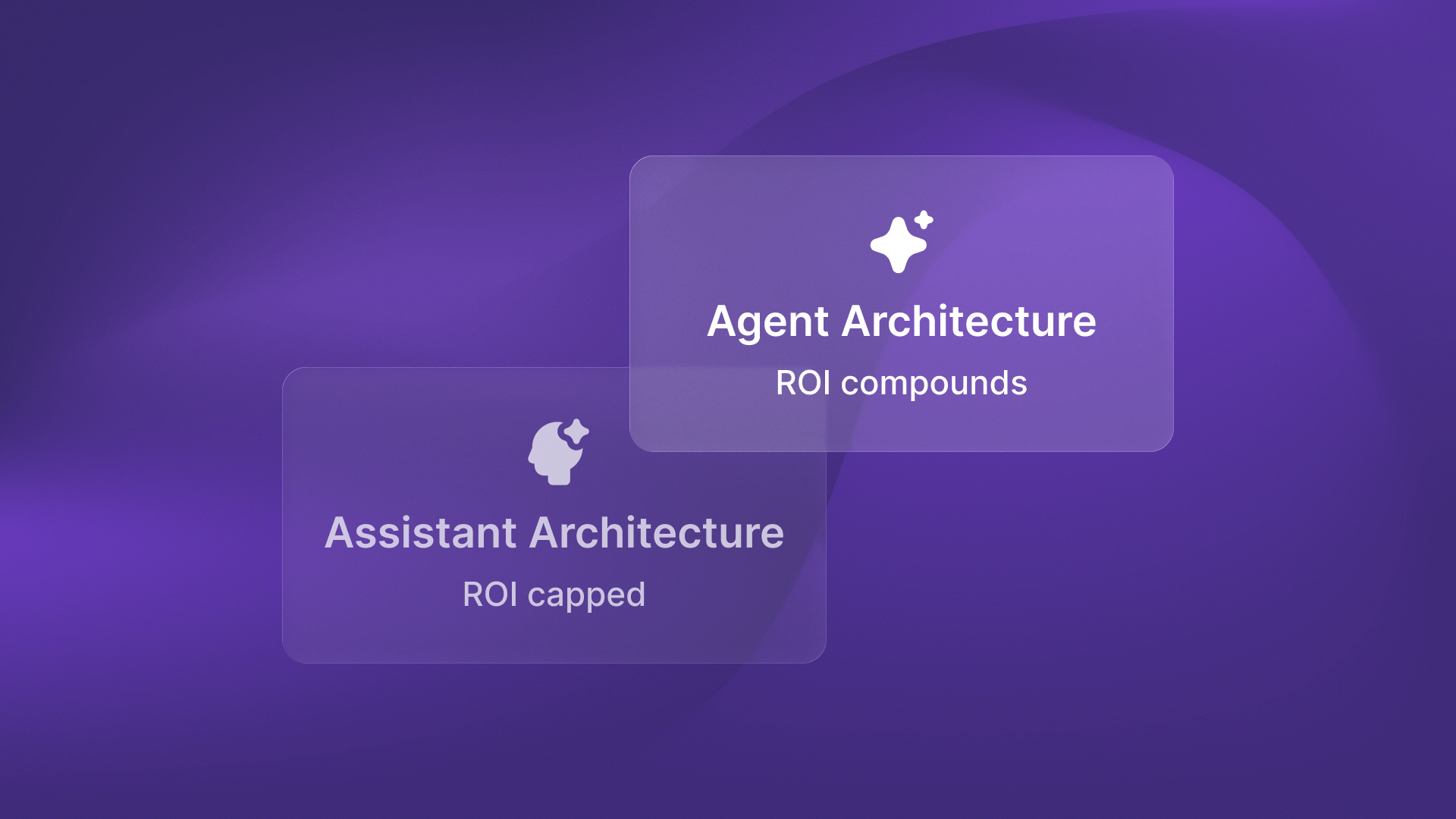
Assistants respond, agents operate
Let me show you the architectural distinction everyone misses.
AI assistants-GitHub Copilot, ChatGPT, Salesforce Einstein-respond to commands. You ask, they answer. You request, they suggest. The human remains in the execution loop. Every action requires human initiation and approval.
Autonomous agents operate independently with goal-driven behavior. You set an objective, they execute end-to-end. No human in the loop for routine decisions. They perceive context, reason about next steps, take actions, and learn from outcomes.
That’s not a feature difference. That’s an architectural difference.
Assistants need three layers: input processing, response generation, output formatting. Agents need four additional layers: perception (understanding environment state), goal management (tracking objectives), action execution (modifying external systems), and learning (improving from outcomes).
I noticed this gap most clearly last month while reviewing QA flow‘s architecture. QA flow is an autonomous agent. It creates test suites from Figma designs. It runs tests continuously. It files bugs without human help. One client detected 847 bugs in production across three months. Zero human QA hours.
That’s not assistance. That’s replacement.
Compare that to GitHub Copilot suggesting code completions. Copilot delivers real value-30% faster coding for developers who adopt it. But the developer still writes the function, reviews the suggestion, decides whether to accept it, and commits the code. Copilot enhances productivity. It doesn’t replace the workflow.
The architectural difference creates the economic difference. Assistants cap ROI at productivity gains. Agents enable workflow replacement.
The market Is shifting from assistance to delegation
Here is what the enterprise landscape looks like in early 2026. Companies are moving from “help me work faster.” They now want “do this work for me.”
Microsoft sees this. Copilot is undergoing a major architectural transformation this year-moving from responding to individual commands toward operating as specialized autonomous agents. That’s not a feature update. That’s Microsoft validating the agent pattern after two years of assistant-level adoption.
The shift makes economic sense. Productivity enhancement has a ceiling. If your developer codes 30% faster with an assistant, you still need the same headcount. You ship slightly faster or handle slightly more work, but labor costs remain constant.
Workflow replacement changes the math entirely. If an autonomous agent handles your QA testing end-to-end, you don’t need QA headcount for that workflow. The ROI isn’t 30% faster. It’s 200-400% return on the agent cost versus the eliminated labor.
They used ReachSocial as the engagement layer.
The agent researches prospects, personalizes messages, manages follow-ups, and tracks conversion-autonomously.
They replaced 1.5 SDR roles ($180K annual cost). That’s 150% first-year ROI, compounding annually.
They initially evaluated Claude Cowork and Twin.so.
Both excellent platforms for enhancing workflows with AI capabilities. But neither architecture could deliver full workflow replacement. The company needed true autonomy: goal-driven behavior, external system integration, and closed-loop learning.
That required custom agent architecture.
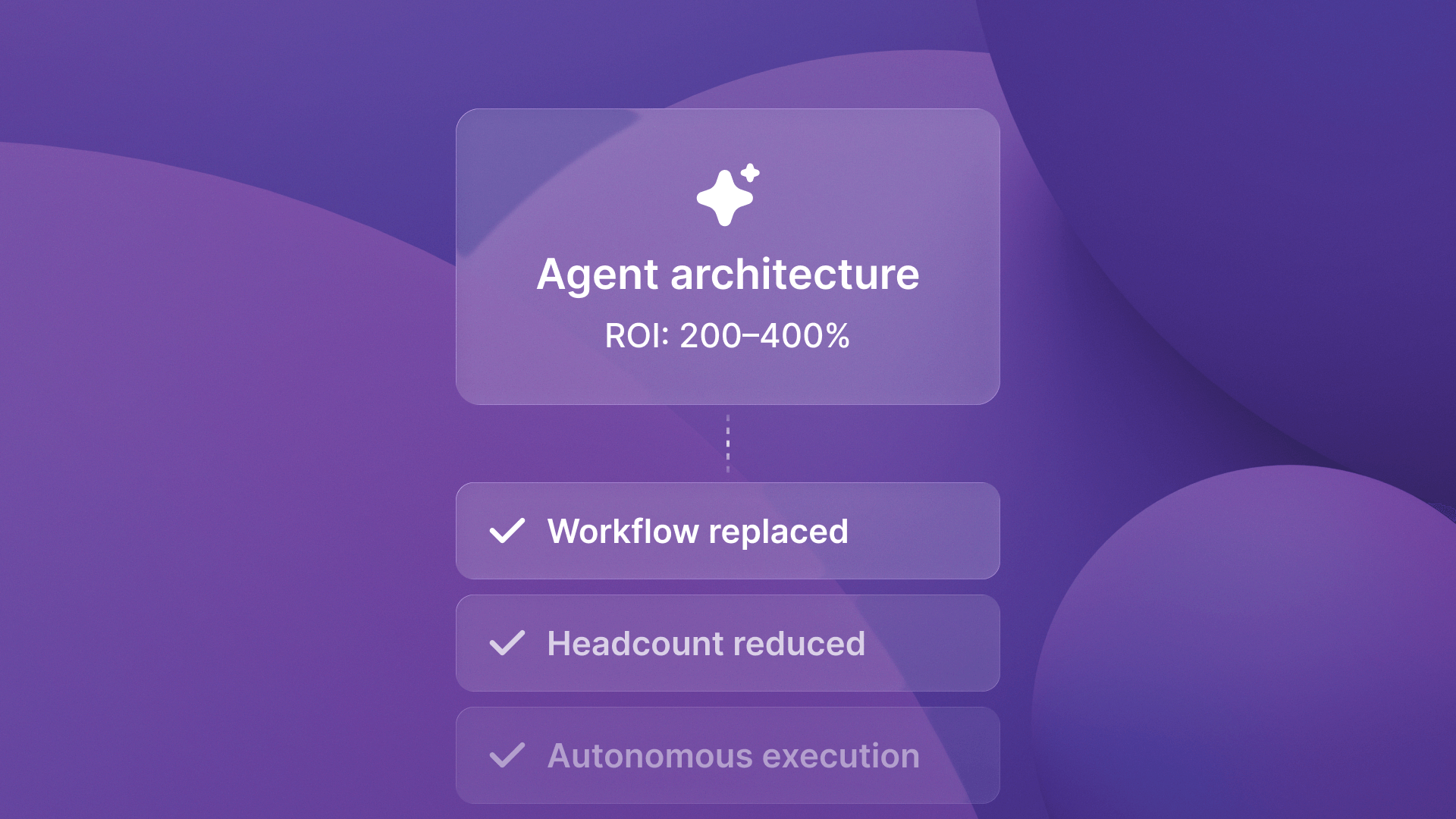
How to choose: custom agents vs platforms
The decision framework isn’t “which is better.” It’s “which problem are you solving.”
Use assistant platforms (Claude Cowork, Twin.so, Microsoft Copilot) when:
You want to enhance existing workflows, not replace them
ROI target is 10-40% productivity improvement
Humans remain in decision loops (assistive, not autonomous)
You need fast deployment with low engineering investment
The workflow requires human judgment for most decisions
Build custom autonomous agents when:
You’re replacing an entire workflow end-to-end
ROI target is 200%+ through labor cost elimination
The workflow is repeatable with clear success criteria
You can invest engineering resources in perception, reasoning, action, and learning layers
You need production monitoring and reliability infrastructure
Here’s the trap: choosing assistant architecture when you need agent capabilities caps your ROI at productivity gains. You’ll get 20-30% improvement. You won’t get workflow replacement economics.
I’ve seen this play out three times in the Islands portfolio over the past six months. Companies that correctly identified workflow replacement opportunities and invested in agent architecture are seeing 300-500% ROI. Companies that used assistants for the same tasks saw only 25% productivity gains. They now wonder why the AI hype fell short.
The difference isn’t model capability. GPT-4 powers both assistants and agents. The difference is architectural: whether you built the perception layer to understand the environment state. Whether you built the goal management system to track objectives over time. Whether you built the action layer to modify external systems without human approval.
What this means for late 2026
If you are reviewing AI investments now, you need to choose your architecture in Q1 2026.
That choice will shape your competitive position by Q4.
Companies that know when to build agents, and when to use assistants, will win big. They can replace workflows and save millions in labor costs by year-end. Companies that use assistants for agent problems will see 30% productivity gains while competitors replace entire workflows.
The gap will be obvious in financial statements. Not because one company has better AI. Because one company chose the right architecture for the problem they’re solving.
Microsoft’s Copilot transformation validates this: assistance was Phase 1. Autonomous operation is Phase 2. The architectural distinction is becoming a competitive moat.
If you’re still treating agents and assistants as interchangeable terms, you’re already six months behind. The economics of agent architecture are clear. The question is whether you’re building the right foundation to capture them.