

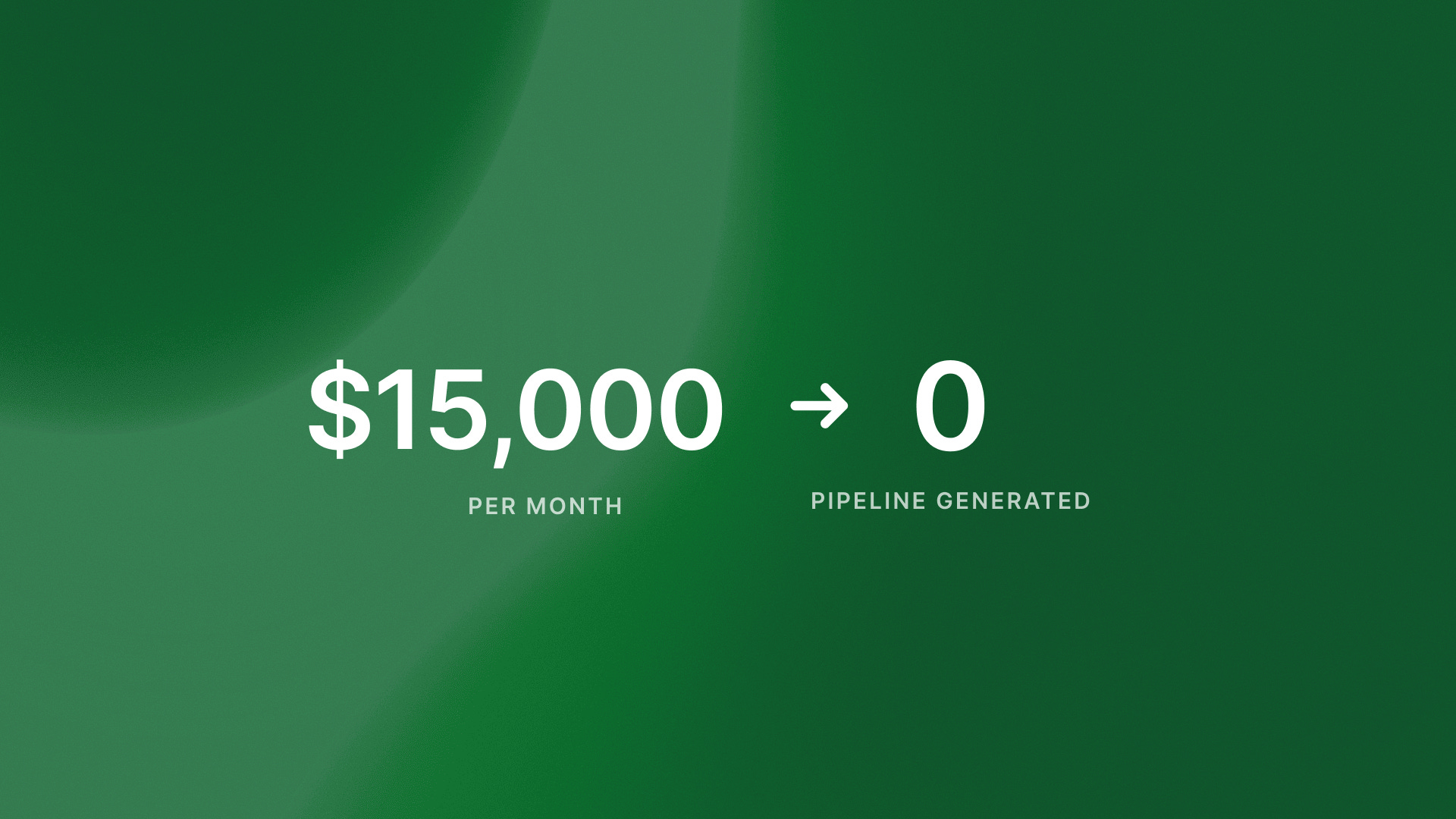
A Series B founder recently shared their frustration regarding a $15k monthly content retainer that produced zero pipeline. The problem was clear: they were buying content when they needed infrastructure. This founder had a library of readable articles addressing general industry topics, yet search visibility was dropping. Generic writing fails to meet the requirements of modern search engines. Many companies now prioritize dedicated SaaS SEO content services to establish technical authority.
In 2026, relying on generalist content marketing services carries significant risk. Most agencies maintain a volume-first model that search engines now actively penalize. As traditional tactics become less effective, the shift to AI and generative engines increases demand for specialized optimization. Technical leaders must treat content as a core part of their business architecture rather than a creative add-on.
The death of the generalist and the rise of SaaS SEO content services
Generalist agencies often lack the technical depth needed for today’s search standards. These E-E-A-T (Experience, Expertise, Authoritativeness, and Trustworthiness) standards dominate the search environment. AI-saturated search removes low-value, repetitive information. If content creation services merely rearrange existing internet data without adding unique technical insight, the strategy remains fragile.
Herbert Simon, who would win the Nobel in economics seven years later, described the underlying economics of this in 1971:
“...a wealth of information creates a poverty of attention.”
Herbert A. Simon — “Designing Organizations for an Information-Rich World,” 1971
Simon’s argument was that information consumes attention, so abundance makes attention the scarce resource rather than the information itself. Fifty-five years later, attention is precisely what a search engine allocates on a reader’s behalf. Publishing more of what already exists does not compete for that allocation. It joins the pile being filtered out of it.
I have observed a significant shift toward specialized pipelines. Generalist writers often struggle to explain API latency. They also struggle to explain state management. Their explanations often do not matter to a VP of Engineering. Generic seo content writing services often result in noise. True authority originates from original research and deep technical relevance that solves specific problems for high-intent buyers.
The 2026 SaaS SEO framework
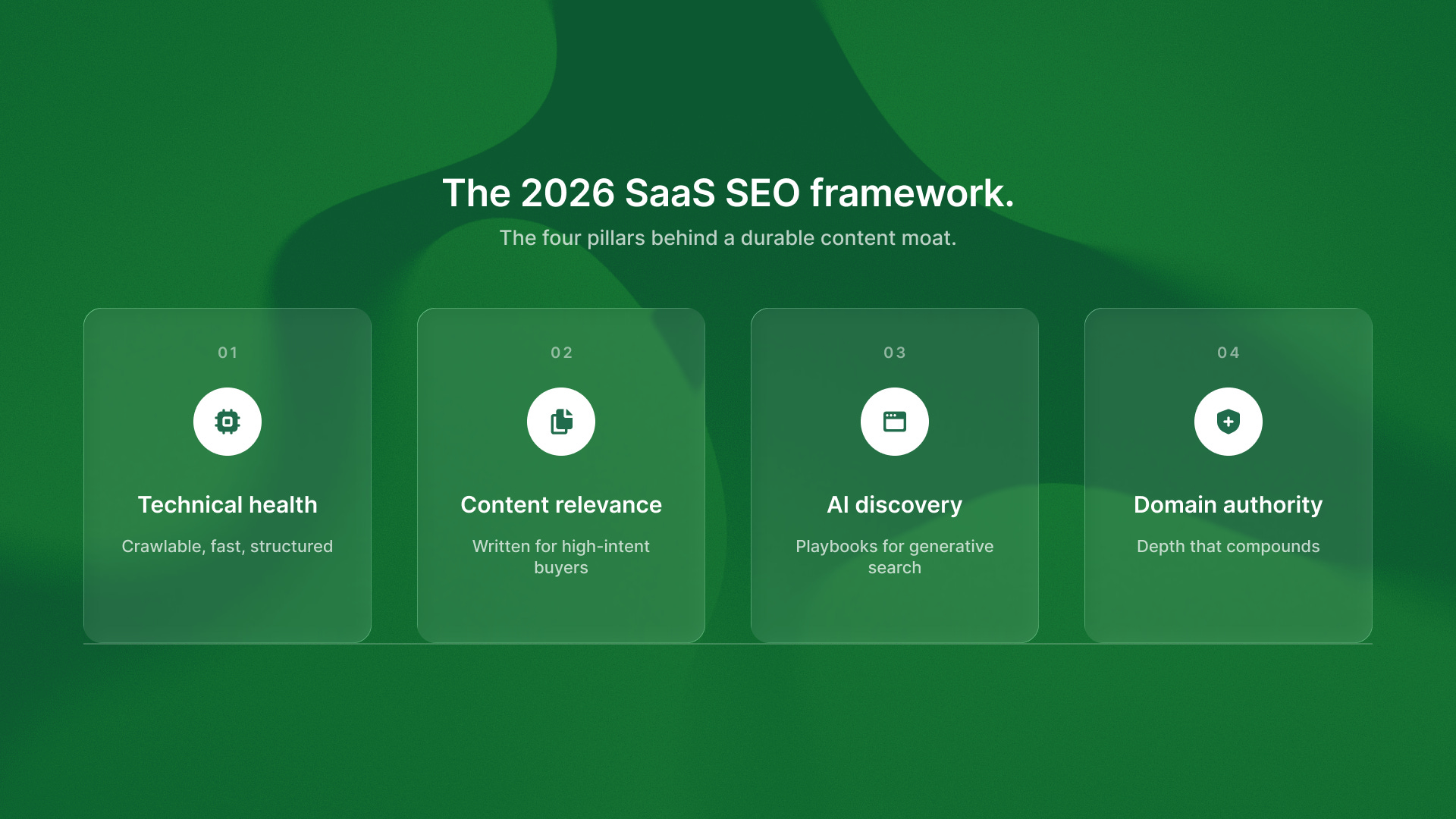
Success in the current market requires a multi-pillar framework that balances technical health with deep relevance. Modern digital growth requires a structure that allows you to compete as search engines move toward generative models. According to Foragentis, SaaS SEO requires a triad of technical health, relevance, and authority to compete.
Technical health as a prerequisite for indexing and performance
Deep content relevance addressing the specific pain points of technical buyers
Domain authority built through high-quality backlink profiles and original data
A specialized playbook designed for AI-driven discovery rather than traditional blue links
Technical health and unit economics
Technical health involves how data is structured for discovery. If site architecture is disorganized, even skilled SEO content writing services will struggle to improve unit economics. Our approach focuses on building this architectural foundation before scaling production.
Specialized SaaS SEO content pricing 2026
Value-based pricing has replaced the old word-count model. In 2026, specialized SaaS SEO content requires a higher investment than generic output. This reflects the technical infrastructure and expert verification required for every claim. A high-intent article that ranks in AI search results provides a much higher ROI than multiple generic posts that fail to gain traction. Companies must also budget for AI SEO content writing service pricing per article in 2026.
The playbook: moving from assistants to agents
Many startups still use AI as a basic assistant to speed up human writers. This is a linear solution. To scale, companies must move toward autonomous SEO workflows that treat content as a system. According to SimpleTiger, SaaS strategy must transition from generic keywords to specialized playbooks for the AI search era.
Audit current content creation services to identify where manual filler is draining margins.
Deploy autonomous workflows that handle research and distribution without human-in-the-loop latency.
Adopt a model where autonomous systems manage multi-channel adaptation (Islands) to drive measurable business ROI.
We use this method with our portfolio companies, like QA Flow. Intent-based systems replace manual workflows. The goal is to specialize for generative engine optimization before competitors saturate the space. Specialized depth is the primary way to survive the transition to AI search.
The bottom line
Technical leadership must treat content as a core component of their business architecture. Generalist services are obsolete. Specialized technical infrastructure is the path to growth.
Build. Run. Maintain.
How is your current content strategy holding up against the shift to AI search? Book a call with Islands to build your roadmap today.