


A Series B founder paid $200K for an AI audit that told them to “start small and experiment.”
We helped them fix it in 2 weeks and charged nothing. Here’s what most AI audits get wrong-and how to do it right.
The Mistake: Generic Consulting
The founder (let’s call him Alex) hired a Big 4 consulting firm for an AI audit. Here’s what happened:
What Alex paid for:
$200K fee
8-week engagement
“Comprehensive AI audit”
150-page report
What Alex got:
Generic frameworks from other industries
Vague recommendations like “start small” and “experiment more”
No specific technical findings
Junior consultants who didn’t understand AI
Unusable deliverables
The real kicker: The audit didn’t help them close the $750K enterprise deal they needed it for.
What AI Audits Should Actually Cover
We offered to review their audit for free. Here’s what was missing:
1. Technical Assessment (Not just “is it accurate?”)
What’s needed:
Model architecture review (is this the right approach?)
Training data analysis (quality, sources, bias)
Performance benchmarking (vs alternatives)
Edge case identification (what breaks it?)
Scalability assessment (can it handle 10x load?)
What they got:
“Model appears to function correctly”
No benchmarking
No edge case testing
2. Business Alignment (Not just “does it work?”)
What’s needed:
ROI calculation with real numbers
Risk vs reward analysis
Alternative approaches comparison
Resource requirements breakdown
Timeline with milestones
What they got:
“AI shows promise for your use case”
No numbers
No alternatives considered
3. Compliance Mapping (Not just “is it legal?”)
What’s needed:
Industry-specific requirements identified
Current compliance status vs requirements
Gap analysis with specific remediation steps
Documentation requirements listed
Timeline to compliance
What they got:
“Ensure GDPR compliance”
No gap analysis
No specific steps
4. Operational Readiness (Not just “can we deploy?”)
What’s needed:
Monitoring and alerting setup
Incident response procedures documented
Human oversight mechanisms defined
Cost management strategy
Scaling plan
What they got:
“Monitor performance metrics”
No specific procedures
No cost analysis
5. Strategic Roadmap (Not just “what’s next?”)
What’s needed:
Phased rollout plan with milestones
Success metrics and KPIs defined
Team structure and hiring needs
Budget allocation by phase
Decision points for continue/pivot
What they got:
“Continue iterating and improving”
No specific plan
No metrics
How We Fixed It (2 Weeks, $0)
We offered to redo the audit as a case study for our framework. Here’s what we did:
Week 1:
Days 1-2: Technical Deep-Dive
Reviewed model architecture (found they were using wrong approach)
Analyzed training data (discovered significant bias issues)
Benchmarked performance (35% error rate on edge cases)
Identified scalability bottlenecks
Days 3-4: Business and Risk Assessment
Calculated actual ROI (negative at current scale)
Identified $50K/month in LLM cost optimization opportunities
Mapped alternative approaches (recommended hybrid model)
Assessed business risks with mitigation strategies
Day 5: Compliance Mapping
Listed specific GDPR requirements (12 items)
Current status: 6 of 12 compliant
Gap analysis with effort estimates for each
Documentation templates provided
Week 2:
Days 1-2: Remediation Plan
High priority items (required for enterprise deal)
Medium priority (needed for scale)
Low priority (nice-to-have)
Specific owners and timelines
Days 3-4: Rollout Strategy
Phase 1: Fix critical issues (2 weeks)
Phase 2: Improve performance (4 weeks)
Phase 3: Scale-ready (8 weeks)
Budget: $85K total vs $200K+ they were quoted
Day 5: Presentation
25-page actionable report (vs 150-page generic one)
Specific findings with evidence
Clear remediation steps
Realistic timeline and budget
The Transformation
Before our audit:
AI model in production but unreliable
No monitoring or alerting
30% error rate on edge cases
$50K/month in LLM costs
Zero compliance documentation
Lost the $750K enterprise deal
After 2-week audit + 4-week remediation:
Comprehensive monitoring and alerting
5% error rate (95% success)
$12K/month in LLM costs (76% reduction)
Full compliance documentation
Won a $900K enterprise deal (even bigger)
SOC 2 ready
Total cost:
Audit: Free (our case study)
Remediation: $35K engineering
vs $200K wasted on generic consulting
The Islands 5-Step Framework
Based on this experience, we formalized our approach:
Step 1: Technical Truth What actually works vs what should work
Step 2: Business Reality Does the math actually work?
Step 3: Compliance Facts Specific requirements, not vague advice
Step 4: Operational Gaps What’s missing for production?
Step 5: Actionable Roadmap Specific steps, owners, timelines
The Three Questions That Matter Most
When we audit AI systems, we focus on:
1. Is this AI system technically sound and production-ready?
Not “does it work sometimes” but:
Success rate on edge cases
Performance vs alternatives
Scaling capability
Cost sustainability
2. Does it create measurable business value that justifies the cost?
Not “it’s promising” but:
Actual ROI calculation
Cost per task
Time saved (hours)
Revenue impact
3. Are we compliant with relevant regulations and can we prove it?
Not “you should be compliant” but:
Specific requirements list
Gap analysis with evidence
Remediation steps with effort
Proof of compliance (documentation)
Red Flags in AI Audits
Watch out for consultants who:
Use generic frameworks not specific to AI
Can’t explain technical findings in detail
Provide vague recommendations
Charge by the page instead of value delivered
Don’t have AI engineering expertise
Government Funding Tip
Here’s something most founders don’t know:
Canadian companies can offset audit costs with government grants. Programs like:
Ontario Centre for Innovation (OCI)
SR&ED tax credits
CDAP grants
We’ve helped clients get $50K-150K in grants for AI audits and implementation.
That $200K Alex spent? Could have been partially covered by grants if structured properly.
The Bottom Line
Don’t overpay for generic consulting dressed up as AI audits.
A good audit should:
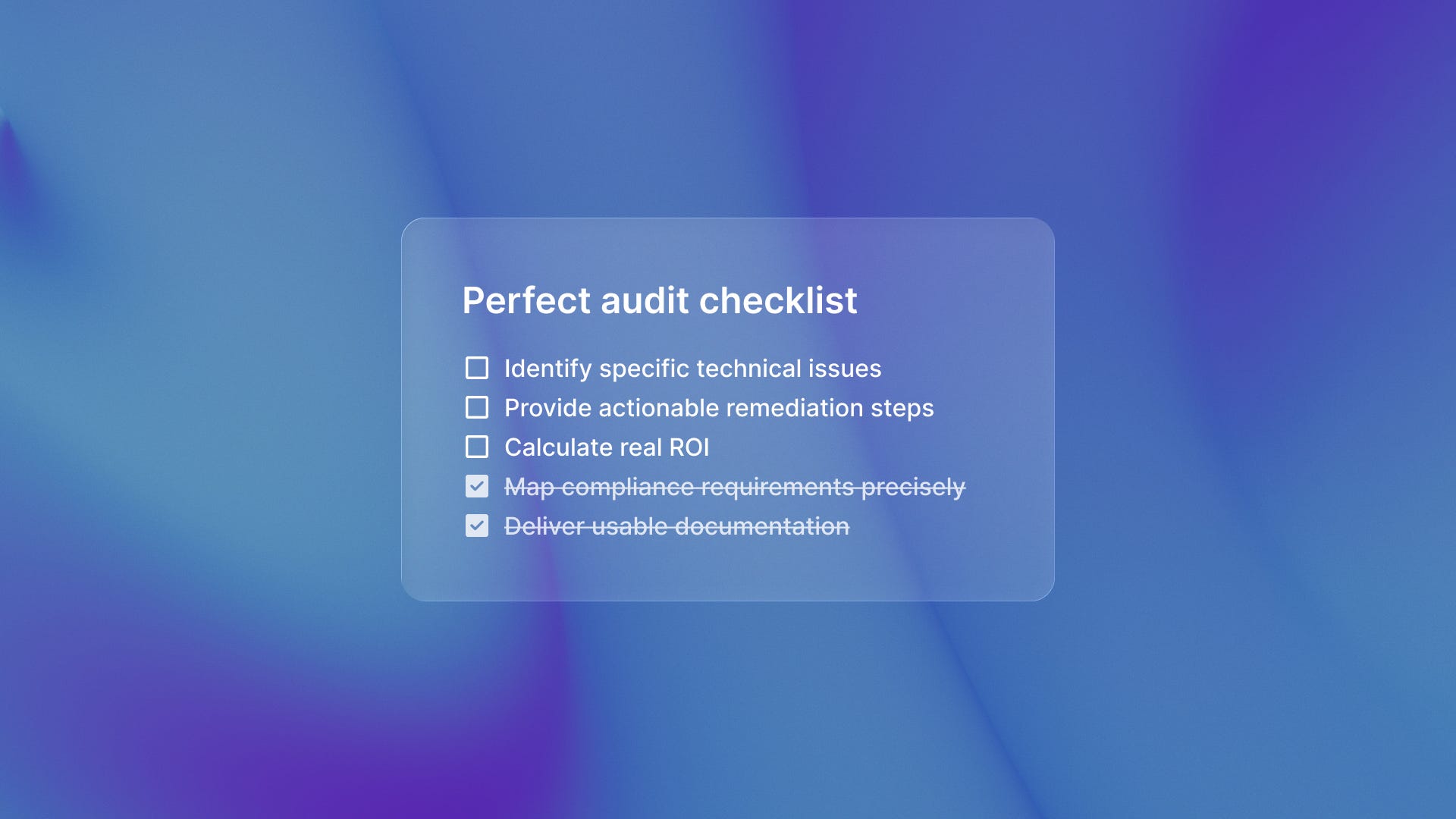
Identify specific technical issues
Provide actionable remediation steps
Calculate real ROI
Map compliance requirements precisely
Deliver usable documentation
If your audit doesn’t do this, you’re wasting money.
Need a real AI audit?
Islands offers comprehensive audits starting at $15K. Free consultation to review existing audits.
Visit https://www.qaflow.com/audit
Couldn't agree more. That $200k for 'start small' is just clasic consultant-speak. Curious, what specific methodologies do you use for identifying those really tricky *novel* edge cases?