


A Series B founder told me last week that he spent six months building an AI assistant that nobody used. It was a classic architectural trap. The system was over-engineered, under-validated, and expensive to maintain. He built a complex system before proving that the agentic workflow solved a real problem for his users. The goal is to build a system that can evolve rather than a perfect system on day one.
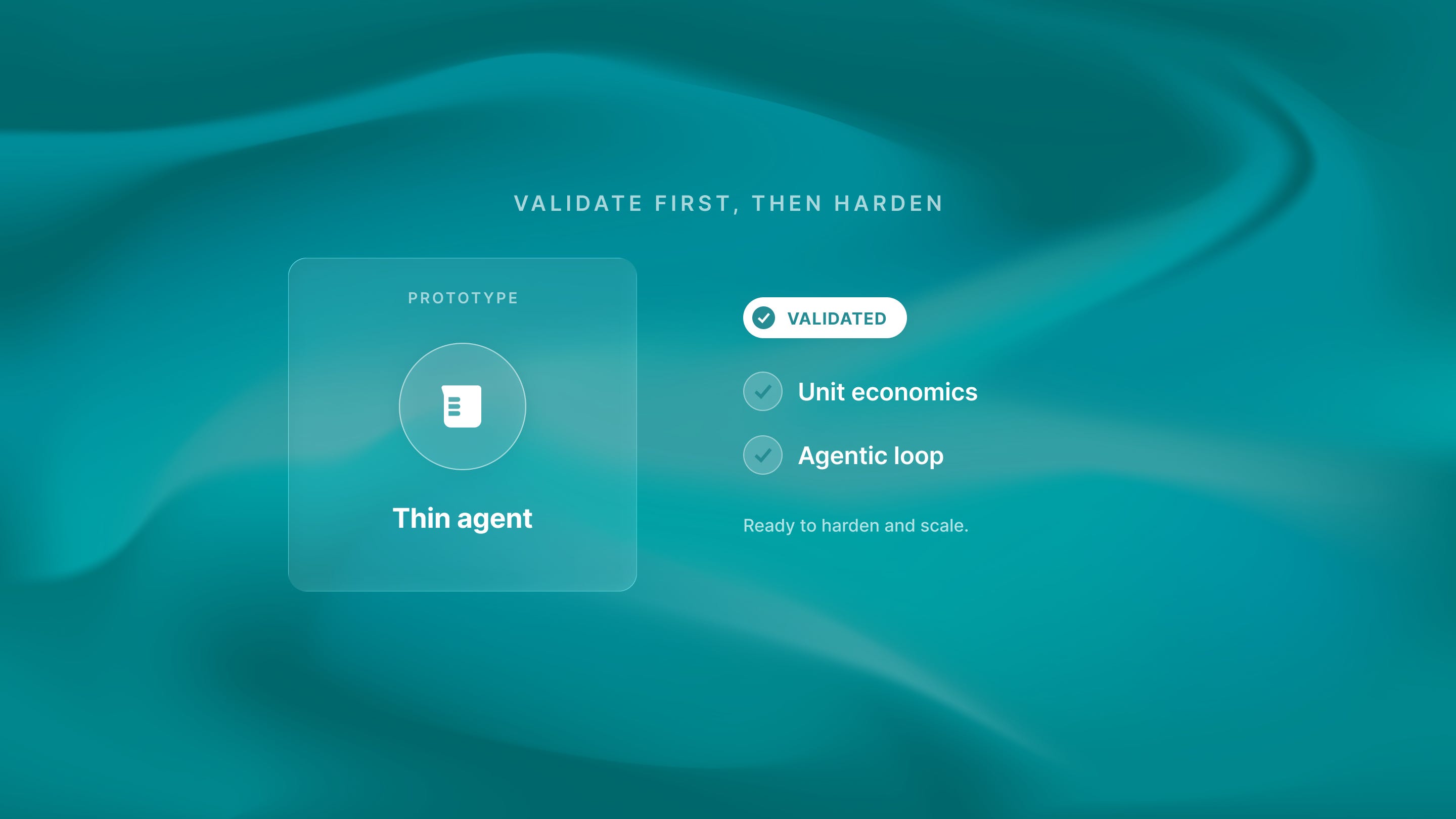
Technical teams are increasingly using scalable frameworks in early development to prevent long-term debt accumulation (RapiDevelopers). Rapid prototyping is a strategic audit tool. It allows technical leadership to validate features without creating an unmaintainable house of cards. Before investing in full infrastructure, founders should run validation tests to ensure the logic of the agent holds up. Speed of validation is currently the primary metric for success.
Avoiding the architectural trap through rapid prototyping
There is a fundamental difference between assistant logic and agent logic. An assistant is a passive tool that responds to prompts. An agent is an autonomous system that can navigate complex workflows. Most startups build the former and expect it to perform like the latter. This leads to scaling debt, which occurs when the cost of maintaining the system exceeds the value it provides. When designing these systems, teams often overlook the underlying AI agent architecture required for scale.
Real ROI comes from replacing entire workflows instead of adding a chat interface to an existing product. If a prototype does not clearly replace a workflow, it will not transform the business. It will only improve productivity a little. You must validate the agentic logic first. A technical architect once told me that a demo is just a promise you haven’t broken yet. In production, those promises break quickly without the right infrastructure. Addressing technical debt in AI early prevents your roadmap from stalling later.
“Make it work, make it right, make it fast.”
: Kent Beck, creator of Extreme Programming
The rapid prototyping playbook
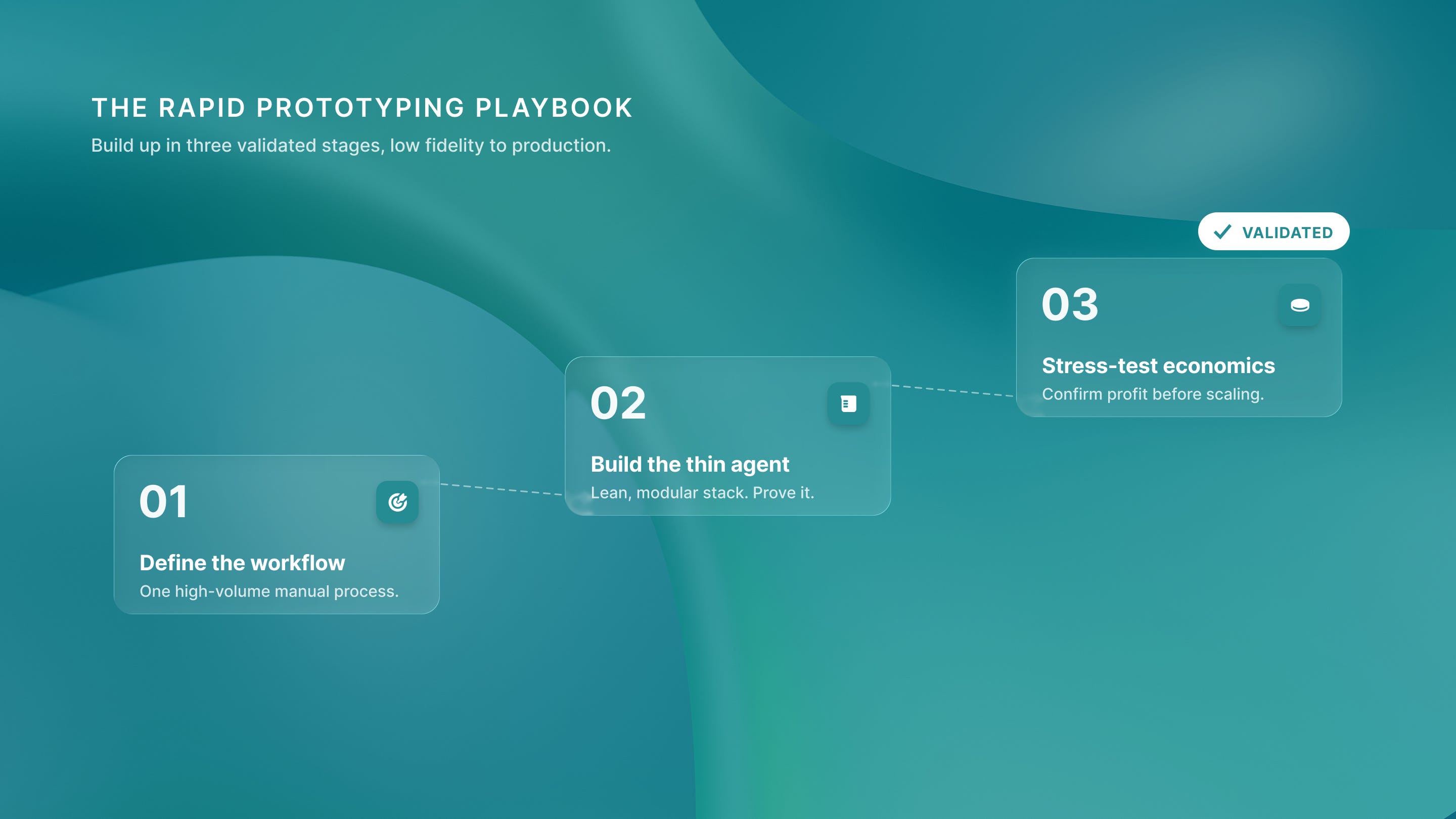
To avoid the debt trap, technical leaders should follow a structured approach to feature validation. This prevents over-engineering solutions that lack market fit:
Define the autonomous workflow: Identify the specific multi-step process the agent will own and what success looks like.
Build the Thin Agent: Create a minimal version of the system. Focus on core reasoning and tool use rather than a polished UI.
Stress-test unit economics: Measure the cost and latency of the agent at a small scale. This ensures it can be profitable when expanded.
Rapid prototyping for AI is the process of building a minimal functional system. This system checks the technical feasibility and business value of an autonomous workflow before full-scale development. By keeping the prototyping cycle tight, you can pivot based on user feedback without losing months of engineering time.
Lessons from the studio: scaling autonomous systems

Using battle-tested playbooks allows for rapid deployment of autonomous systems in weeks, not months. We’ve seen this methodology work for ventures that prioritize infrastructure over surface-level features. Their approach includes:
Implementing intent-based autonomous testing via QA flow to prevent QA from becoming a bottleneck as feature output increases.
Moving from simple assistants to agents that can eliminate middle-management bottlenecks.
Prioritizing production-grade reliability over flashy demos.
Ensuring the system can evolve alongside changing user problems.
Focusing on the architectural gap between a local script and a distributed system.
The bottom line

Validate the workflow first, then harden the infrastructure. The goal is to build a system that can evolve as you understand the user problem better. Build. Run. Maintain. Through prototyping rapid development cycles, you ensure the product meets real-world demands.
Before you invest in major infrastructure, consider using a prototype-to-production framework. It can save you up to six months of work.
Ready to scale? Book a call to discuss your roadmap.