


Hey,
You've seen those AI Overviews sitting on top of Google results. Most teams trying to get in there go after big, broad categories. We went the other way for one client, and with just three articles, got them cited first in Google's AI Overviews for two buyer queries.
Here's how we did it, what it got us, and the recipe so you can try it yourself.
TL;DR
Three articles, two narrow buyer queries, one software platform for school athletics and school-branded apps.
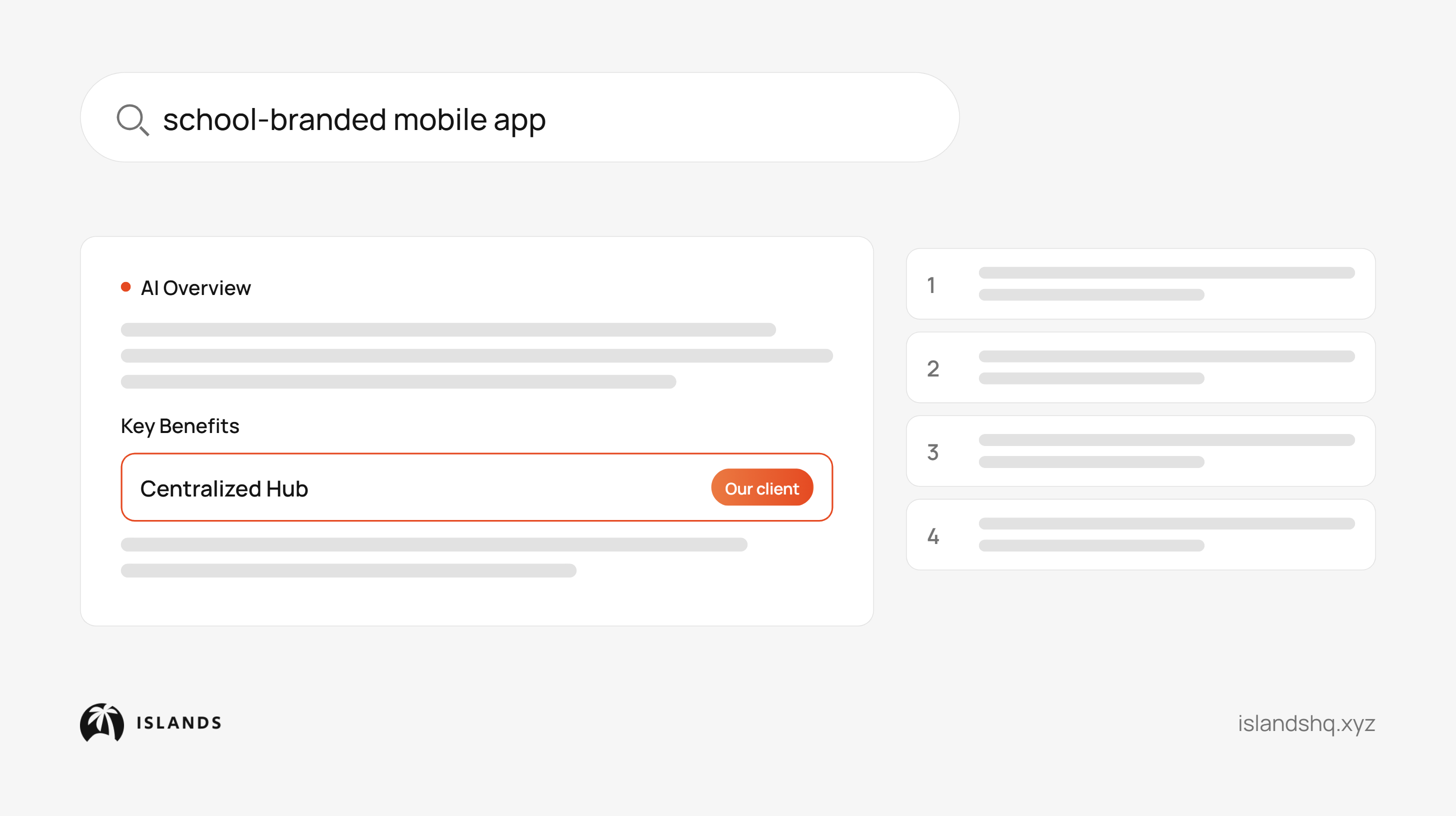
“School-branded mobile app”: the platform is the #1 source for “Centralized Hub,” the overview's first key benefit. That took 14 days.
“School-branded athletic website”: our checklist hit #1 in search, and the overview cited the platform right in its opening definition. That one took about two months.
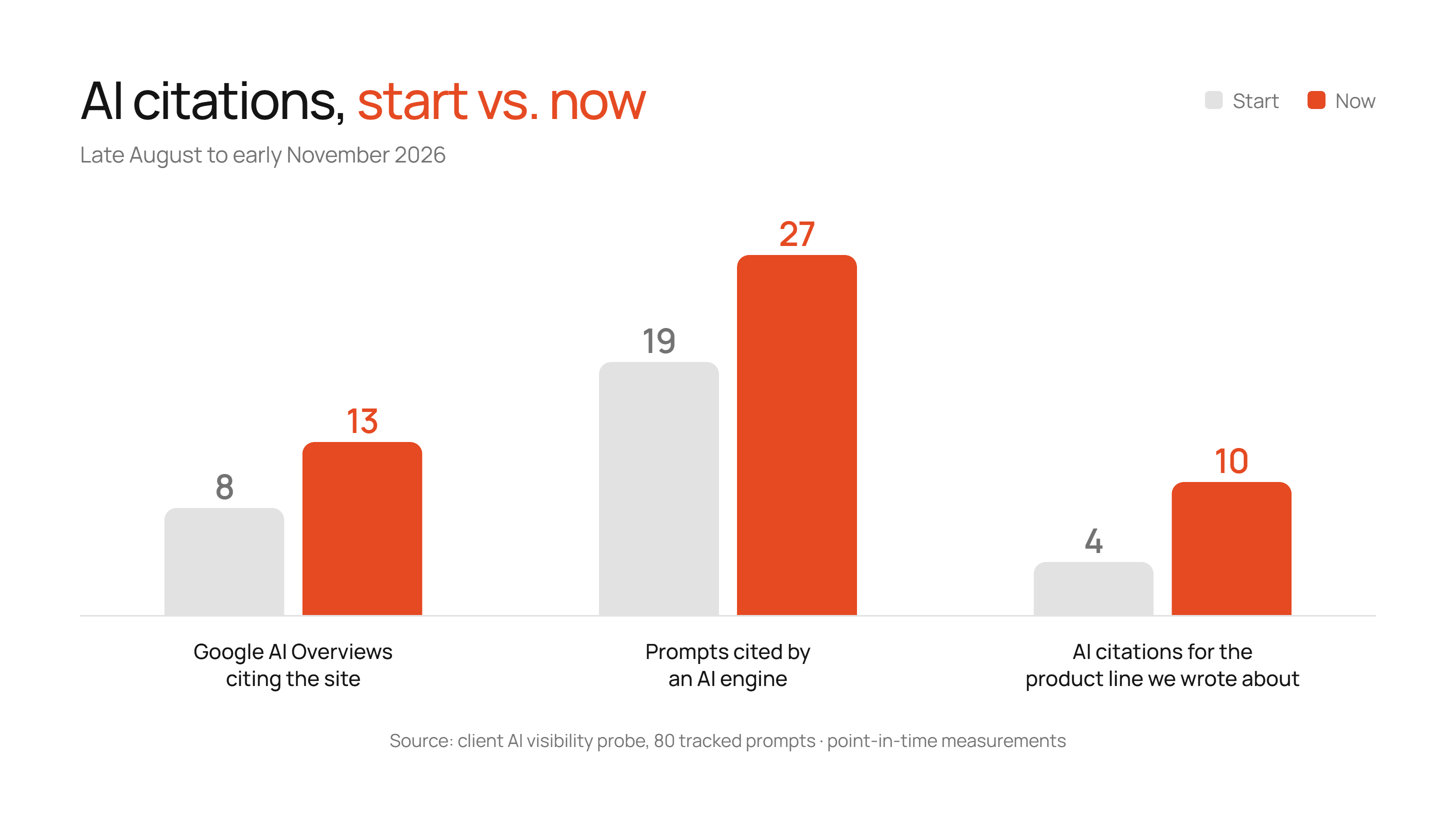
Zooming out to the whole program (late August to early November): AI Overviews citing the site went from 8 to 13, and AI citations for the product line we wrote about went from 4 to 10.
The steps were simple, and the same every time: the query in the title, a short plain answer up top, a named customer example.
One caveat: these are snapshots. AI answers change between searches, and we're not claiming leads or revenue from this.
Here's what that looks like in Google
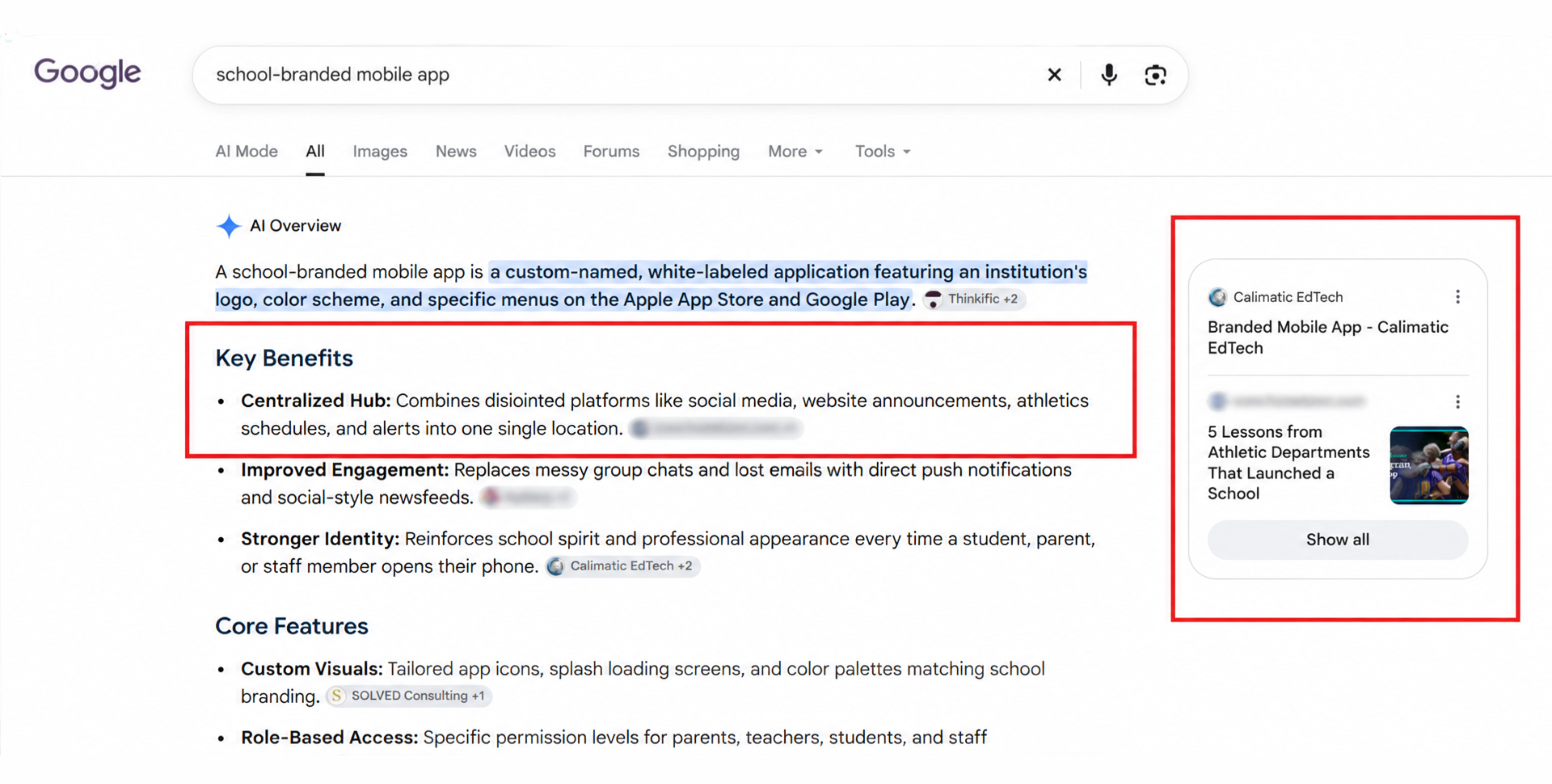
This is the AI Overview for “school-branded mobile app.” See “Centralized Hub,” the first key benefit? That's the platform, cited as the #1 source for it.
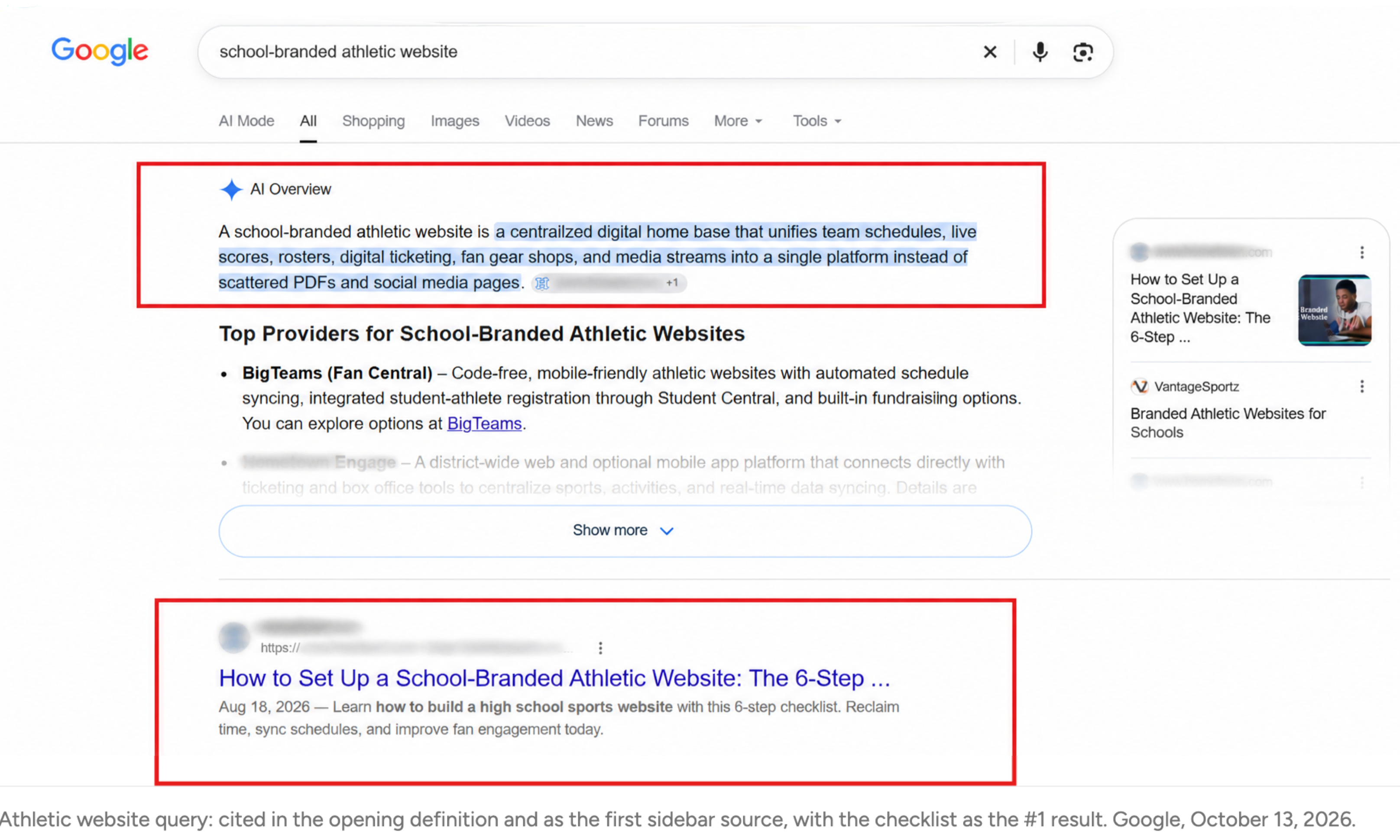
Here's the search for “school-branded athletic website.” Our 6-step checklist is the #1 result and the first source in the sidebar, and the overview cites the platform right in its opening definition.
One showed up 14 days after the article went live. The other took about two months.
What we actually did
The platform wanted to show up where buyers look now: inside AI answers, not just the blue links. We could have fought for the broad category. Instead, we targeted the exact phrases buyers type.
So we wrote three articles for the platform's engagement products:
a 6-step checklist
“5 Lessons”
“Boosting School Spirit”
Each one followed the same recipe. We put the target query (or a close variant) in the title, answered it in a short plain paragraph right at the top, and used a real, named school as the customer example.
Behind it, the usual rhythm of the engagement: five pieces of content a week, weekly automated reports and a monthly deep dive.
What it produced
“School-branded mobile app”: the platform is the #1 source for “Centralized Hub,” the first of the AI Overview's “Key Benefits.” It showed up 14 days after the article went live.
“School-branded athletic website”: the checklist became the #1 search result and the first sidebar source, and the overview cites the platform in its opening definition. It showed up about two months after the checklist went live.
A quick note on reading those numbers: they're two different measures. One is a position in the search results, the other is a source position inside the overview, so we don't mix them. And every capture is a snapshot. Overviews shift between searches.
The recipe in six steps
Pick a query worded the way your buyer would say it. Keep it narrow and specific to one product category.
Put that query (or a close variant) in the title. We did it in all three articles.
Answer it in a short, plain paragraph right at the top. Answer first, background after.
Add a named customer example. Just get the customer's permission before you publish their name.
Write a small cluster on one topic. Here, three focused articles beat one broad one.
Search the query and read the overview. Look at who's cited and under which sub-themes, so you know where your content got pulled in.
Three mistakes to avoid
Treating a capture as permanent. It's a snapshot, so log the date of every check.
Mixing up ranking and citation. Being cited isn't the same as being first, and a source position inside an overview isn't the same metric as a search result.
Going broad. Three articles against two specific questions were enough for us. A category-wide play is a much bigger bet.
How to start
Grab the two questions your best customers asked before they bought, in their own words. Search each one and screenshot the AI Overview, sources and sub-themes included. Then write your first article using steps 2 to 4: question in the title, short answer up top, one real customer example. Set a reminder to check again at two weeks, and another at eight.
If you try it, hit reply and tell us how it goes. And if you'd rather have us build a content engine around the exact questions your buyers ask, book a time with us and we'll walk through your infrastructure and operational bottlenecks together in a technical deep dive.
Talk soon,
Ali · Islands