
When founders say “we automated our content,” the first question I ask is: what does the workflow do without you in it?
If the answer is “nothing,” that isn’t automation. That’s a faster keyboard.
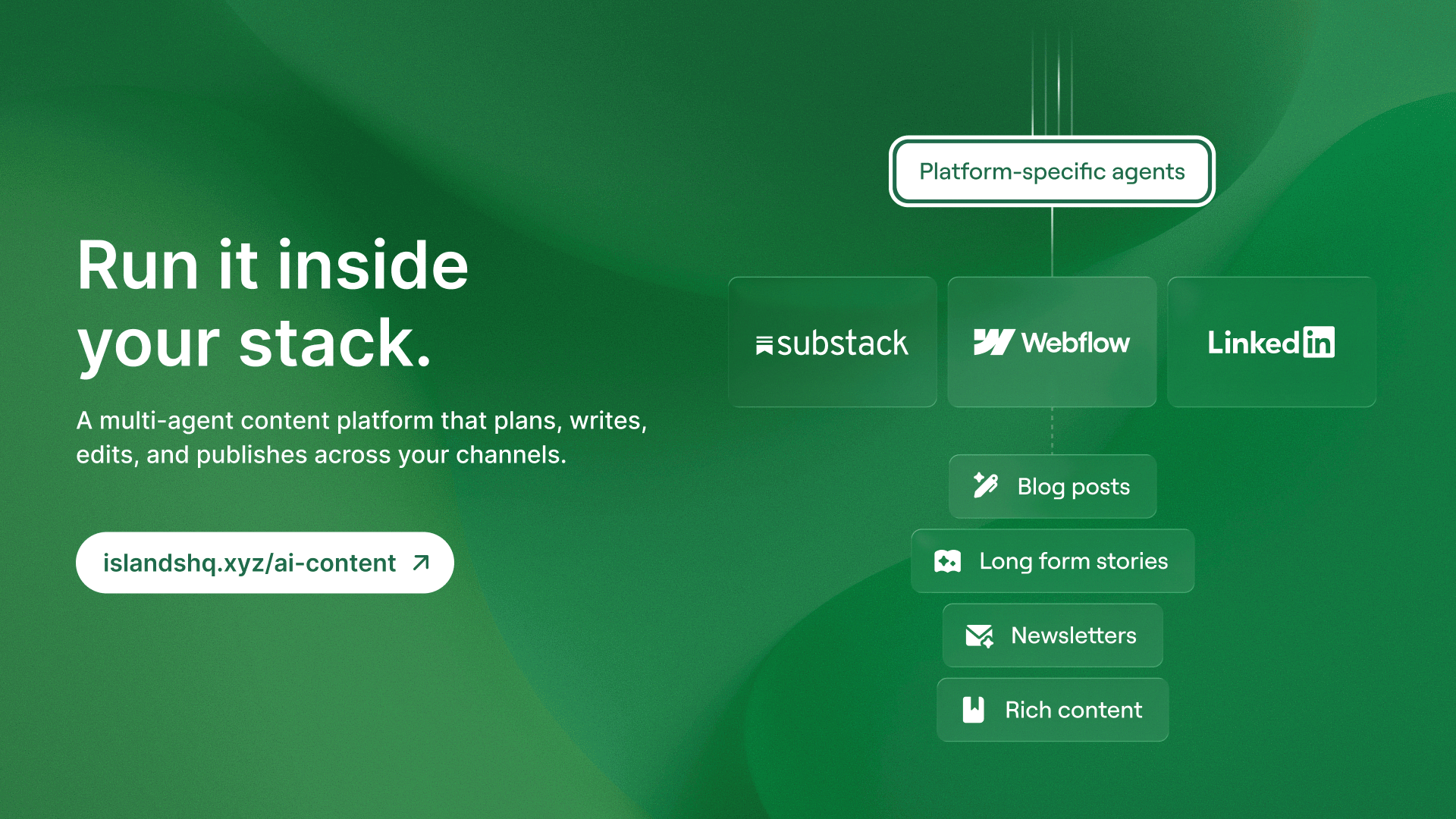
Real content automation in 2026 uses a multi-agent AI system. It plans, writes, edits, and publishes content. It does this without a human pushing each step forward. Research happens. Drafting happens. Editing happens. Publishing happens. Reporting happens. You show up to review, not to type.
That’s the version that compounds. Everything else burns out by month three.
What content automation actually is
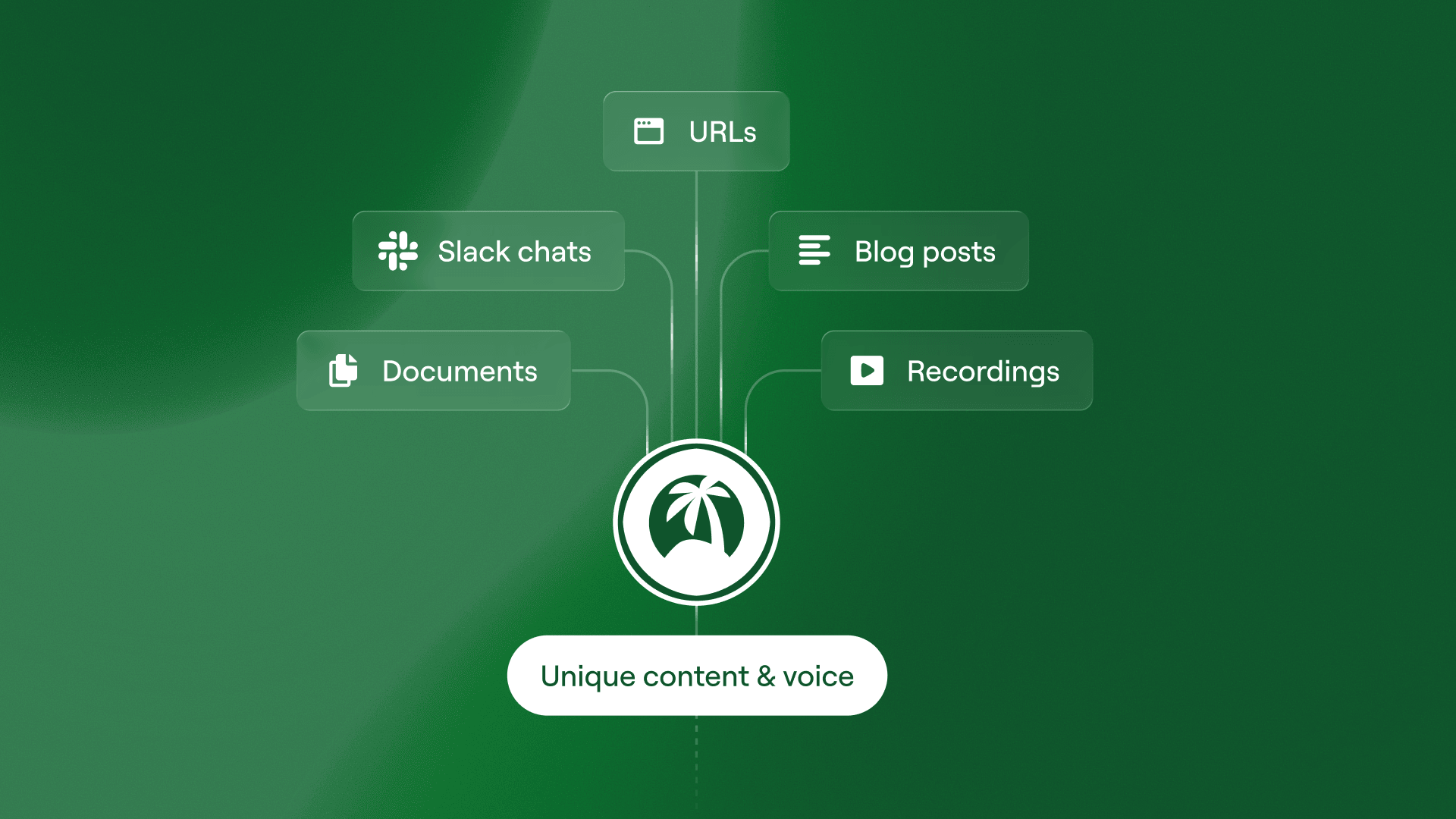
Content automation uses software agents and connected workflows. It takes a topic, a brand voice, and a keyword target. It then creates, publishes, and distributes the final piece. The stack varies. The shape doesn’t.
A strategy agent maps the calendar against real keyword demand. A research agent reads the web so the writer agent doesn’t start from a blank page. An editor agent scores drafts on SEO, voice, and flow. Platform sub-agents reshape each piece for the channel it’s going to: blog, newsletter, Medium, LinkedIn, Shopify, customer.io.
That is an AI powered content creation platform. Anything less is an AI content writer pretending to be one.
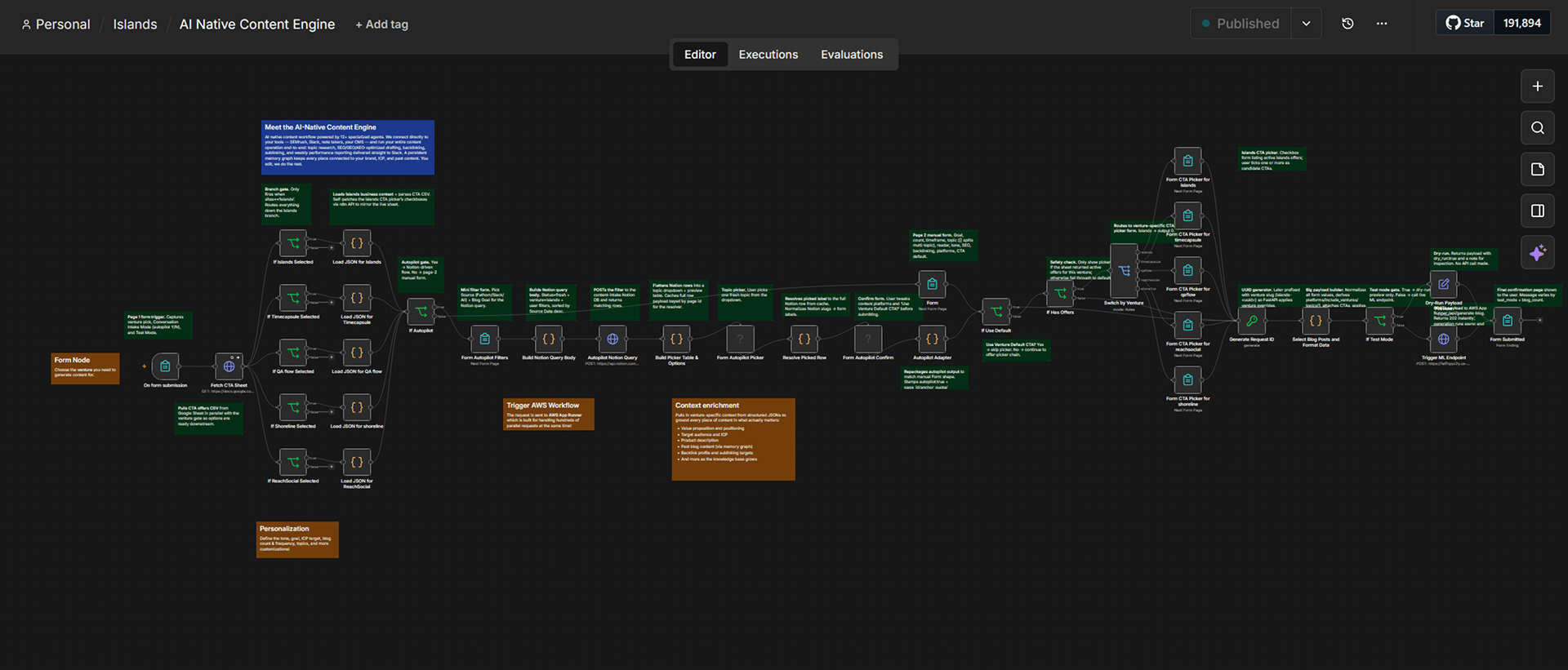
A glimpse of our internal AI content engine
What it isn’t
Three things keep getting confused with automation.
ChatGPT plus a CMS. You wrote a draft. You pasted it in. You hit publish. That’s a faster manual workflow. The bottleneck moved from “writing” to “everything else.”
An AI content marketing tool plugged into your blog. One model writing one post is assisted creation. It doesn’t ingest your brand, it doesn’t pull keyword data, it doesn’t distribute, and it doesn’t report. The handoffs you wanted to eliminate are still there.
“We use AI in our process.” Most teams that say this mean they generate outlines with ChatGPT and write the rest themselves. Real AI content creation flips the ratio: agents do the production, humans do the judgment.
The proof I keep coming back to
Islands ran the system on its own properties before deploying it anywhere else.
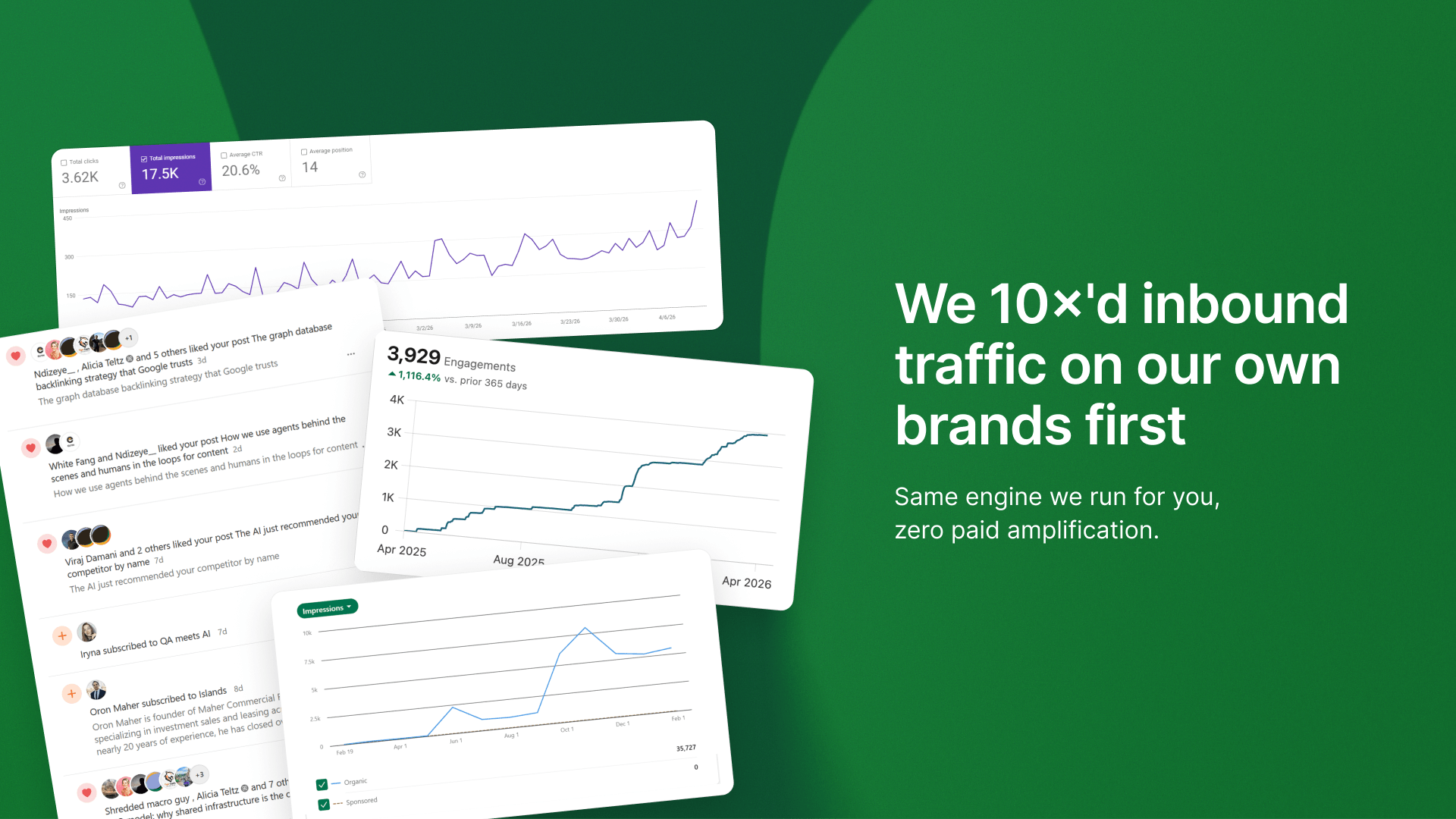
The Islands Substack went from 6 to 1,266 subscribers in 180 days. Views: 295 to 10,800. Zero paid amplification.
The QA flow Substack went from 7 to 1,233 in the same window. The QA flow LinkedIn account pulled 35,727 organic impressions.
Same pipeline now runs QA engineering content, LinkedIn content systems, agency operations resources, hiring playbooks, freelance marketing operator content, performance marketing playbooks, Canadian benefits content, and beauty brand publishing. One system. Many brands. Zero extra headcount.
When you actually need this
Content automation isn’t for everyone. It’s for teams sitting in one or more of these positions:
Publishing across three or more channels with handoffs eating your week.
Sitting on a keyword list nobody is writing against.
Tired of freelancers and agencies producing work that doesn’t sound like you.
Shipping in bursts because your experts can’t carve out the writing time.
Trying to create content for AI articles that ChatGPT, Perplexity, and Google AI Overviews actually cite.
If none of those describe you, an AI content writer is probably enough. If two or more do, you need the platform.
The unfashionable take
Most teams treat content like a project. They fund a batch, ship it, and move on. Three months later the calendar collapses and they start over.
Content isn’t a project. It’s infrastructure. It compounds when it’s running, and it bleeds when it isn’t.
That’s the whole reason Islands built the AI Content System. Not because writing is hard. Because keeping the system running is.
If your content strategy lives in a doc nobody reads, that’s the gap.
Sign-up for free and see what an AI powered content marketing system would do inside your stack.