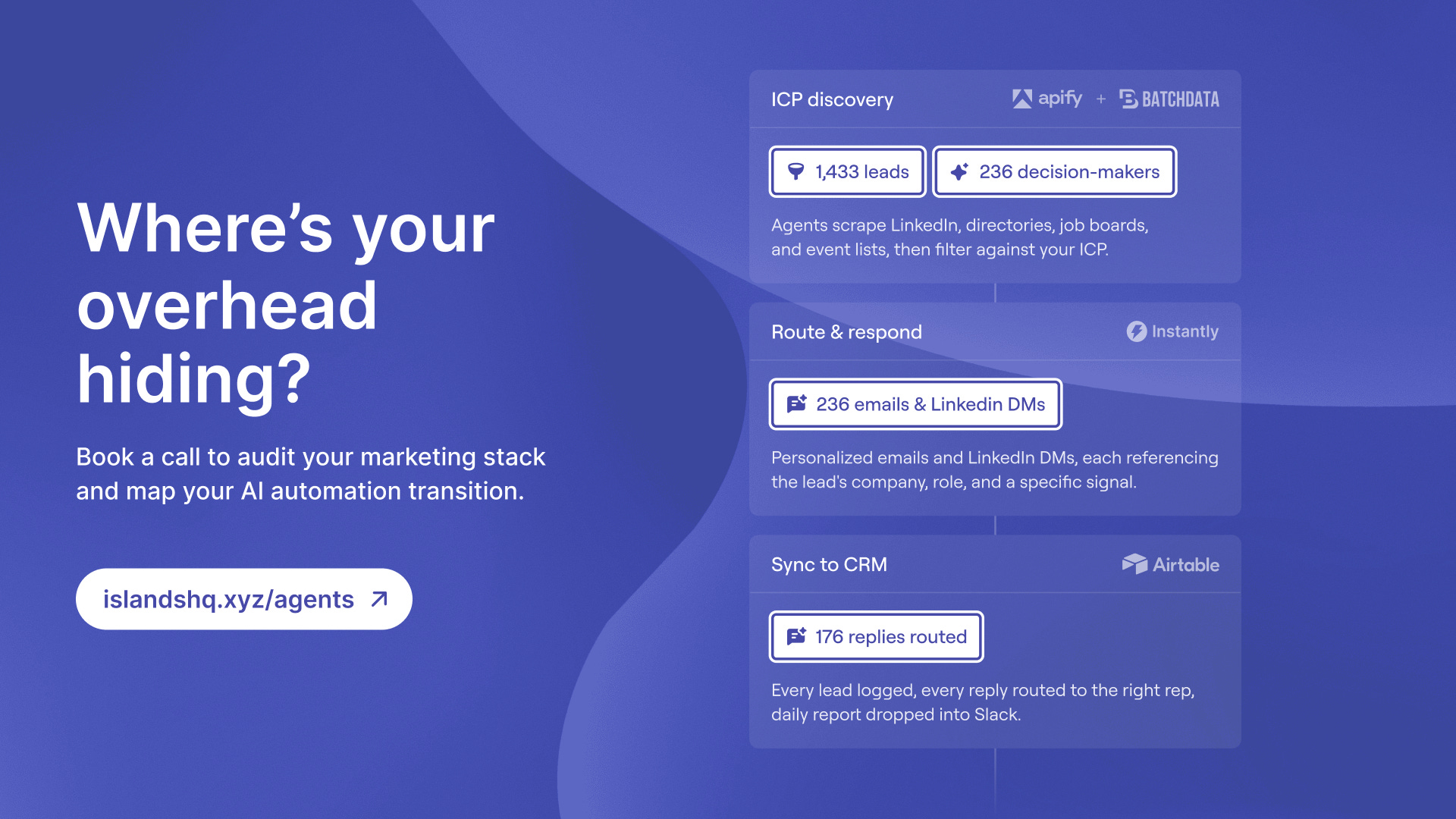

I recently watched a $180,000 marketing manager get replaced by an AI agent in exactly 90 days. The startup was a Series B scale-up drowning in executive overhead. They didn’t need another person to manage a calendar or sit in Slack. They needed an architectural overhaul. Most people hear “AI in marketing” and think of a better way to write a LinkedIn post. They think about productivity assistants that help humans work faster. AI digital marketing is the future of this industry.
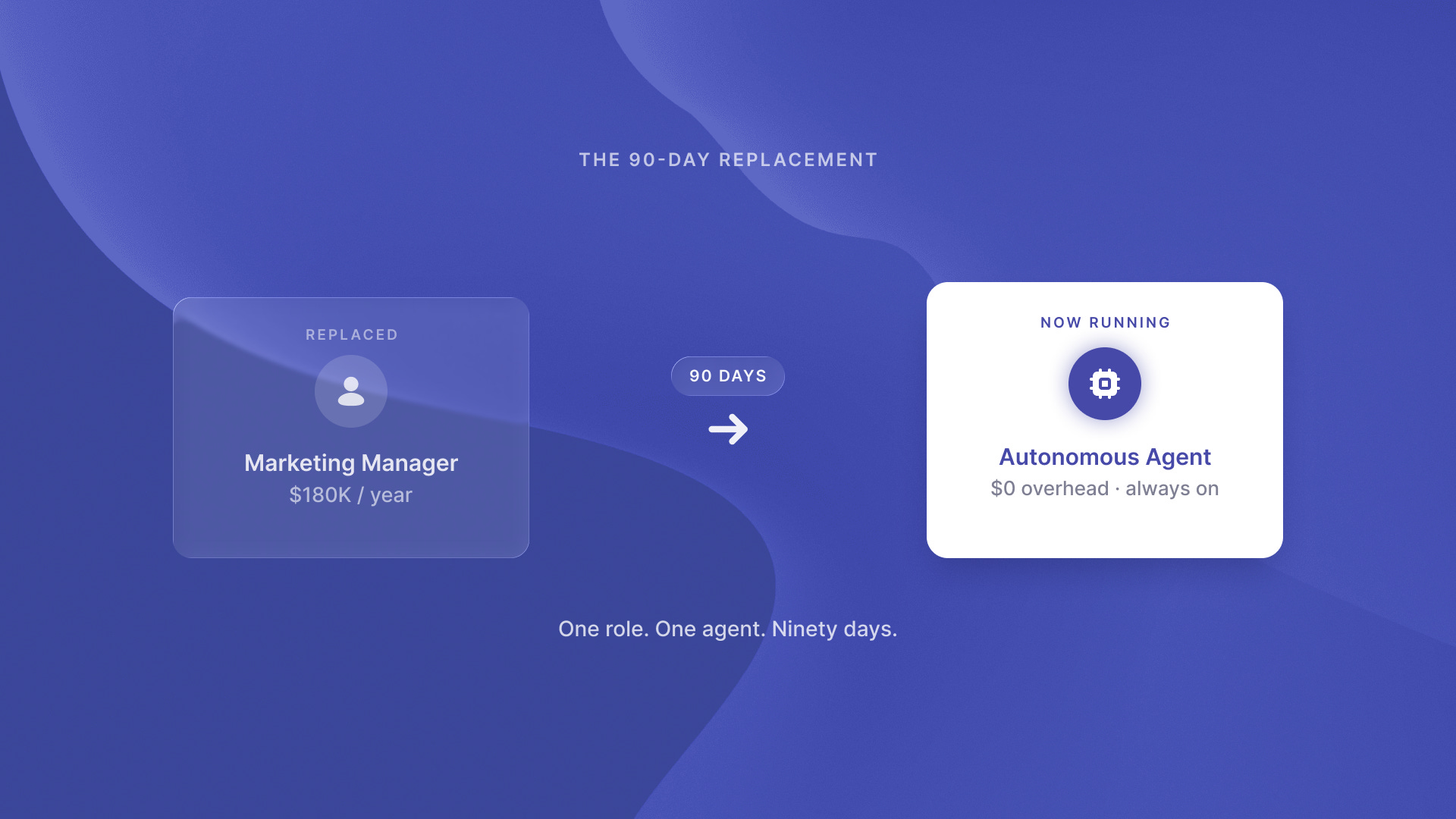
Here is the reality: an assistant still requires a manager. If you hire a human to prompt a tool, you haven’t solved the bottleneck. You’ve simply shifted it. To cut costs and scale output, you must move from assistants to autonomous logic. This is where ai marketing news is heading in 2026. It is no longer about tools. It is about infrastructure.
Why AI marketing news requires autonomous agents
A traditional marketing operations manager spends hours on repetitive coordination. A marketing operations manager time consuming tasks ai automation 2026 can be streamlined through these new systems. Research happens. Drafting happens. Review happens. In a legacy system, these are separate tasks linked by a human. An autonomous agent works differently. It has the logic to finish whole workflows without a handler.
Comparing assistants and agents
Systems like automated QA testing handle technical validation. Specialized workers manage complex outbound engagement through integrated LinkedIn workflows. These aren’t just best AI marketing tools. They are specialized workers. When you build with this logic, you aren’t just automating a task. You are automating a role.
The difference is structural:
Assistants: Require specific prompts for every output
Agents: Operate based on high-level goals and business logic
Assistants: Create drafts for human approval
Agents: Execute campaigns and optimize based on real-time data
Why the 90-day window matters for ROI
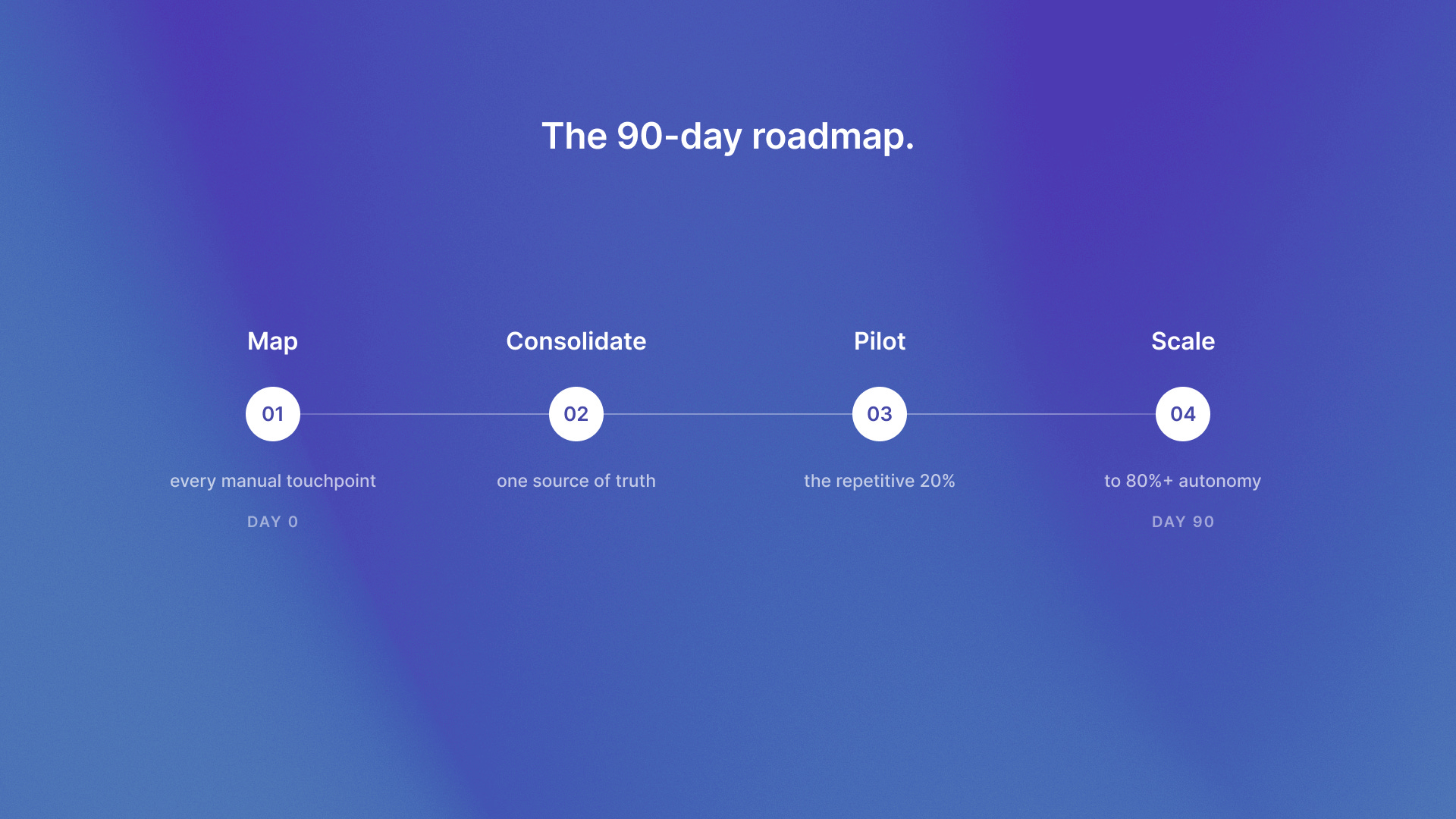
Technical leaders often feel pressure to show immediate results. I’ve found that a 90-day window is the critical benchmark. In the first 30 days, you audit the technical debt of your current stack. This involves a high-velocity execution framework to establish performance baselines. In the next 30, you deploy the agentic framework. By day 90, you have measurable data.
Melanie Mitchell, the Santa Fe Institute AI researcher whose Artificial Intelligence: A Guide for Thinking Humans reshaped how executives evaluate real vs. hyped AI capability, said it in a line every 90-day transition should be measured against:
“AI systems can be brittle in ways that humans are not.” - Melanie Mitchell, Santa Fe Institute
Solving for friction points
Many leaders fail because they try to do too much at once. They want a complete ai digital marketing transformation on day one. Instead, you should focus on the most expensive friction points. If your team spends 20 hours a week on manual lead research, target that first. By removing that weight, you improve your unit economics immediately. To how to use AI in marketing effectively, you must solve for the Series B scaling trap where headcount growth stalls actual progress.
Building an AI automation agency infrastructure
If you want to move beyond basic automation, you need a system that converts. This involves an AI automation agency approach where the site itself acts as a filter. It is about how the system handles the data it receives. You can see this transition in how teams architect for agents instead of just adding more software. An AI website marketing agency can help set up an AI automation agency website layout. It can convert clients and provide AI conversational marketing agency website development services.
This reduces the need for middle management. Startups often find that a full-time CMO is a suicide mission when they actually need execution infrastructure. High-level talent should focus on strategy, not coordination.
The playbook for autonomous execution
Identify marketing operations tasks AI automation can solve
Map the data flow between your CRM and your execution tools
Deploy specialized agents for specific channels like LinkedIn or Email
Monitor the system for technical debt and logic drifts
Proof in the production cycle
I often see founders get stuck in the research phase. They look for the best AI tools for business or the perfect development partner but never actually ship. The technology is ready today.
We see companies using an autonomous model to replace entire production departments. They aren’t just using AI to write. They use it to research, distribute, and analyze. The result is a system that runs at a fraction of the cost of a traditional team.
The bottom line
Replacing a high-level role isn’t about finding a smarter chatbot. It is about re-architecting your workflows around autonomous systems. This isn’t a short-term cost-cutting hack. It is a fundamental shift in how businesses operate in 2026.
Shoshana Zuboff, the Harvard Business School professor emerita whose In the Age of the Smart Machine predicted this exact restructuring 35 years before it happened, closed her research with a line worth pinning to every founder’s 2026 planning session:
“The choice is not between technology and no technology. The choice is between an organization designed for the future and one that isn’t.” - Shoshana Zuboff, Harvard Business School
If you are still paying for a manager to manage a manager, you are losing. You need to build an infrastructure that executes without help. This is how you win the next decade of growth.
If you want to see how this architecture applies to your specific stack, book a call.