
A founder asked me last week why his blog traffic fell off a cliff in February. Nothing was broken. He had simply spent a year doing exactly what worked in 2022: keyword-led posts, published on schedule, optimized for Google’s blue links. Then the January core update hit. AI Overviews took half his clicks. His buyers began asking ChatGPT instead of searching.
That story is everywhere right now. So let me share how we actually approach AI for SEO across our own ventures, in plain terms, founder to founder.
The shift in one line
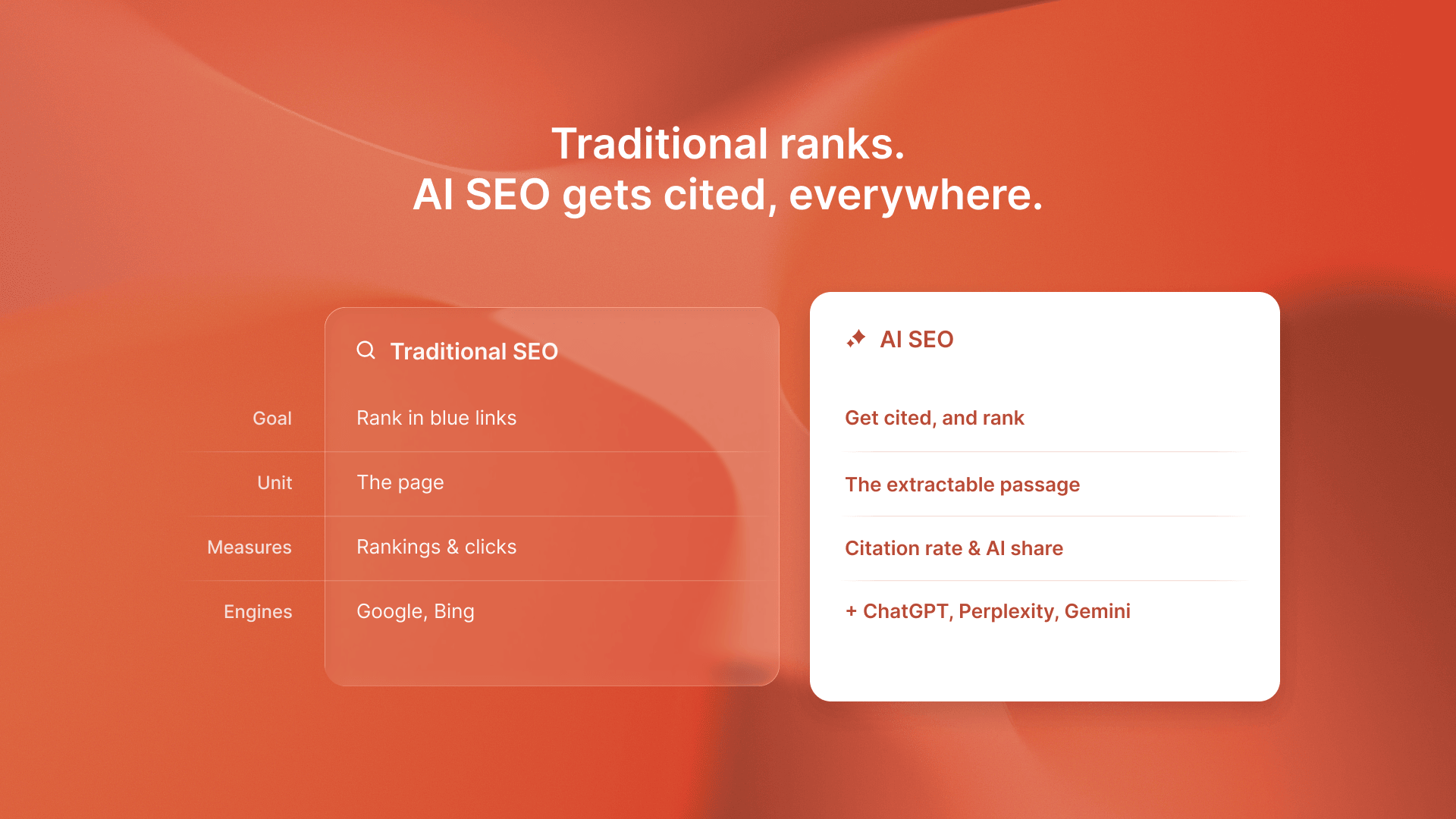
Traditional SEO gets you ranked. AI SEO gets you cited. Those are different games, and in 2026 you have to play both.
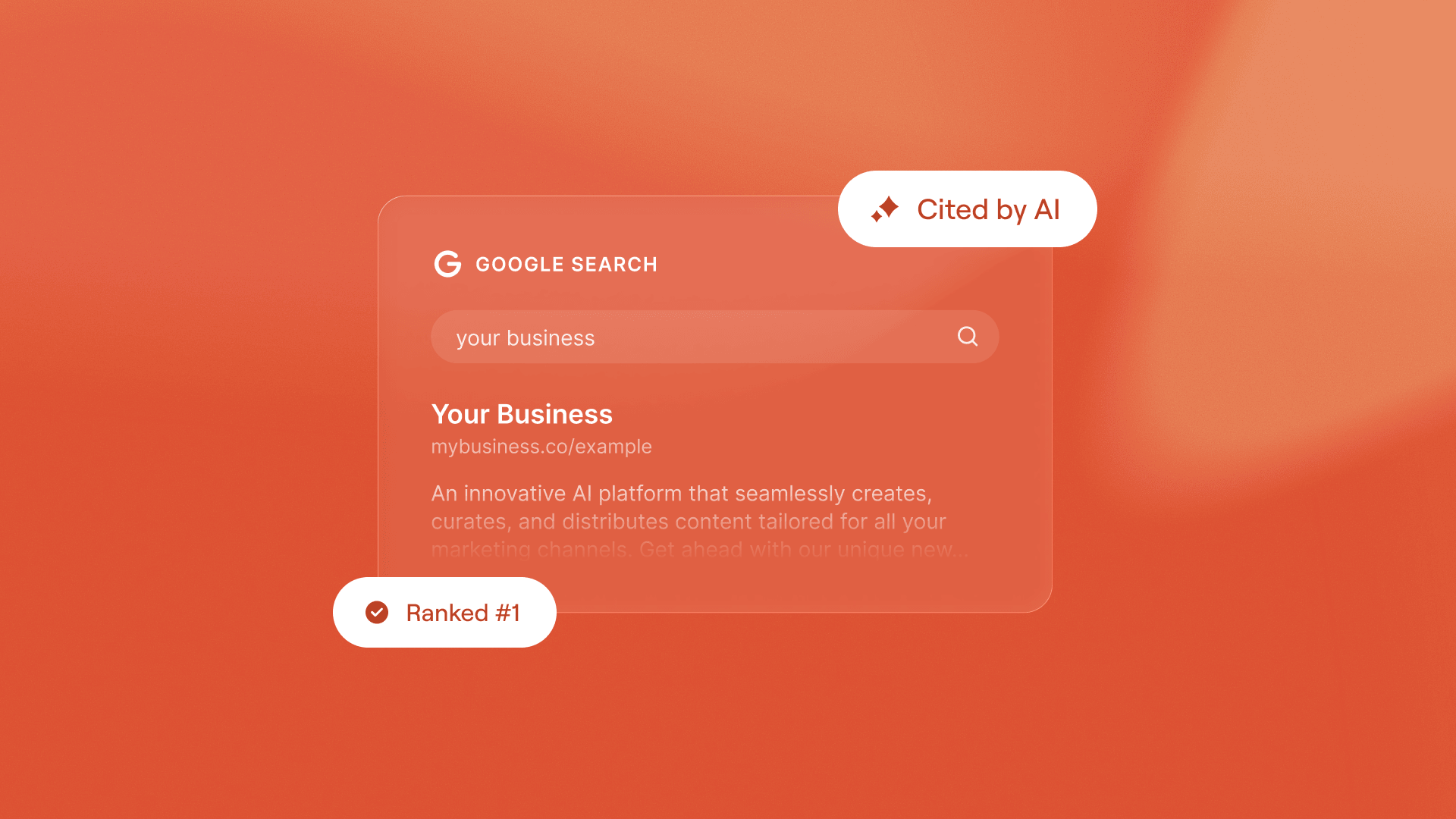
Ranking still matters because AI engines like ChatGPT and Perplexity build on Google’s index. But a clean, well-structured page now gets pulled into an AI answer even when it sits on page two. The engines pick sources on clarity and credibility, not just position. That is the whole opportunity.
What we actually do
Six moves, in order:
Research intent, not volume. We aim AI at pages that already rank. Then we pull real buyer questions, including ones from Reddit and Quora.
Brief before draft. One target query per post, answered in the first paragraph.
Write for humans, structure for machines. Direct answers up top, tables for comparisons, FAQ blocks for the long tail.
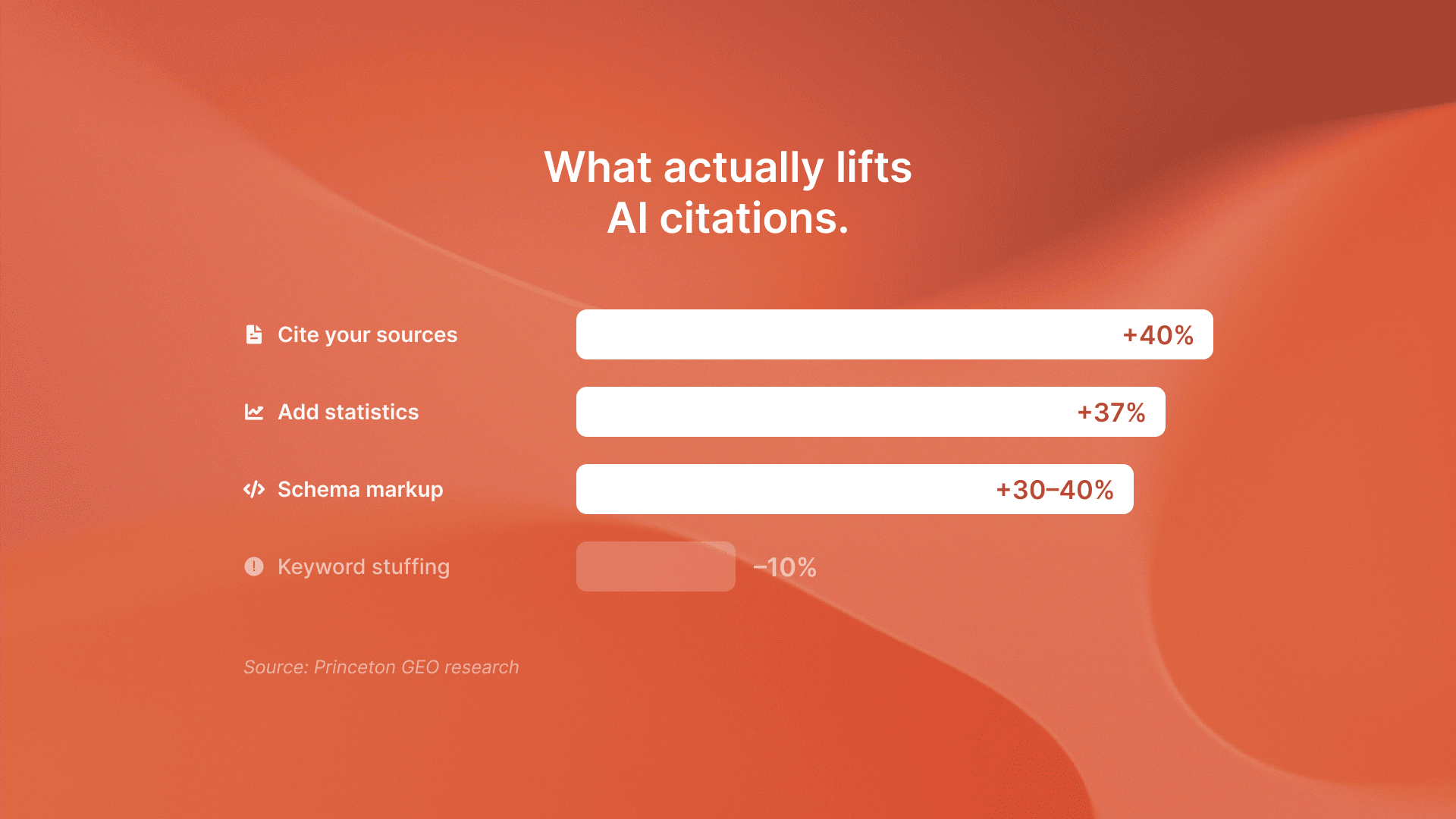
Optimize for citations. Citing sources lifts AI visibility about 40 percent. Adding statistics lifts it 37 percent. Keyword stuffing costs you 10 percent. The data here is blunt.
Add proof. A named author, original numbers, a visible “last updated” date.
Track it. Run your top queries through ChatGPT and Perplexity monthly and log who gets cited.
The questions every founder asks me
Do you need an all-in-one SEO platform? Only when you manage real volume. If a platform saves you ten hours a month, it pays for itself. A small site on Search Console does not need one yet.
Is an SEO plugin enough? For a small site, a plugin handles your titles, meta, and schema fine. It will not tell you whether Perplexity is citing a competitor. Treat it as the floor, not the ceiling.
What are the best AI SEO tools 2026 has to offer? Honestly, it depends on your bottleneck. Semrush for all-in-one and AI visibility tracking. Surfer or Clearscope for content optimization. Frase for intent and briefs. Ahrefs for backlinks. Peec AI if you only want to monitor how the LLMs talk about you. A focused 100-dollar stack beats a 500-dollar one you never open.
Why I think we get this right
Because we are not theorizing. We run AI search engine optimization on our own properties before anyone pays us for it. Our AI Content System drives content for QA Flow, ReachSocial, Timecapsule, and Shoreline, and Canadian founders can fund the work through our AI training grant advisory.
The same engine ranks content for the brands we run growth for: a DTC beauty brand, a commercial floor-care company, a marketing talent marketplace, a financial services firm, and a performance marketing agency. One model, five very different industries.
That is the difference between a consultancy that advises and an operator that builds. We do the second one.
If your content stopped working this year and you want a system instead of another tool, book a call. We will map your AI SEO playbook and show you exactly where you should be getting cited.
Build. Run. Maintain.
Ali