


Hey,
Maybe your post ranks on Google, but ChatGPT never shows it. Why is that?
A page can be #1 on Google and still be totally invisible in AI answers. AI doesn’t just look at your main keyword. It looks for answers to all the questions around it. If your page doesn’t have them, AI quotes someone else.
So we changed the way we write our blogs. Here’s what we did, how it’s going, and how you can do it too.
TL;DR
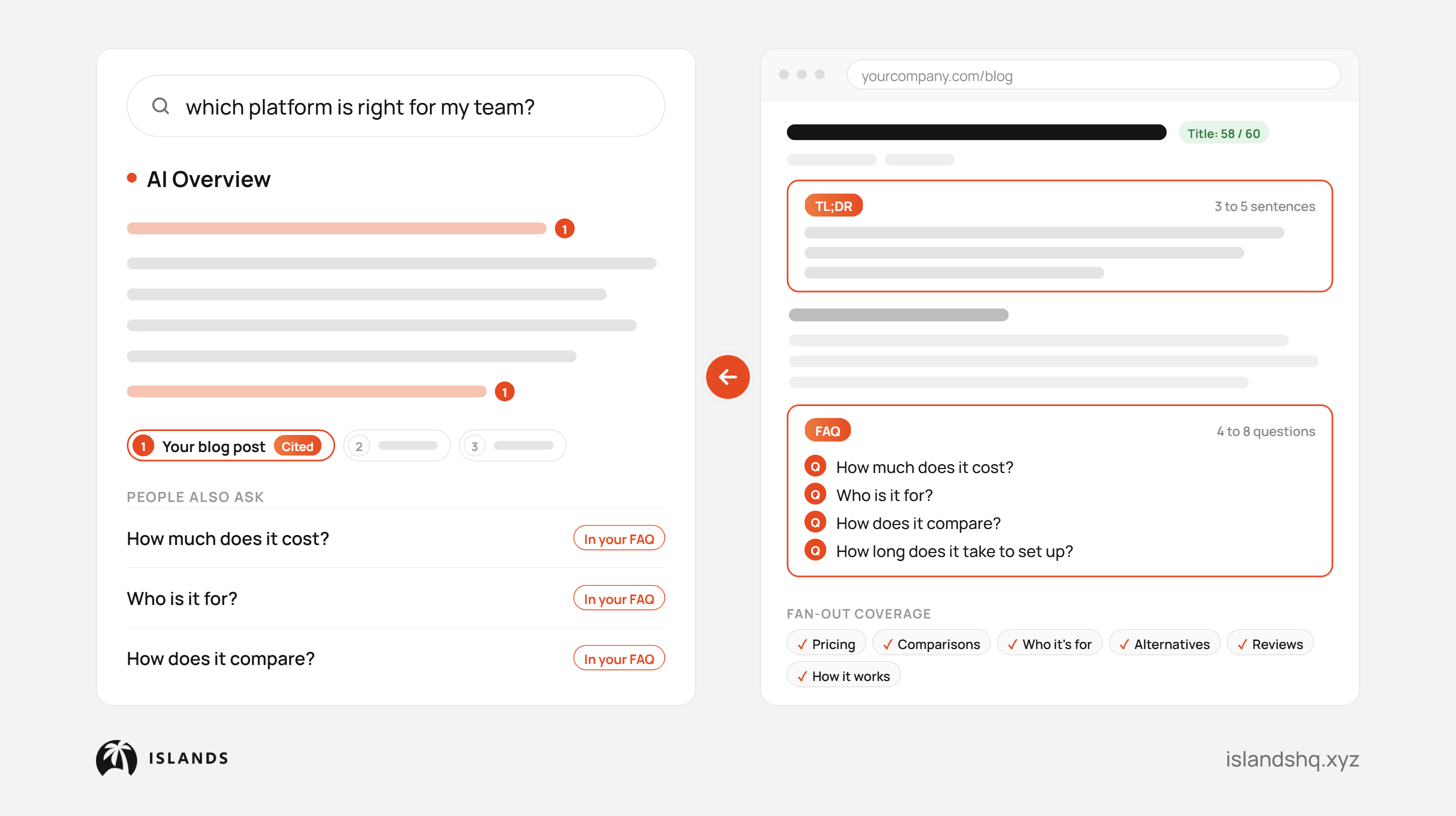
Every blog post we publish now ships with a TL;DR at the top and an FAQ at the bottom, written for AI engines to read, not just people.
We built a playbook for query fan-out: the 5 to 15 smaller questions an AI engine searches before it answers one big one.
Our writer now caps every title at 60 characters, automatically.
All three went live the first week of November, for every client.
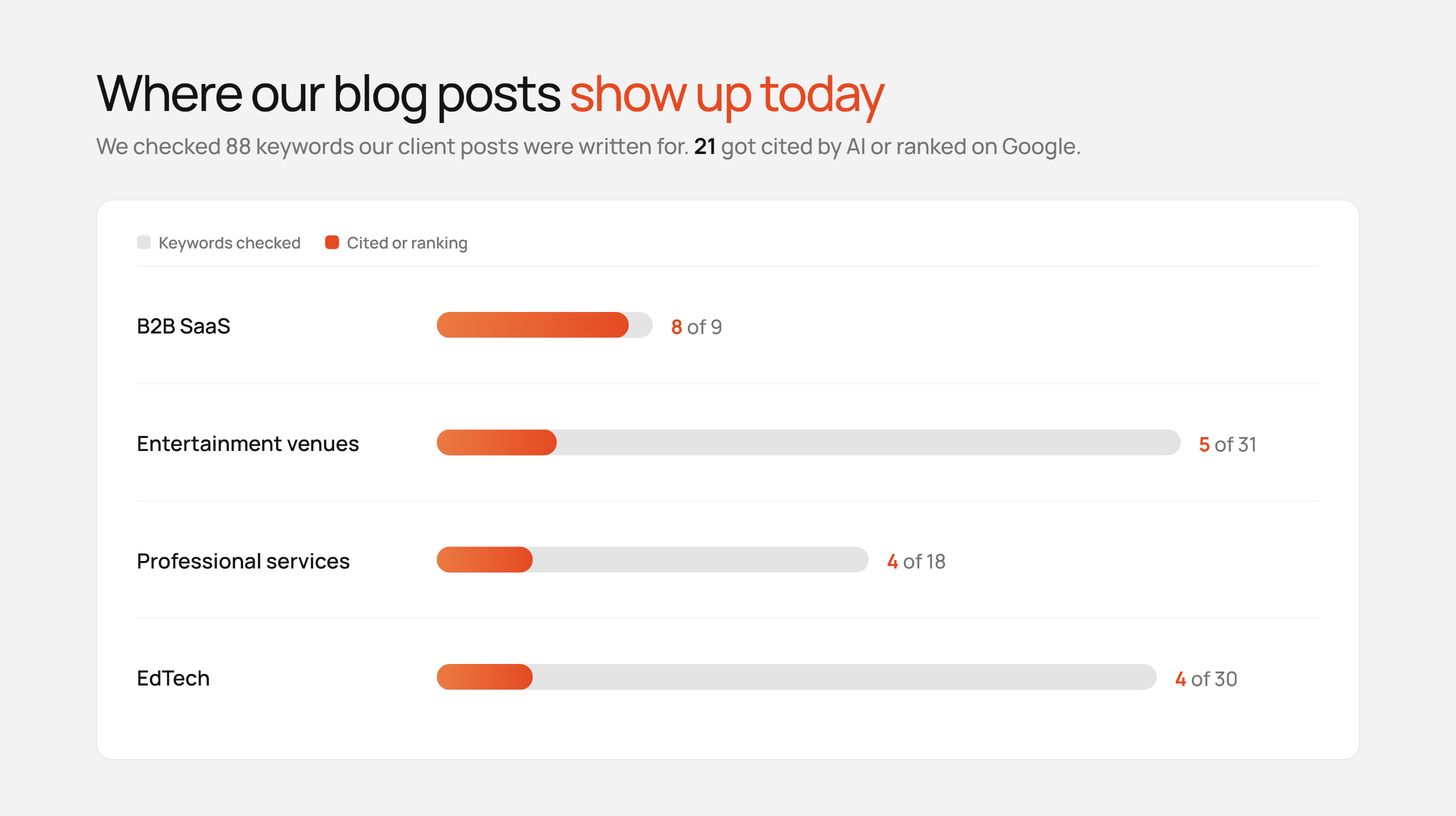
Our starting line, from the November 20 check: our posts were cited or ranking for 21 of the 98 keywords they were written for. About 1 in 5.
Ranking on Google isn't the same as getting quoted
Posts written to rank on Google are built around one keyword, and AI engines don't work that way.
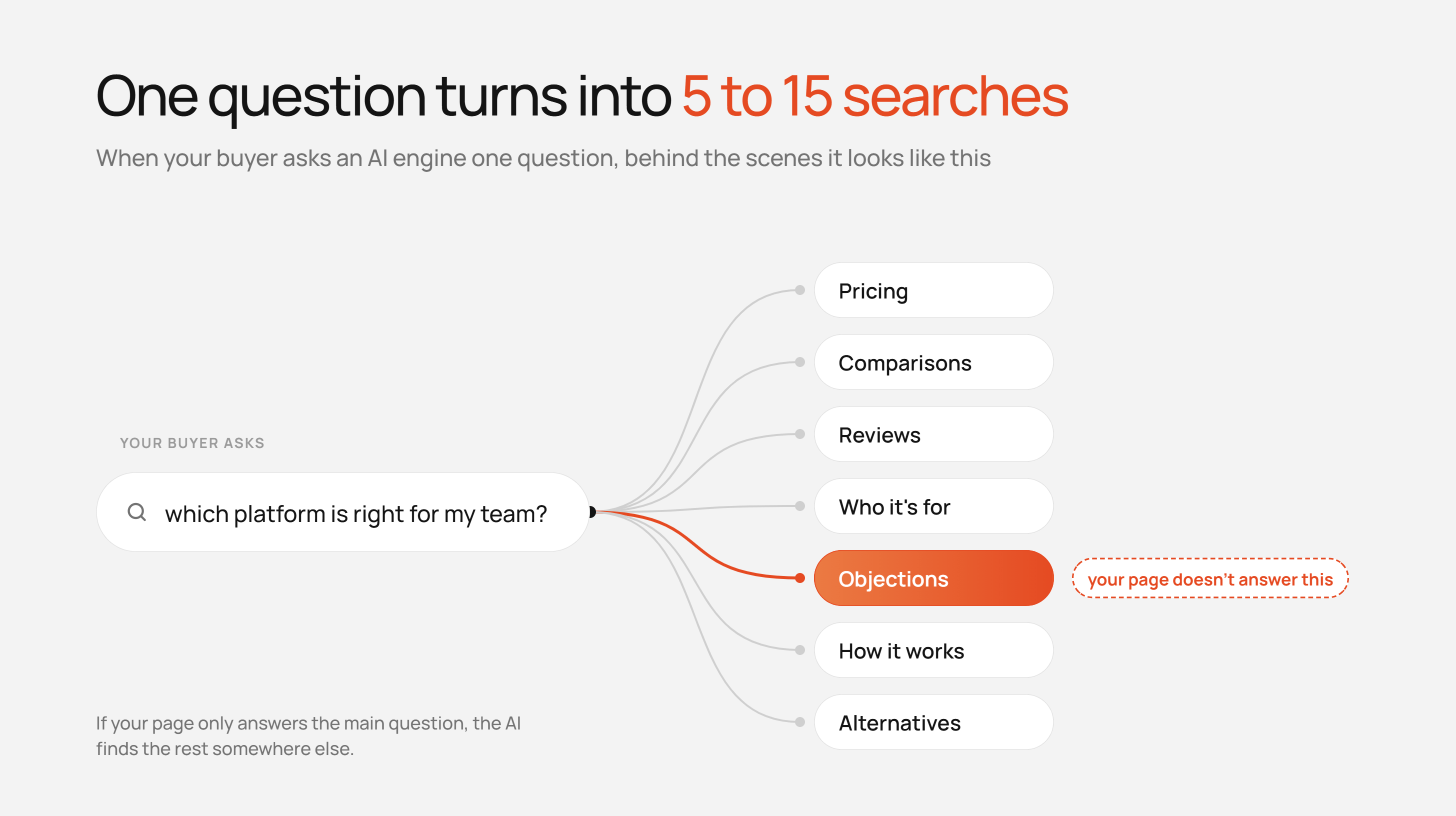
When someone asks ChatGPT, Perplexity or Gemini a question, the engine breaks the phrase into 5 to 15 smaller searches: pricing, comparisons, reviews, who it's for, objections, how it works, alternatives. That's called query fan-out.
If your page only answers the main question, the AI goes and finds the rest somewhere else. Usually on a competitor's site.
Here's our step by step
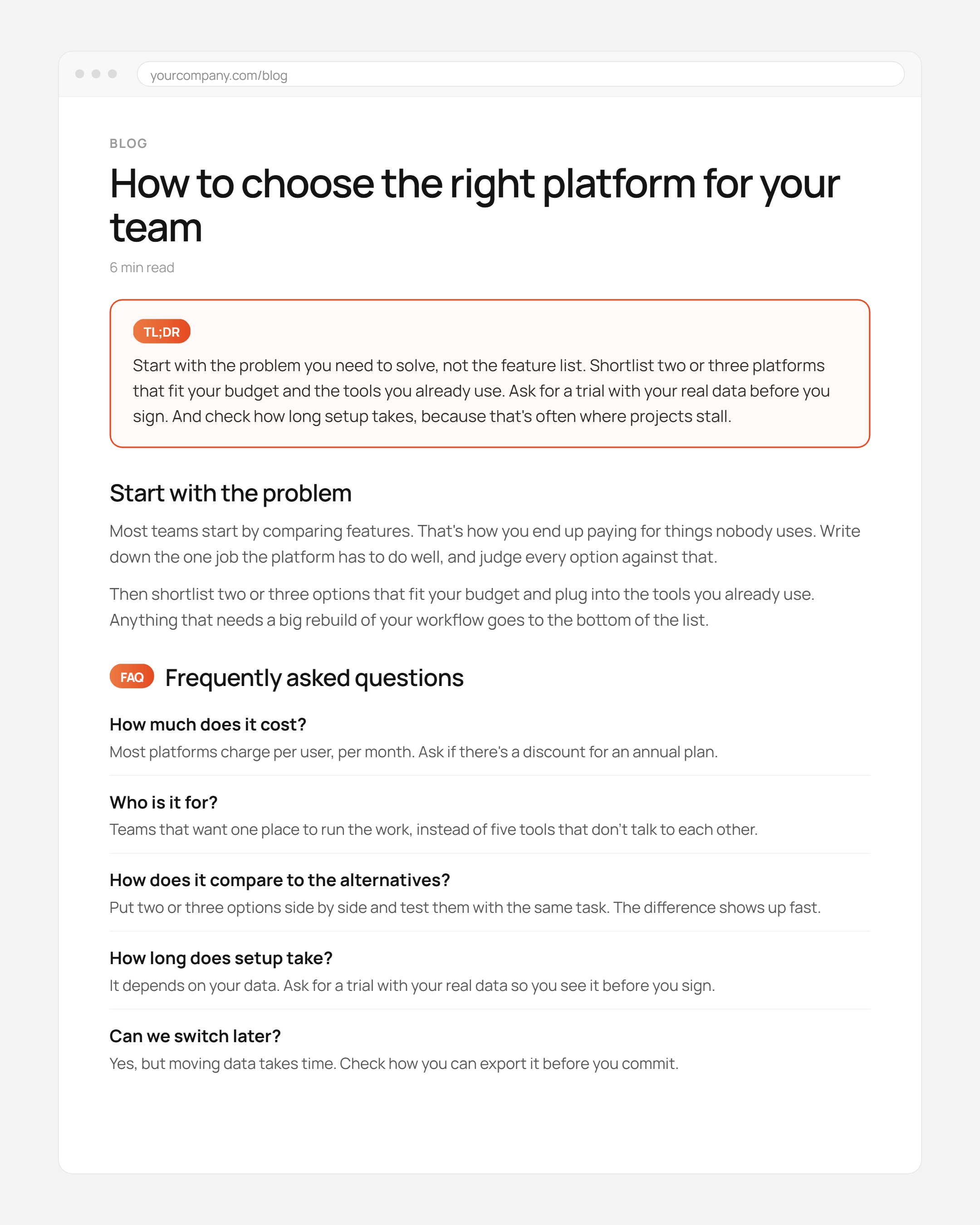
A TL;DR on every post. Three to five sentences that sum up the whole article. It gives AI engines a clean summary they can pull straight into an answer.
An FAQ on every post. Four to eight questions with short, direct answers, written so an AI engine can read them as structured knowledge.
A fan-out map before we write. We pull real query data from Google Search Console, group the questions by topic, and check which ones the page doesn't answer yet. Those go into the brief and into the FAQ.
Titles under 60 characters, always. Our writer now enforces it automatically, for every client, so titles don't get cut off in search results.
Our goal for the fan-out audit is to run it for any client in under two hours.
So, how are we doing so far?
Pretty good for a start: on November 20, our AI visibility check asked ChatGPT, Perplexity, Gemini, Claude and Google the exact keyword each of our client blog posts was written for. That’s 88 keywords across four brands.
From here, the goal is simple: push that number up every month. We’ll run the check again and show you the before and after.
If this sounds like you, do this
Put the answer first. A short, plain TL;DR at the top. AI engines (and busy people) read the top first.
Write the FAQ in your buyers' words. Use the exact questions they ask on sales calls, not the keywords you wish they searched.
Map the fan-out. Take one big question and list the smaller ones behind it: price, comparisons, who it's for, alternatives. Answer them on the same page.
Keep titles under 60 characters. Longer ones get cut off.
Check before and after. Write down which AI answers cite you today, so you can tell if anything changes.
Ranking on Google still matters, but if your post doesn't answer the follow-up questions, ChatGPT will just quote someone who does.
If you try it, hit reply and tell us what you found! And if you want us to set this up for your blog, book a time with us and we'll walk you through it.
Talk soon,
Ali · Islands