


Hey,
We tell clients we can make them the brand AI recommends. For a while, we couldn't show it. We knew how much we were publishing. We didn't know how much of it ChatGPT or Google's AI Overviews were actually pulling into their answers.
So we built a way to check. Here's how it works, where we got it wrong at first, and our tips if you want to try it yourself.
TL;DR
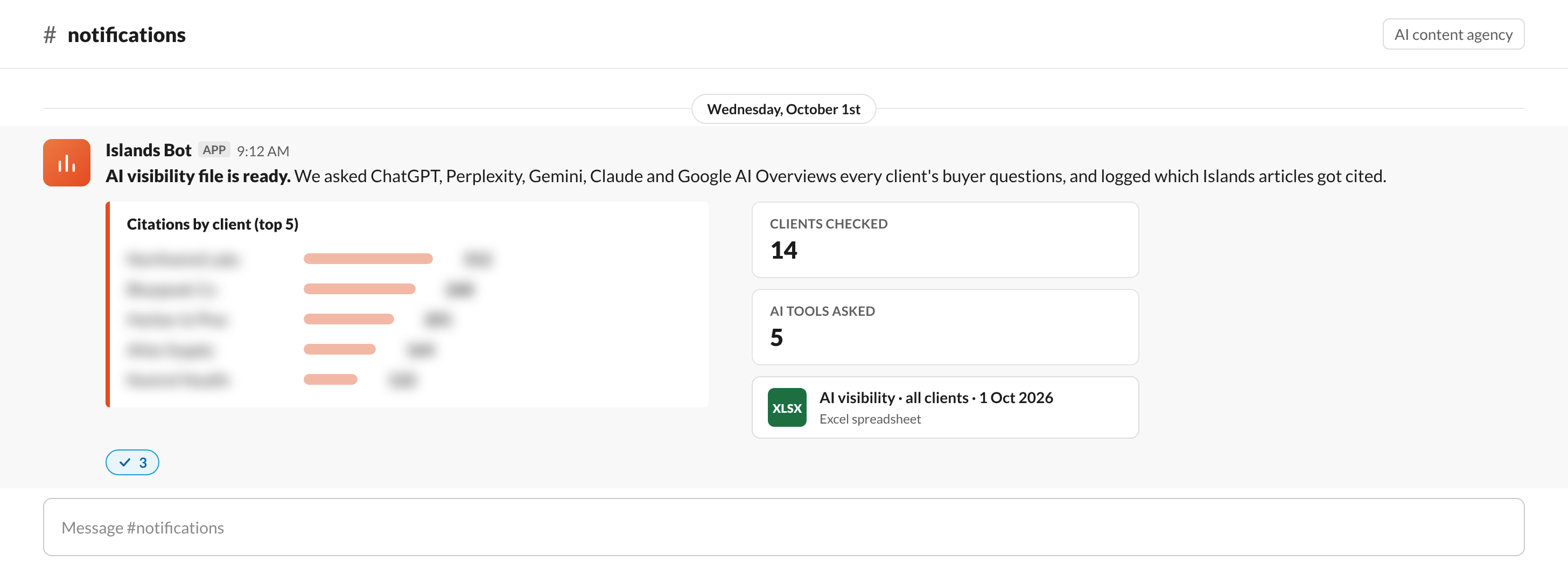
We built an automated check that asks ChatGPT, Perplexity, Gemini, Claude and Google AI Overviews the questions our clients' buyers ask, and records which of our articles get cited.
The first run, on October 1, counted 7,329 citations across 14 clients.
Then we caught a counting error that made our coverage look bigger than it was. We fixed it and reposted the file.
Today those numbers feed the "AI answers" section of every client report.
If you publish for AI search and can't see where you're cited, our tips are at the bottom.
Rankings and clicks only told half the story
Rankings and clicks only tell you part of the story. They tell you nothing about AI answers. We needed to prove, to ourselves and to our clients, that the content we write was getting pulled into those answers. Without data, it was a promise.
Our solution: tracking every AI citation
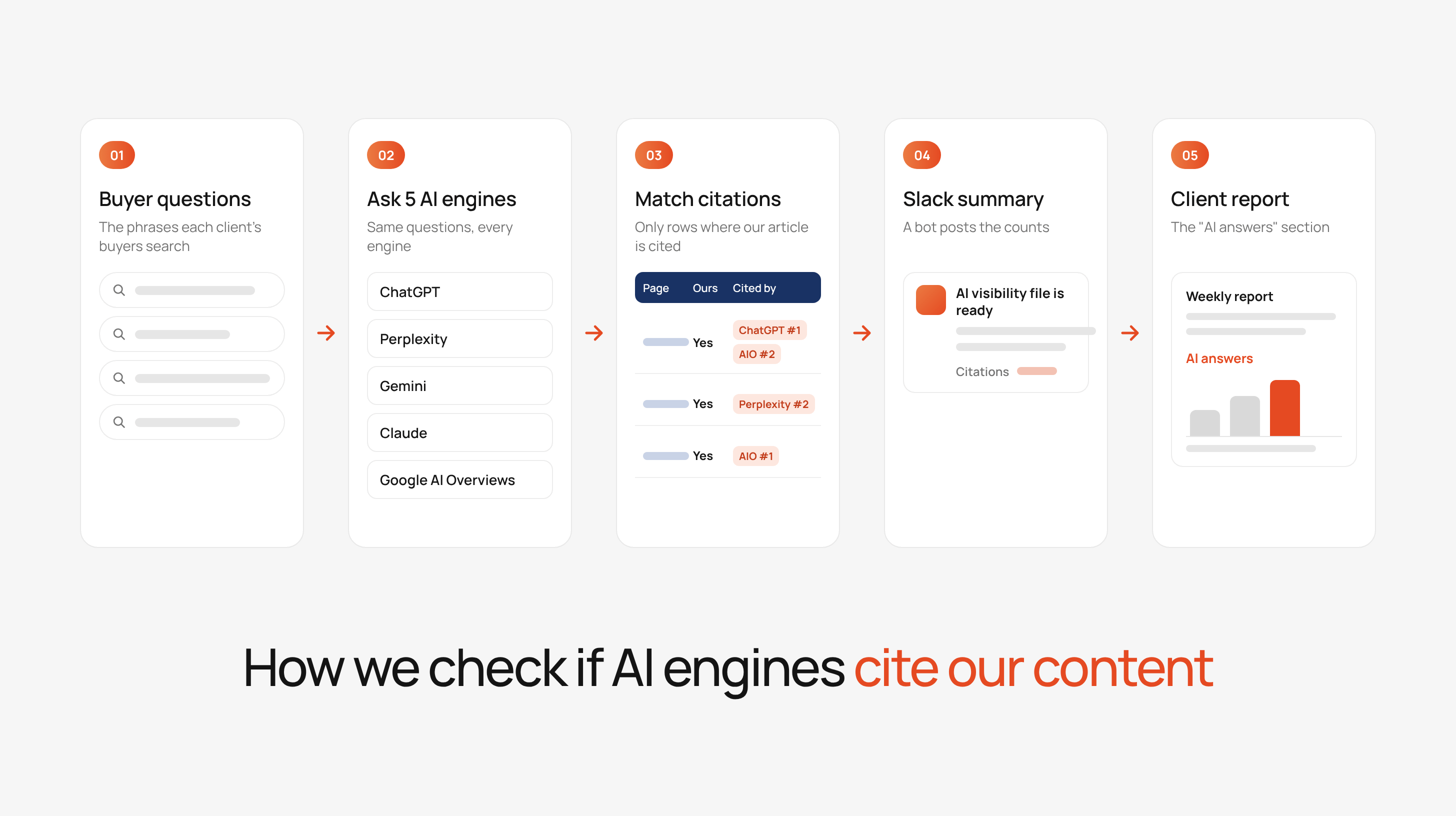
Here's our step by step:
Pick the questions. For each client, a list of queries their buyers would actually ask.
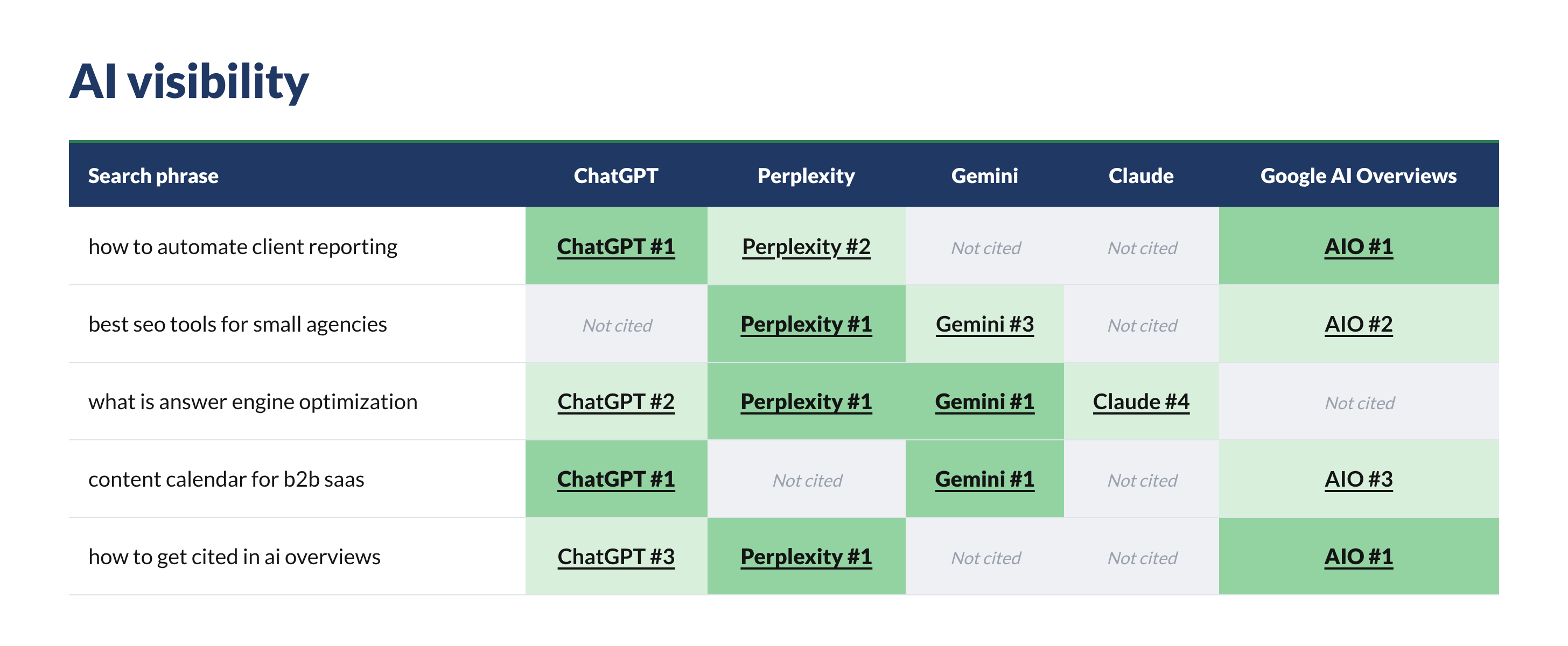
Ask every engine. The check runs those queries on ChatGPT, Perplexity, Gemini, Claude and Google AI Overviews.
Record the citations. For every answer, it saves which pages got cited and matches them against the articles we wrote, using our daily log of every Islands-written post that's live on client sites.
Post the summary. When the file is ready, a bot posts the citation counts to our Slack channel.
Feed the reports. The numbers go straight into the "AI answers" section of each client's weekly report.
Our first number was too big
Our first run gave us a big number. Too big.
When we looked closer, the file was counting more than real AI citations.
So we cleaned it up. Only the rows where an AI engine actually cited our article stay in. Then we sent out the corrected file.
The real number is smaller. But it's the one we trust, and it's the one that goes in our client reports.
If this sounds like you, steal our tips
List your URLs first. Then check which ones AI actually cites. That tells you what to write more of.
Only count real citations. Ranking on Google isn't the same as getting cited by ChatGPT. Keep them apart.
Check more than one engine. Your buyers don't all use ChatGPT.
Write down the date. AI answers change all the time, so every check is a snapshot.
Get an alert when it breaks. If a run fails, you want to know before that number lands in a report.
If you try it, hit reply and tell us what you found. And if you want us to set this up for your content, book a time with us and we'll walk you through it.
Talk soon,
Ali · Islands