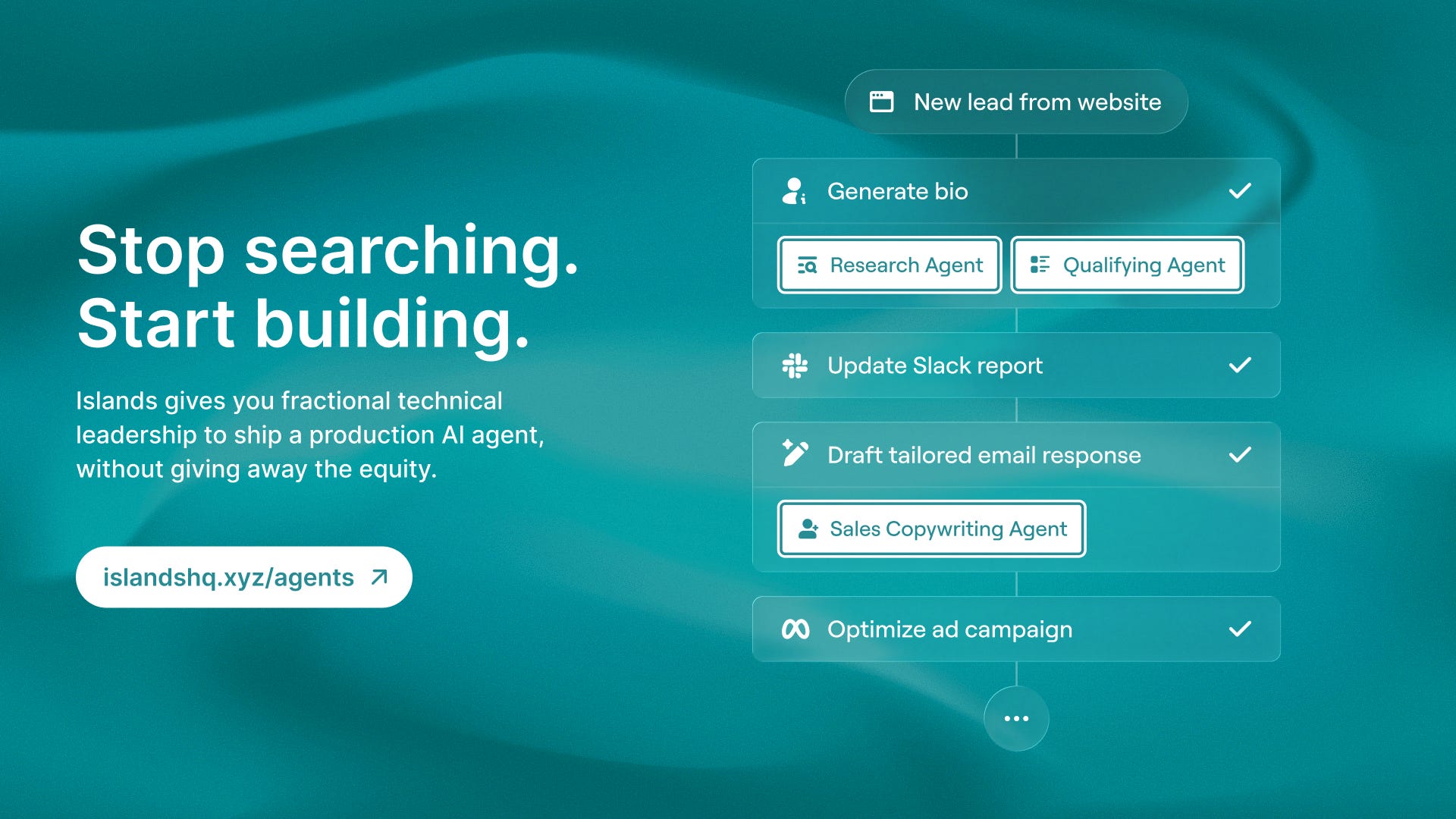

How to find a technical co-founder AI startup founders often ask me. I've been talking to founders who see a clear AI opportunity. They have a validated market gap. They also have a growing stack of investor decks. But they can't build it themselves. Every ML engineer they reach out to is either fully booked or wants more equity than they're willing to give. The traditional advice (network, pitch, split equity) is failing for AI startups because the talent supply simply isn't there. A venture studio model offers a different path: fractional technical leadership during the critical validation phase. This preserves equity and optionality.
How to find a technical co-founder AI startup: the math is stacked against you
Here is the reality: the demand for ML engineers far exceeds supply, so cold outreach is largely ineffective. Even if you find someone, the wrong match can be disastrous. I saw this clearly when I analyzed the outcomes of 50+ founder outreach attempts across our network.
What cold outreach actually gets you
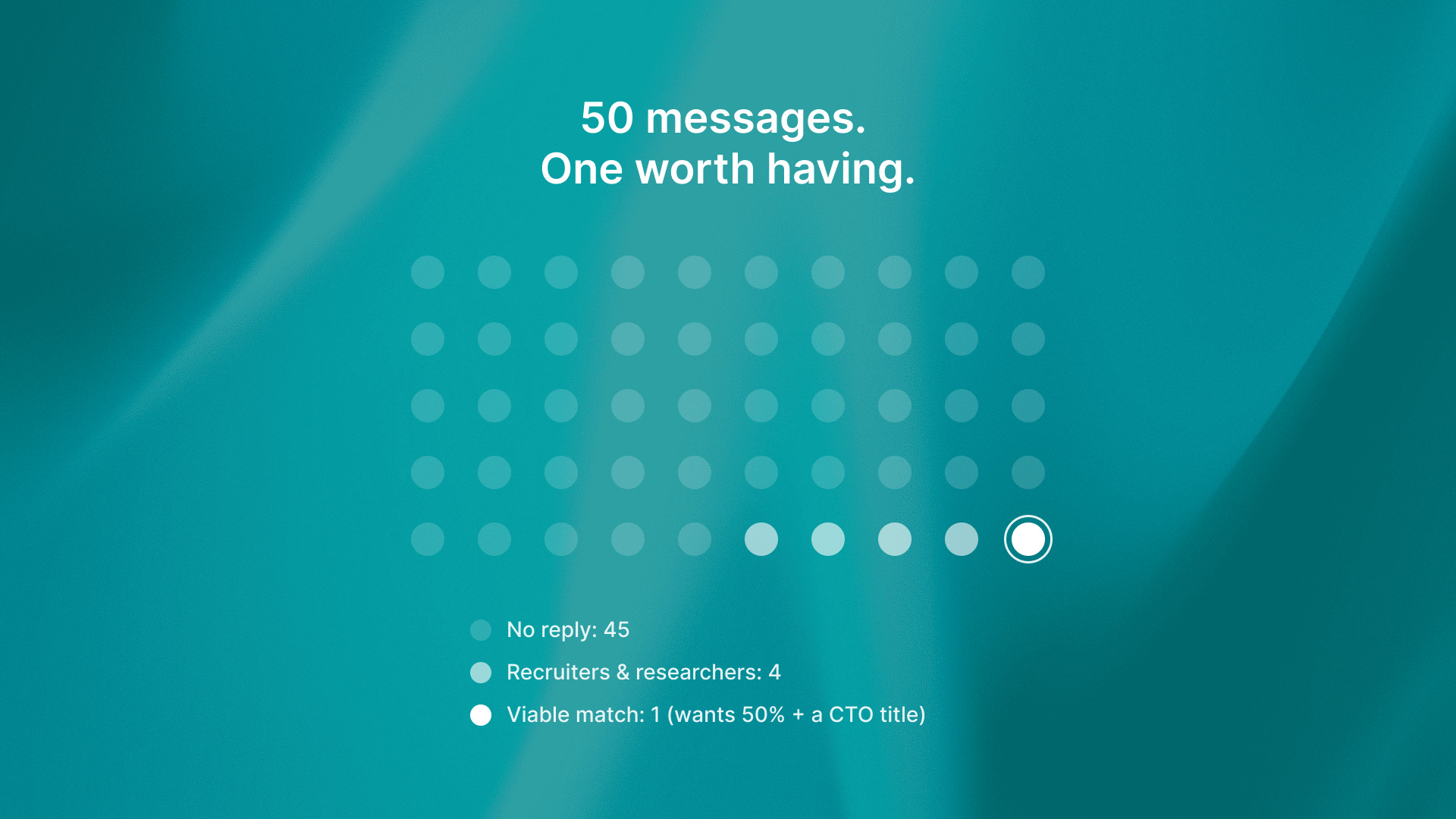
You send 50 LinkedIn messages. You get 5 replies. One is interested but wants 50% equity and a CTO title. Another is a researcher with no production experience. The rest are recruiters. This is the reality of the co-founder search AI startup landscape in 2026. The demand for AI builders is reshaping how entire industries approach hiring and marketing (Flywheel Digital).
The hidden cost of a wrong co-founder match
A mismatched co-founder creates problems that compound over time:
Equity disputes when roles and contributions aren’t aligned
Misaligned vision on product direction
Skill gaps that require additional hires
Lost time and momentum
I’ve seen these failures many times. That’s why many successful founders now partner with venture studio AI firms. This gives them access to technical expertise without the immediate need for a full-time co-founder. For founders exploring technical co-founder alternatives, the venture studio model is worth a close look.
Why venture studios break the pattern
Fractional technical leadership during validation
A venture studio provides a part-time AI CTO lead. They help architect the system, choose the tech stack, and oversee development. You get senior expertise without the full-time commitment. At Islands, we’ve done this for QA flow, ReachSocial, Shoreline, and Timecapsule. Each time, we provided the technical leadership needed to get to a production MVP. For example, QA flow’s autonomous testing platform shows what a venture studio can build from day one (QA flow). It can create scalable infrastructure right away.
When you partner with a venture studio, you also avoid the hidden overhead that comes with traditional hiring. Many agencies underestimate freelancer costs by 30-50% because they miss onboarding, management time, and communication friction (Timecapsule). The venture studio model bundles that overhead into a predictable engagement.
Retained equity and optionality
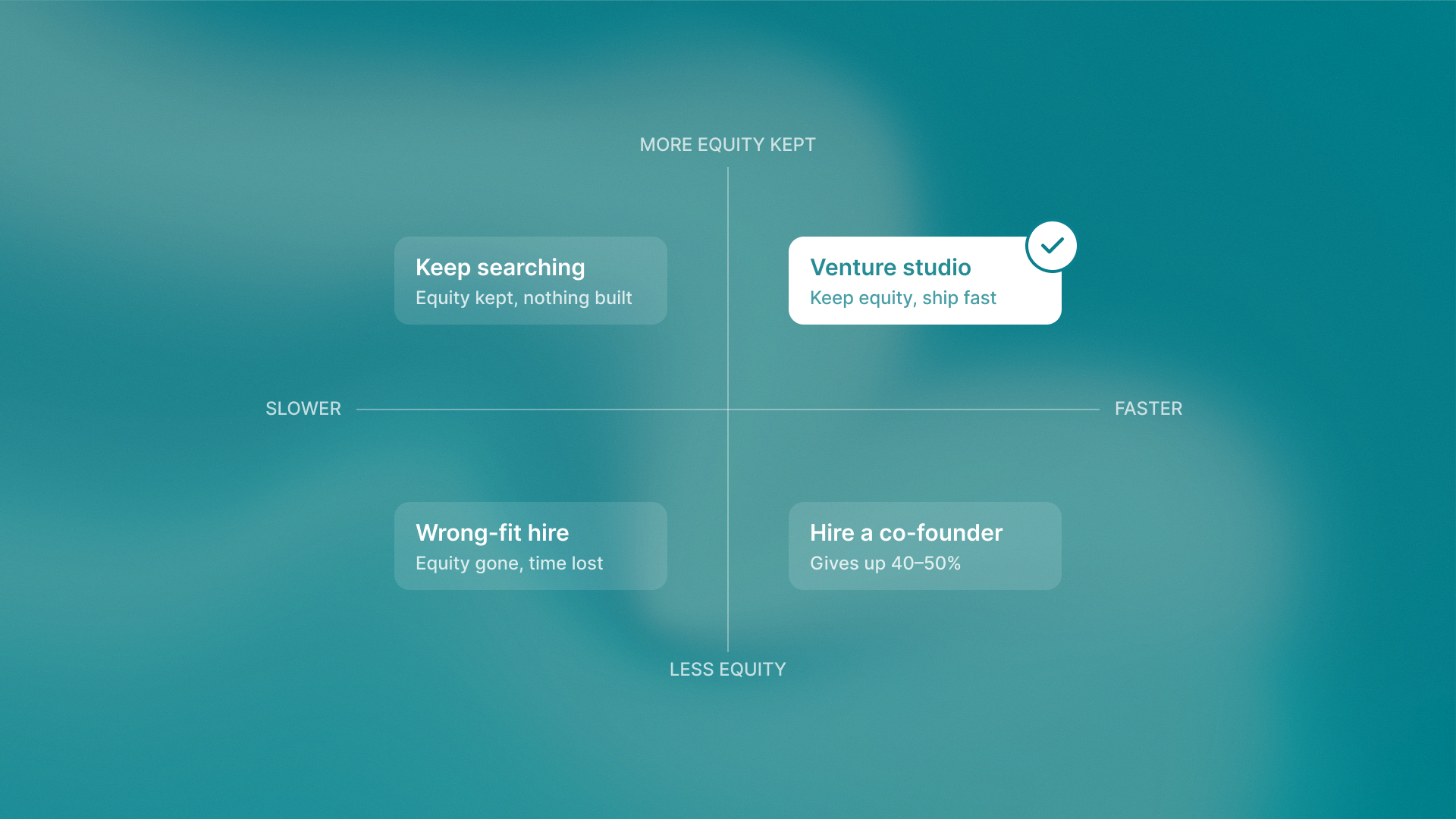
Instead of giving 40-50% equity to a co-founder, you pay a fee or give a smaller equity stake to the studio. You retain control and can decide later whether to bring in a full-time CTO. The studio model is designed to de-risk the early phase. As I’ve told many founders: it’s not a compromise, it’s a strategic choice.
Real MVP outcomes
Across our portfolio, ventures that began with a studio partner reached production-ready agents faster. They moved quicker than teams that spent months looking for a co-founder. The time savings alone justify the model. For those focused on AI MVP development, the studio path is often the fastest route to a working product. A venture studio can also provide marketing support that builds brand presence while founders focus on product (ReachSocial).
What to look for in a venture studio partner
Not all studios are equal. Here is what to evaluate:
Architecture-first mindset vs. demo-driven development
Does the studio build for production or just demos? Ask to see their deployed systems. At Islands, we emphasize an architecture-first approach that avoids technical debt. Before signing with any studio, I always recommend going through a structured evaluation process. A good framework is covered in this venture studio checklist.
Production deployment track record
How many AI agents has the studio deployed? Have they handled scaling, monitoring, and maintenance? Look for studios that have a portfolio of live products.
Clear milestone-based engagement
A good studio offers a phased approach with clear deliverables and exit points. You should be able to stop after validation if the idea doesn’t work.
Quick gut check
Would you trust this studio to architect a system that handles real users and real data? If not, keep looking.
When the venture studio model is not the right fit
If you already have a technical co-founder, a studio may not be the best choice. The same applies if your idea needs deep domain expertise from a full-time person. Also, if you need a permanent CTO from day one, hiring directly might be better. But most nontechnical founders already have a proven market need. A venture studio is the fastest way for them to build a production-ready AI agent.
I’ve also seen founders hire a full-time CMO too early. They often burn runway, and this approach often fails (GrowTal and GrowTal’s substack). Similarly, hiring a full-time CTO before product-market fit can be a suicide mission for your startup (Shoreline). The venture studio model avoids that trap by keeping your options open.
The bottom line
The venture studio model is not a compromise. It is an intentional strategy for a market where the traditional co-founder path has broken down. You get technical leadership, preserve equity, and move faster.
Ready to stop searching and start building?
See how a venture studio engagement can help you move faster on your AI idea. Move from concept to production faster.