


I’ve seen too many AI startups burn six figures on a product that fails before it launches. The problem isn’t the technology. It’s that they validated the wrong thing. They built fast and iterated, but they never checked if the idea had legs.
At Islands, I evaluate hundreds of AI concepts every year. Most of them fail the first test. The ones that succeed share a common pattern: they validated assumptions before writing a single line of code. Here is the 5-test framework I use to filter out ideas before any engineering spend.
The problem: most AI startups validate the wrong thing
Founders rush to code because they think building is validation. But building proves you can build, not that you should build. The most common reason AI startups fail is building a solution for a problem that doesn’t exist. The cost of a wrong build is enormous. Months of engineering time, burned runway, and lost opportunity.
Why founders skip pre-code validation
It feels slow. Investors want traction. The market moves fast. But the fastest path to failure is building something nobody wants.
The cost of building before validating
I’ve seen startups spend over $200K on development. Then they find their data pipeline fails. Or their unit economics turn negative. Those are problems you can catch on a whiteboard. Most AI business cases fail because they measure vanity metrics instead of EBIT impact. The hidden costs in architecture rebuilds and maintenance are real.
The 5-test framework: a zero-code validation process
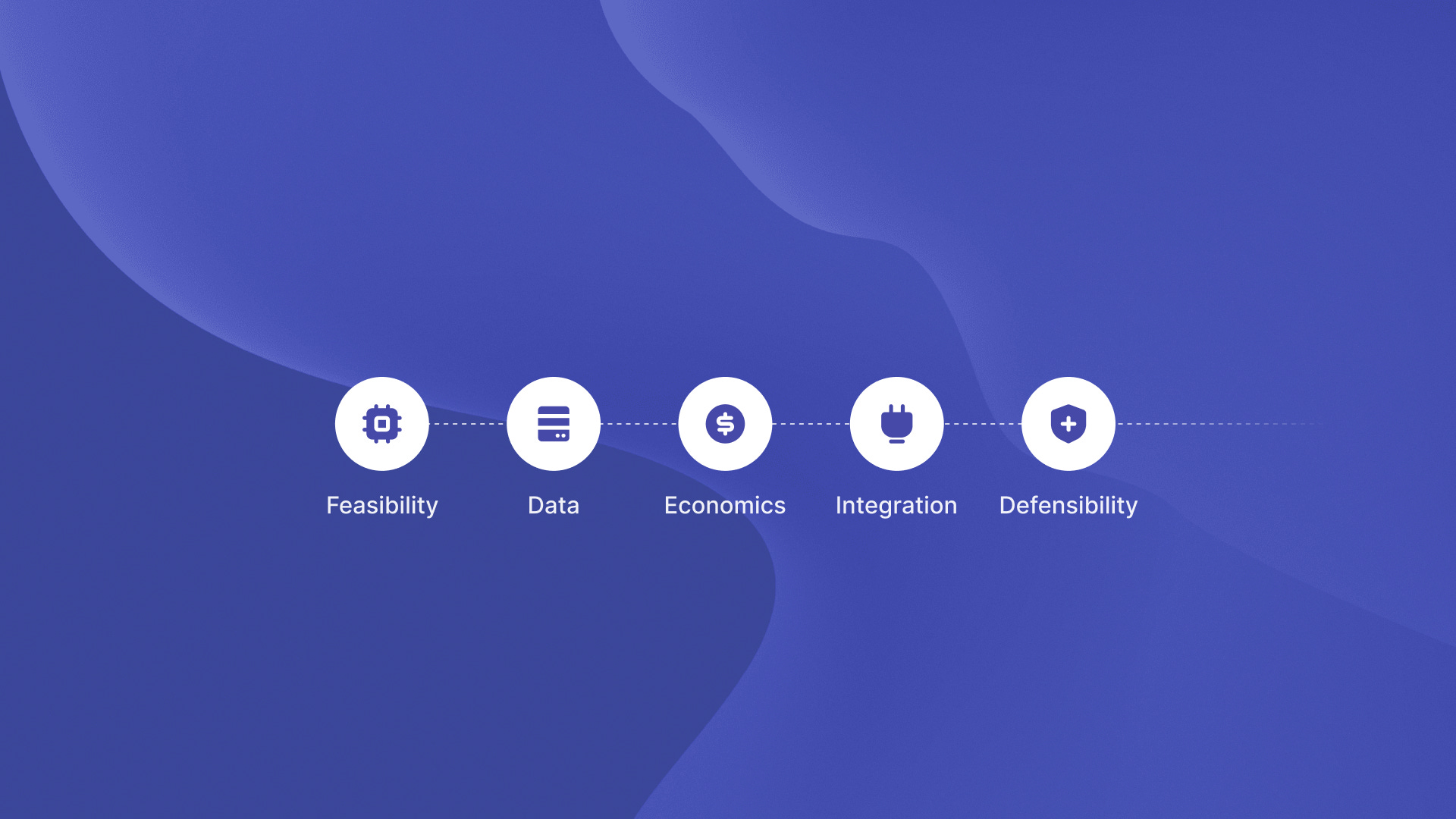
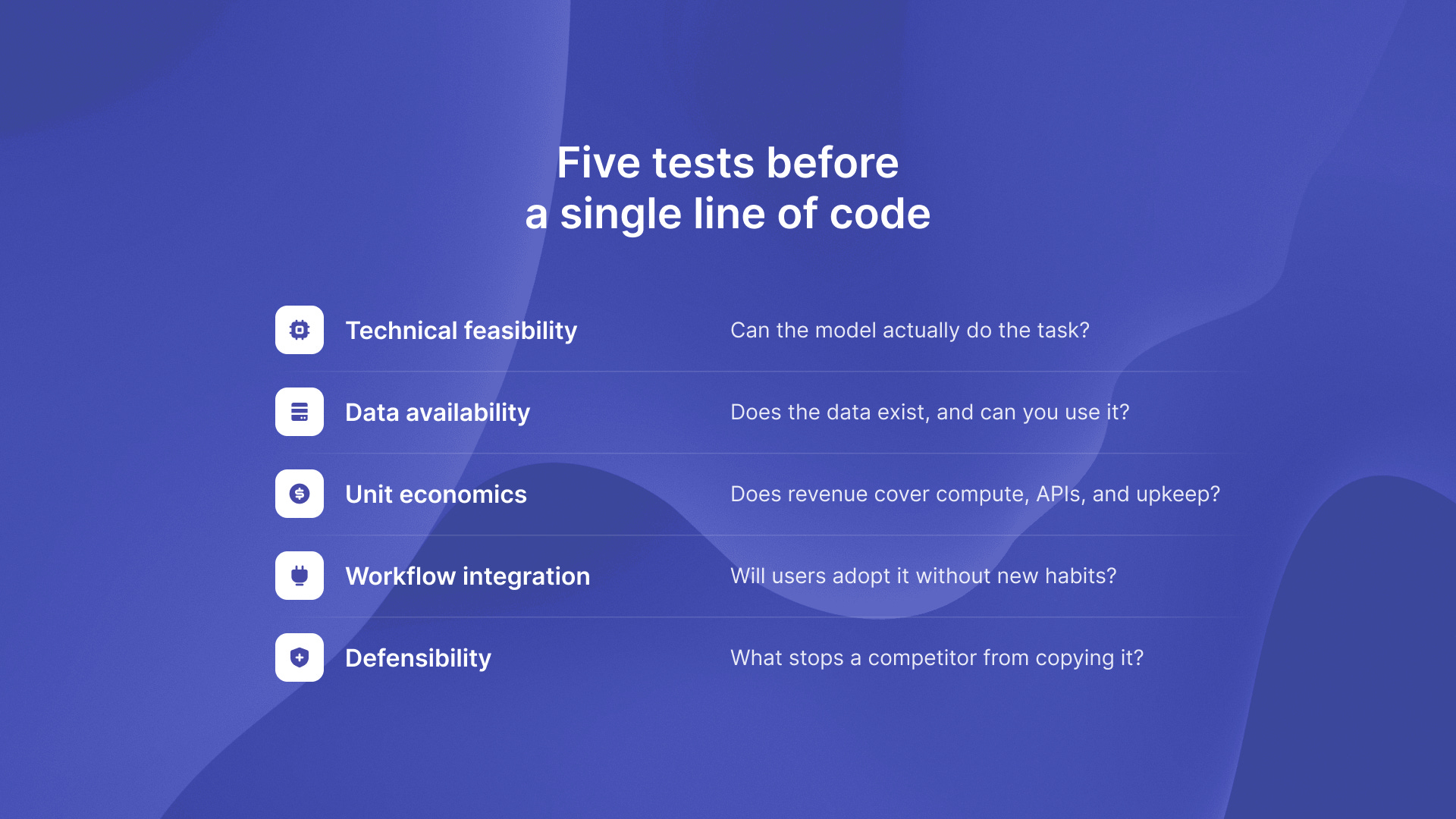
This is the AI startup idea validation framework I use at Islands. It covers five areas before a single line of code ships.
Test 1: Technical feasibility
Can the AI actually do what you claim? Many ideas sound plausible but fail when you dig into the details. Building a real-time agent that processes video streams requires infrastructure most early-stage teams don’t have. Test this with a simple research exercise: find evidence that similar technology works in production. If not, the idea is likely too ambitious. Assessing technical feasibility AI startup ideas early prevents costly overreach.
Test 2: Data availability
AI models are only as good as their training data. Do you have access to the data you need? Is it structured? Labeled? High quality? Lack of quality training data is a primary reason AI startups fail. If you can’t answer “yes” to data availability, stop here.
Test 3: Unit economics
Can you deliver your AI solution at a cost that leaves room for profit? AI inference costs, data storage, and model retraining add up quickly. A common mistake is building a product that works but costs more to run than customers will pay. Map out the cost per user and compare it to your pricing model. Real-time profitability tracking during execution, like the framework at Timecapsule, prevents margin erosion before it starts.
Test 4: Workflow integration
Does your AI fit into an existing workflow, or does it require users to change how they work? The most successful AI products slide into a process without friction. I saw this clearly with ReachSocial. Its integrated workflow embeds AI directly into the user’s content calendar. If your AI requires a new behavior, adoption will be an uphill battle.
Test 5: Defensibility
What stops a competitor from copying your idea? Without a moat, even a successful AI product gets commoditized as foundation models improve. Defensibility comes from:
Proprietary data that gets better with use
Deep workflow integration that creates switching costs
Domain-specific models that generalists can’t replicate
Network effects or community lock-in
If you can’t point to a defensibility moat, your idea is a feature, not a business. This is where pre-code validation for AI startups saves months of wasted effort.
How to apply the framework before writing a single line of code
Step 1: Whiteboard the 5 tests
Gather your team and go through each test on a whiteboard. Be honest. If you fail a test, don’t move forward until you have a plan to pass it.
Step 2: Gather evidence for each test
Use customer interviews, competitor analysis, and data audits. Don’t rely on assumptions. For technical feasibility, ask an expert to review your plan. For data availability, actually look at the data. This is how to validate an AI business idea without wasting engineering time.
Step 3: Make a go/no-go decision
If you pass all 5 tests, you have a validated idea ready for development. If you fail any test, either pivot or kill the idea. This process takes days, not weeks. I’ve seen it save portfolio companies like QA flow, ReachSocial, Timecapsule, and Shoreline from costly mistakes.
But won’t this slow me down?
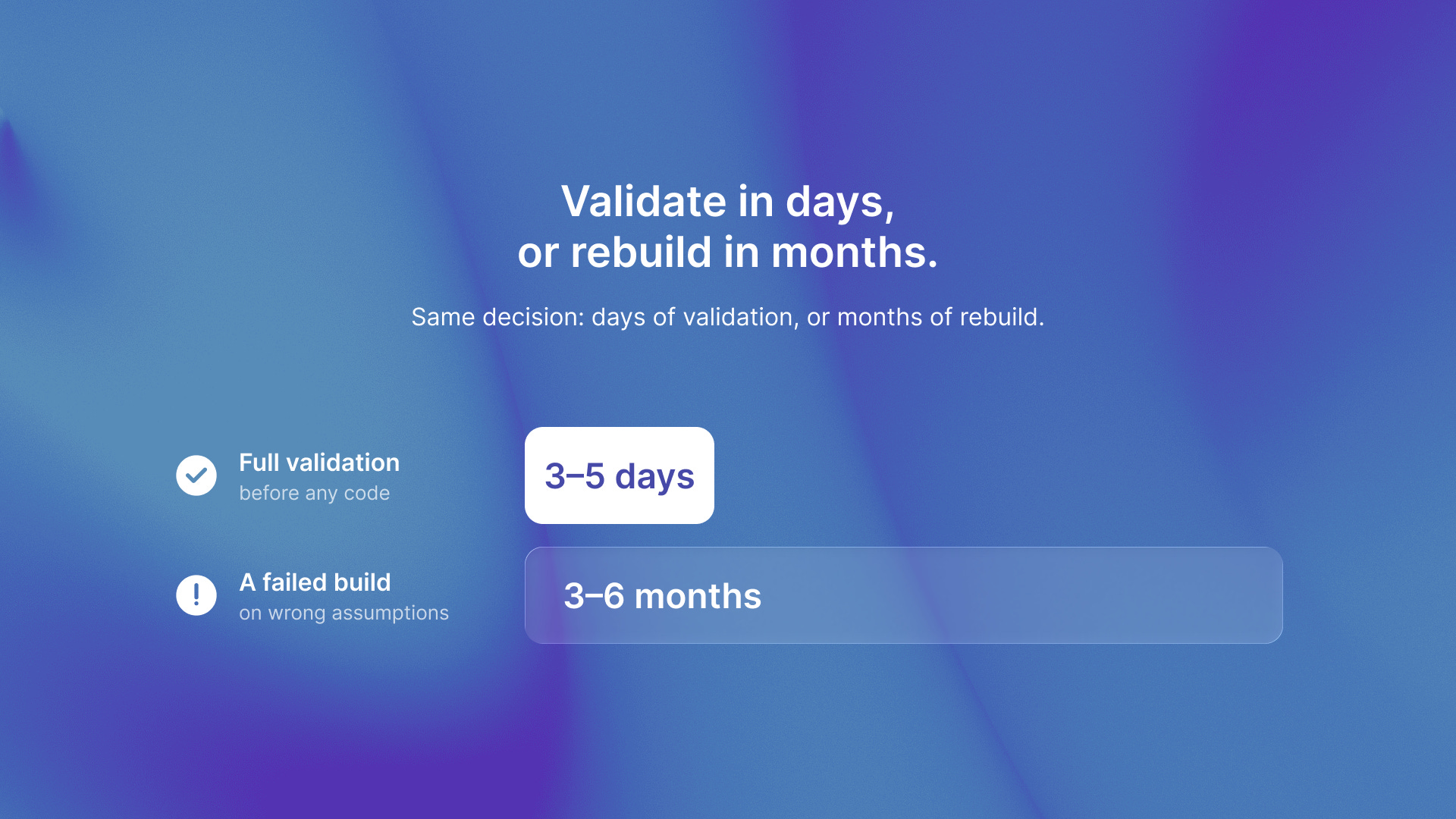
Common objection: “I’ll miss the market if I spend time validating.” The reality is that the cost of a wrong build far exceeds the cost of a few days of validation. Here is how to run the framework in under a week:
Day 1: Whiteboard the 5 tests with your team.
Days 2-4: Gather evidence. Customer calls, data audits, expert reviews.
Day 5: Make the go/no-go decision.
That’s one week to save months of wasted engineering.
The bottom line
The 5-test framework is a repeatable process. It helps founders avoid AI’s most expensive mistake. It keeps them from building something nobody wants. Use it before you write a single line of code.
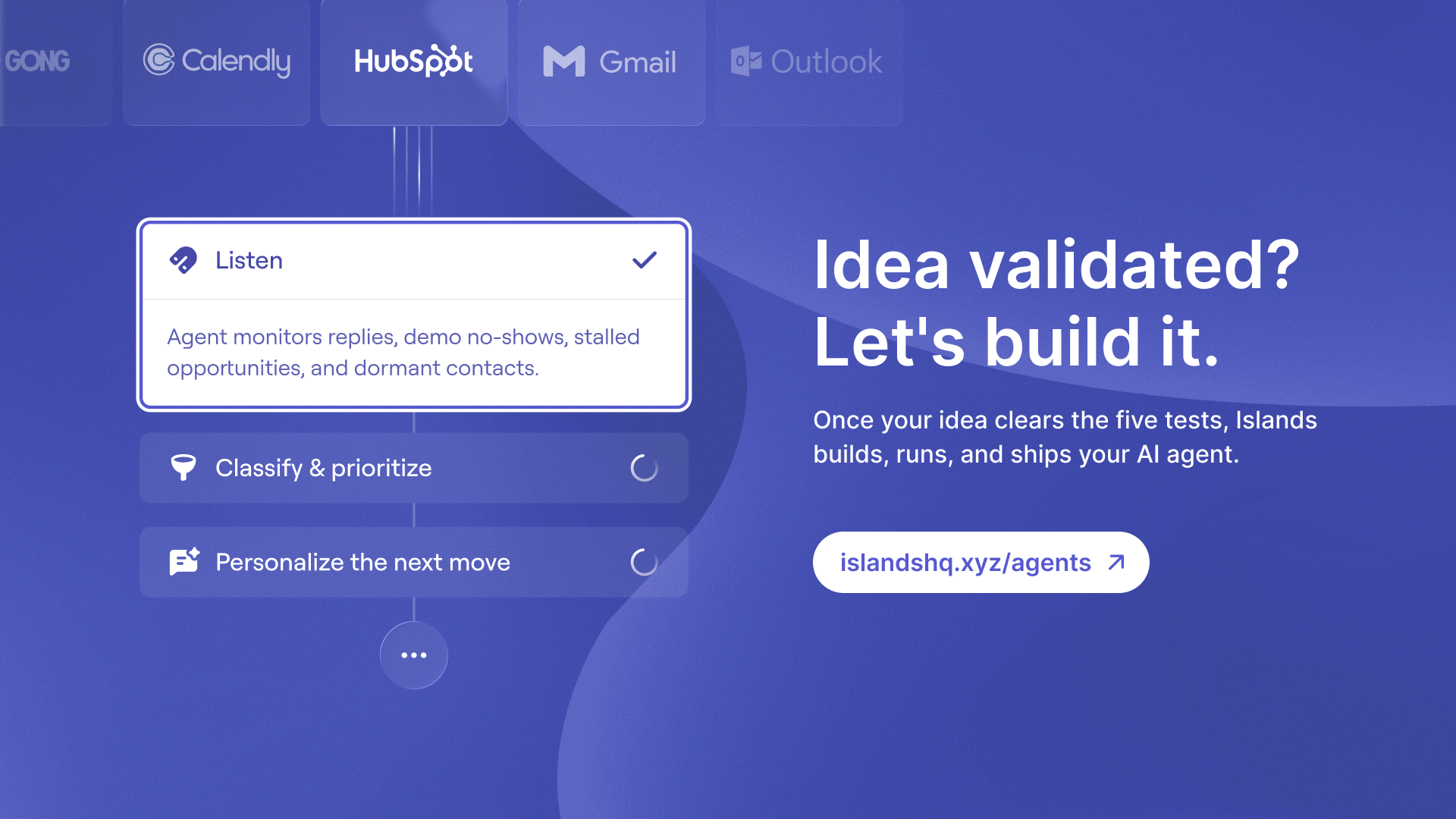
Ready to apply the 5-test framework to your AI idea? Start your validation today.
Love this — most AI startups skip the economics test and ship a demo that dies on inference costs. Validate the unit economics before the model.
the fastest no's in pitch meetings are products that get commoditized the second the next model ships. worth naming that the defensibility bar moved up a lot in the last 6 months.